Category Archives: Uncategorized

Final Blog Post III- The Battle of Carrhae

In 53 B.C.E., the Roman Triumvir Marcus Licinius Crassus led his army against that of the Parthians in the arid land of Carrhae in Mesopotamia. Crassus’ intentions were all but noble, as he was most likely invading Parthia with the either the “desire to rival the military exploits of Caesar and Pompey,” or “add to his already legendary fortune” (Mattern-Parkes, 2003, p. 387). Parthia had been going through a lot of internal conflict over succession after King Phraates IV died, so Crassus was under that impression that he could easily conquer the Parthians amid the chaos. Without the consent of the Senate, Crassus led his army of around 36,000 men across the Euphrates River and began his campaign (Bunson, 2002, p. 97). Among his officers were his son, Publius Crassus, and Cassius, who would later be involved in the assassination of Julius Caesar (Bunson, 2002, p. 97).

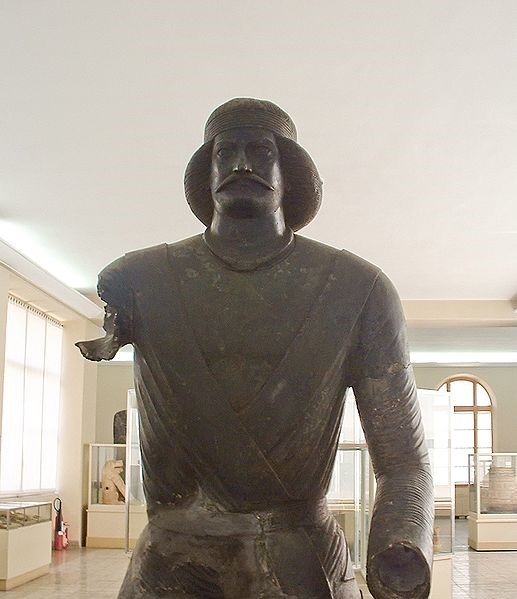
Shown below are the generals of this great battle- the bust of Crassus and a bronze statue that is most likely of the Parthian general Surena (cjh1452000 (Wikipedia), 2009; Julia W (Wikipedia), 2010).

Bust of Marcus Licinius Crassus. Retrieved from http://en.wikipedia.org/wiki/File:Marcus_Licinius_Crassus_Louvre.jpg
Bust of Marcus Licinius Crassus. Retrieved from http://en.wikipedia.org/wiki/File:Marcus_Licinius_Crassus_Louvre.jpg

Bronze statue believed to be Surena. Retrieved from http://en.wikipedia.org/wiki/File:Arm_less_man_edit_3.jpg

Bronze statue believed to be Surena. Retrieved from http://en.wikipedia.org/wiki/File:Arm_less_man_edit_3.jpg

The Parthian successor Orodes was not oblivious to Crassus’ moves, and gave command of all the Parthian forces to a general named Surena, who, despite having a much smaller army than Crassus, had a number of advantages for the battle. For one thing, the Parthians’ mostly cavalry force was made up of “heavy-armed cataphracts and mounted archers” that were “legendarily accurate bowmen,” giving them the edge on the flat plains of Carrhae (Mattern-Parkes, 2003, p. 388; Bunson, 2002, p. 97). A huge mistake Crassus made that benefited the Parthians was that he left the Euphrates River, his only supply line, to meet General Surena’s army (Mattern-Parkes, 2003, p. 388). Without those supplies, the Roman soldiers, who were unaccustomed to the region, would feel the horrible effects of hunger and thirst in the deserts of Carrhae.

If the circumstances weren’t bad enough, Crassus’ army was encircled and ambushed by Surena, causing his soldiers to panic. Crassus hastily ordered the formation of a defensive square, but his son Publius charged the Parthians to buy the Romans more time to form up. Publius’ bravery was short-lived, though, as he was separated from the main line of Roman forces, and his whole detachment was slaughtered, his own head being cut off and put on a spear (Bunson, 2002, p. 97). His death was demoralizing to the rest of the troops, and Crassus was unable to console them.

The disheartened Romans were doomed from the start, due to the superior Parthian tactics, “[f]or if they decided to lock shields” to block the incoming arrows, “the pikemen were upon them in a rush,” but “if they extended their ranks to avoid this, they would be struck with the arrows” (Dio Cassius, 1914 Trans., p. 437). The Parthian army “fought at long range” and on horseback, so the legions were unable to engage their more “mobile opponents” (Matyszak, 2003, p. 179). Crassus tried to keep his men in order, but with the Parthians raining down arrows on them, they broke down and retreated, “abandoning 4,000 wounded to certain death” (Bunson, 2002, p. 97). Crassus “was in the very extremity of fear, and was distraught by the terror of the calamity” (Dio Cassius, 1914 Trans., p. 445). His troubles were far from over, though, as he was pursued by the unrelenting Parthians and the scorching Mesopotamian sun.

With great reluctance, Crassus agreed to hold a negotiation meeting with Surena, but he was killed in the encounter. There is speculation whether Crassus was killed by a Parthian or “one of his own men to prevent his capture alive,” but whatever the case, his forces were subsequently wiped out, with many others being captured, and their eagles, the standards symbolizing legionary power, were taken by the victorious Parthians (Dio Cassius, 1914 Trans., p. 447). As for Crassus, the Parthians “poured molten gold into his mouth in mockery” of his excessive wealth and greed, and held a mock triumph to further insult the Romans (Dio Cassius, 1914 Trans., p. 447).

Crassus’ military campaign could be labeled an “unjust war,” as it was fought on the grounds of personal gain and glory, not retaliation for a past Parthian offense (Mattern-Parkes, 2003, p. 392). With the death of Crassus came the fall of Roman Republic and the emergence of the Empire, as the two surviving triumvirs, Pompey and Julius Caesar, would fight for sole dominance over Rome. Unfortunately for Crassus’ surviving forces, retaliation was out of the question because Rome would become involved in a heated civil war, so the disastrous events that unfolded at Carrhae were never truly reconciled. Carrhae was a horrible loss for the Romans, and a sign that Rome’s greed would only result in tragedy and death.

Works Cited

Bunson, M. (2002). Carrhae. In Encyclopedia of the Roman Empire (pp. 96-97). New York, NY: Facts on File, Inc.

cjh1452000. (Photographer). (2009). Marcus Licinius Crassus Louvre [Web Photo]. Retrieved from http://en.wikipedia.org/wiki/File:Marcus_Licinius_Crassus_Louvre.jpg

Dio Cassius. (1914). Dio’s Roman History Volume III (E. Cary, Trans.). Cambridge, MA: Harvard University Press.

Julia W. (Photographer). (2010). Arm less man edit 3 [Web Photo]. Retrieved from http://en.wikipedia.org/wiki/File:Arm_less_man_edit_3.jpg

Mattern-Parkes, S. (2003). The Defeat of Crassus and the Just War. The Classical World, 96, 387-396. Retrieved from http://www.jstor.org/stable/4352789

Matyszak, P. (2003). Chronicle of the Roman Republic: The Rulers of Ancient Rome from Romulus to Augustus. New York, NY: Thames & Hudson.
Leave a comment

Filed under Uncategorized

Final Blog Post II- The Battle of Arausio

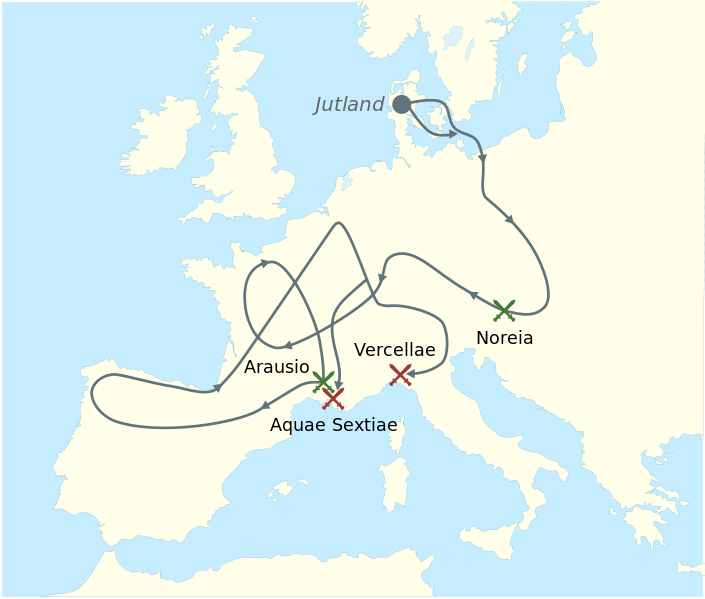
In 105 B.C.E., the Romans felt the backlash of the Germans at the great battle of Arausio, which is now known as Orange, France.  As the Roman Republic began expanding its territory, they had to deal with “unrest and hostility” all across their lands, and as such, became involved in a number of conflicts (Cornell and Matthews, 1982, p. 60).  In the various wars being fought at the time, “[t]he Romans incurred…some heavy defeats, notably at Arausio” (Crawford, 1969, p. 80).  Arausio was part of an “unprecedented series of military reverses,” as the Roman army clearly had the better equipment and discipline (Cornell and Matthews, 1982, p. 60).  Their forces were spread far too thin, and with a large army marching through their territory, it seems they should have tried to avoid engaging the enemy at all costs.

Map showing the warpath of the massive Germanic army. Retrieved from http://en.wikipedia.org/wiki/File:Cimbrians_and_Teutons_invasions.svg

Map showing the warpath of the massive Germanic army. Retrieved from http://en.wikipedia.org/wiki/File:Cimbrians_and_Teutons_invasions.svg

The image above shows the victories (green swords) and defeats (red swords) of the massive Cimbri and Teuton force that swept through Europe and Roman territory (Pethrus (Wikipedia), 2010).  This Germanic army, estimated at around 300,000 men, was marching from the north, crushing all opposition, and while they did suffer some losses, as the map shows, these were only minor setbacks to their cause (Matyszak, 2003, p. 152).  Unfortunately for the Romans, the battle at Arausio was no different.

The Roman army of around 80,000 men came out to meet them, being led by the consul Mallius Maximus and proconsul Quintus Servilius Caepio (Matyszak, 2003, p. 152; Hornblower, et al, p. 1354).  Arausio turned out to be more of a massacre that “left Italy at the mercy of the Germans” (Cornell and Matthews, 1982, p. 60).  “According to Valerius Antias, 80,000 soldiers and 40,000 servants and camp followers of the Romans were slain at Arausio” (Lendering: Livy, Book 67).  “Caepio, who had caused the defeat by his rashness, was convicted” (Lendering: Livy, Book 67).  Apparently, Caepio had disregarded the authority of Mallius Maximus, “[refusing] to co-operate” with him, which “led to the disaster at Arausio” (Hornblower, et al, p. 1354).  As part of his punishment for attacking the Germanic army rather than trying to negotiate, as Mallius intended, Caepio’s wealth was seized, he lost all his power in the senate, and he was forced into exile.

The humiliating defeat at Arausio was an early example of unrest among the Germanic tribes, even before the empire had begun.  It was a clear sign that peace times in the empire would be few and far between, and that the oppressed peoples under Roman rule would be anything but submissive.  Luckily for the Romans, though, the barbarian hordes’ conquest took them west to Spain instead of east into Italy, where no Roman army would have been available to hold them back (Pethrus (Wikipedia), 2010).  This gave the new Roman consul Gaius Marius the chance to make reforms to the military, as he is well-known for (Matyszak, 2003, p. 152).  He altered the training, such as by having the soldiers practice fighting gladiator style, and adjusted “the Roman battle array to resist the barbarian assault” (Matyszak, 2003, p. 152).  While these military revamp measures benefited the Roman army for years to come, the horrible defeat at Arausio couldn’t have been forgotten, because “at that moment Rome was faced with complete extinction” (Cornell and Matthews, 1982, p. 60).


Works Cited

Cornell, T., & Matthews, J. (1982). Atlas of the Roman World. New York, NY: Facts on File, Inc.

Crawford, M. (1969). Coin Hoards and the Pattern of Violence in the Late Republic. Papers of the British School at Rome, 37, 76-81. Retrieved from http://www.jstor.org/stable/40310672

Hornblower, S., Spawforth, A., & Eidinow, E. (Eds.) (2012). Caepio, Quintus Servilius. In The Oxford Classical Dictionary (Fourth Edition) (p. 1354). Oxford, UK: Oxford University Press.

Lendering, J. (March 23, 2014). Livy: Periochae 66-70. Livius.org. Retrieved March 23, 2014, from http://www.livius.org/li-ln/livy/periochae/periochae066.html#66

Matyszak, P. (2003). Chronicle of the Roman Republic: The Rulers of Ancient Rome from Romulus to Augustus. New York, NY: Thames & Hudson.
Pethrus. (Designer). (2010). Cimbrians and Teutons invasions [Web Photo]. Retrieved from http://en.wikipedia.org/wiki/File:Cimbrians_and_Teutons_invasions.svg

Leave a comment

Filed under Uncategorized

Final Blog Post I- The Battle of Cannae

At Cannae in 216 B.C.E., the Roman army faced off against the Carthaginians led by Hannibal. Here, “Hannibal won his greatest victory” and caused “one of Rome’s worst military disasters” (Cornell and Matthews, 1982, p. 46). As part of a “renewed effort from Rome” during the Second Punic War, two large consular armies were sent out to crush Hannibal (Matyszak, 2003, p. 95). Tension and conflict were high at this time, with both Rome and Carthage executing bold strategies in attempts to devastate the other, but in the decisive battle at Cannae, Hannibal was the victor.

The two elected consuls of Rome- Lucius Aemilius Paullus and Gaius Terentius Varro- were put in charge of the legions for this battle, but it was ultimately the folly of Varro that caused the loss. Aemilius had “argued against a battle, since the surrounding area was flat and treeless, and the enemy had cavalry superiority,” but the inexperienced Varro superseded his advice and marched on the Carthaginian camp (Polybius, 2010 Trans., p. 215). Hannibal launched a surprise attack with his cavalry and light infantry that “caused considerable disruption in the Roman column,” but the Romans were able to recover from the blow (Polybius, 2010 Trans., p. 215). They set up a defensive screen, and it appeared that they “had the advantage all over the field,” especially because Hannibal “had no reserves to speak of” (Polybius, 2010 Trans., p. 216).

After the skirmish ended, the two forces separated and made preparations for the battle that would ensue. The Romans set up two palisaded camps on either side of the river Aufidus, with the Carthaginians setting up only one. With tensions rising and a major conflict inevitable, Varro had all the Roman soldiers form up, with nearly 80,000 infantry and 6,000 cavalry (Polybius, 2010 Trans., p. 218). Hannibal moved his own troops (40,000 infantry and 10,000 cavalry) into a “single, straight line,” but then had them create a “crescent-shaped bulge,” a brilliant tactical move that would come into play later in the battle (Polybius, 2010 Trans., p. 218).

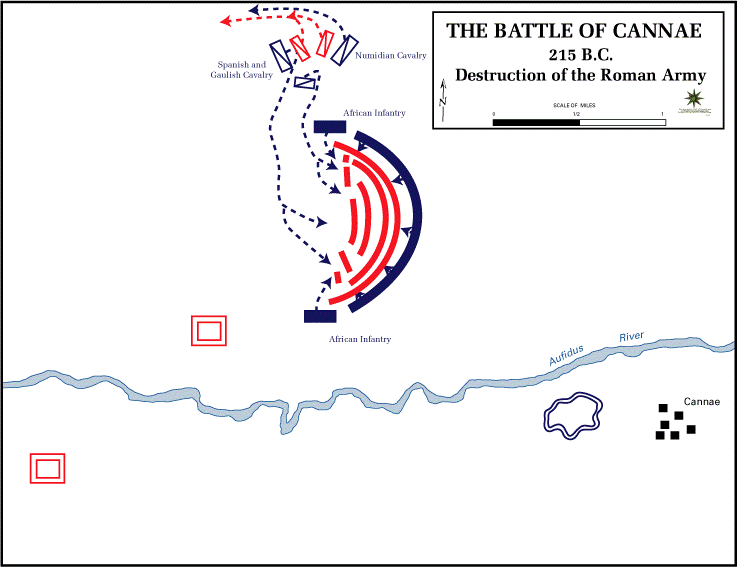
The heavy infantry of the Romans were able to fight back the Iberians and Celts in the center of Hannibal’s army, destroying the crescent bulge. With their lines too thin, Hannibal drew them back and proved his strategic genius. The Romans had unknowingly rushed after the retreating Celts, only to become trapped by the Libyan portions of the Carthaginian army. They were flanked on both sides and completely helpless. As the image below shows, Hannibal defeated the Romans with a “classic envelopment maneuver,” surrounding their forces by collapsing the middle of his own line (GhePeU (Wikipedia), 2006; Matyszak, 2003, p. 95). The Numidian cavalry, which “were most effective and dangerous once they had the enemy on the run,” followed the fleeing Romans and cut them down (Polybius, 2010 Trans., p. 220).

Around 70,000 Romans died in the battle, along with their great leader Aemilius and other generals. Most of those that survived were captured, but a few managed to escape, including the one “largely responsible” for the loss, Varro, who was from then on labeled “a man of no redeeming qualities” (Matyszak, 2003, p. 98; Polybius, 2010 Trans., p. 221). While the Carthaginians sustained thousands of casualties, the Romans suffered far greater.

Image showing the layout of the battle of Cannae.  Retrieved from http://en.wikipedia.org/wiki/File:Battle_cannae_destruction.gif

Image showing the layout of the battle of Cannae. Retrieved from http://en.wikipedia.org/wiki/File:Battle_cannae_destruction.gif

The impacts of this defeat were severe for the Romans, as their loss was a sign of weakness to their allies. Strong alliances during this time would have been crucial, as Rome and Carthage were involved in the Second Punic War. After Cannae, there were “some defections…among the allies, and large areas of the south [in Italy], went over to Hannibal” (Cornell and Matthews, 1982, p. 46). “[T]he defection of Roman allies in the aftermath of Cannae” allowed Hannibal to continue to fight, although he was “forced to forego his march on Rome” due to “[t]he lack of a permanent base of supply” (Shean, 1996, p. 168; p. 174). In fact, many historians believe that “Hannibal’s best opportunity for a decisive victory was immediately following” the battle fought at Cannae (Shean, 1996, p. 159).

There is no doubt that Cannae was a military catastrophe for the Romans, and it could have meant Rome’s doom, but despite the shift of power in the region, “[t]he Romans’ blind refusal to admit defeat” made them tough to extinguish (Cornell and Matthews, 1982, p. 46). If things had gone the way Hannibal planned, it is likely that Rome itself would have fallen, but the “constitution and…sound deliberation” of the Romans “enabled them to regain dominion over Italy,” enact their revenge on Hannibal and Carthage, and make themselves “masters of the entire known world” (Polybius, 2010 trans., p. 222).

Works Cited

Cornell, T., & Matthews, J. (1982). Atlas of the Roman World. New York, NY: Facts on File, Inc.

GhePeU. (Artist). (2006). Battle cannae destruction [Web Photo]. Retrieved from http://en.wikipedia.org/wiki/File:Battle_cannae_destruction.gif

Matyszak, P. (2003). Chronicle of the Roman Republic: The Rulers of Ancient Rome from Romulus to Augustus. New York, NY: Thames & Hudson.
Polybius. (2010). The Histories (R. Waterfield, Trans.). New York, NY: Oxford University Press.

Shean, J. (1996). Hannibal’s Mules: The Logistical Limitations of Hannibal’s Army and the Battle of Cannae, 216 B.C. Historia: Zeitschrift für Alte Geschichte, Bd. 45, H. 2, 159-187. Retrieved from http://www.jstor.org/stable/4436417

Leave a comment

Filed under Uncategorized

The History of the Trojan War

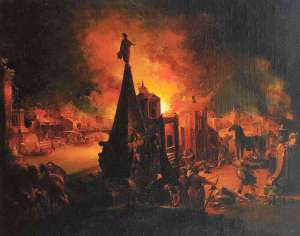
Figure 1: A depiction of the Siege of Troy

Figure 1: A depiction of the Siege of Troy (Trautmann)

The Trojan War, which occurred sometime between 1260 and 1240 BC, was fought between the Greeks and the Trojans in the city of Troy. According to Greek mythology, the war was initiated when the goddesses Hera, Aphrodite, and Athena began to quarrel when Eris gave them the Apple of Discord, which was marked for the fairest. Paris judged that Aphrodite was the fairest and she received the apple. In return, Aphrodite made the wife of Menelaus, Helen, fall in love with Paris. This angered Menelaus, which caused him to have troops, led by his brother Agamemnon, to siege the city for over ten years.

Many historians disagree as to whether the Trojan War actually occurred. Many pieces of evidence of the war come from various pieces of Greek art. “A great proportion of Greek and Roman art can be connected with legends that stem from the Trojan War” (Sparkes, 54). “The most important literary sources are the two epic poems traditionally credited to Homer, The Iliad and The Odyssey, composed sometime between the 9th and 6th centuries BC” (Wikipedia Contributors). In The Odyssey, Homer writes of Odysseus who has not returned home from the war. He mentions the Trojan War in the first sentence of this poem. “Tell me, O muse, of that ingenious hero who travelled far and wide after he had sacked the famous town of Troy” (Homer, 1).

In Homer’s epic poem The Iliad, he “never overtly refers to the ruse of the wooden horse” (Franko, 121), but he does allude to the horse three times near the end of the poem. Greek legend states that the war was ended when the Greeks constructed a large hollow wooden horse. He filled the horse with soldiers and delivered the horse to the Trojans’ camp. The Trojans accepted the horse, which was a sacred animal to them, and the soldiers emerged from within and sacked Troy.

Bibliography

Franko, George Fredric. “The Trojan Horse at the Close of the Iliad.” Classic Journal. 101.2 (2005/2006): 121. Web. 20 Apr. 2014. <http://www.jstor.org/discover/10.2307/30038644?uid=3739256&uid=2&uid=4&sid=21104040000563&gt;.

Homer. The Odyssey. 800 BC. 1. Print.

Sparkes, B.A. The Trojan Horse in Classical Art. 18. Cambridge University Press, 1971. 54. Web. <http://www.jstor.org/discover/10.2307/642388?uid=3739256&uid=2&uid=4&sid=21104040000563&gt;.

Trautmann, Johann Georg. Blik Auf Das Brennende Troja. 1759. Painting. Wikipedia: The Free EncyclopediaWeb. 20 Apr 2014. <http://en.wikipedia.org/wiki/File:J_G_Trautmann_Das_brennende_Troja.jpg&gt;.

Wikipedia Contributors. “Trojan War.” Wikipedia: The Free Encyclopedia. 05 Apr 2014. Web. 20 Apr 2014. <http://en.wikipedia.org/wiki/Trojan_war&gt;.

Leave a comment

Filed under Uncategorized

Trojan Horse Model

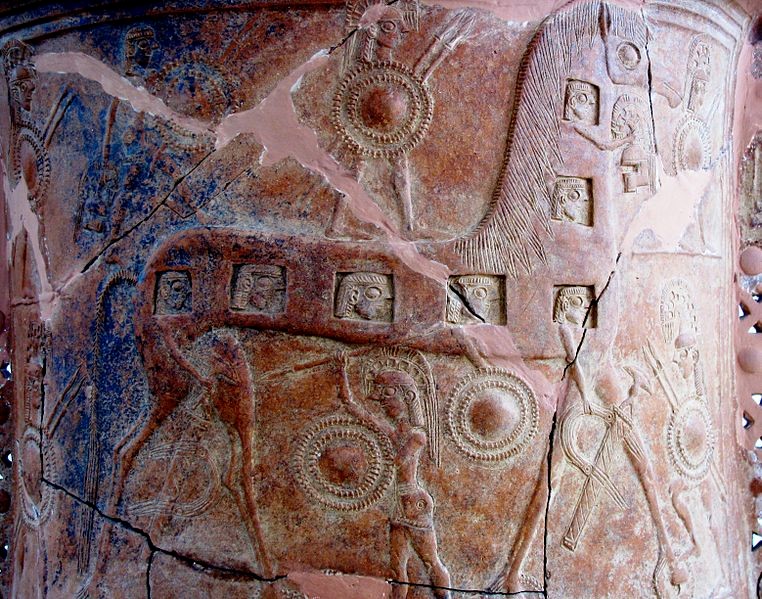
The Mykonos Vase is one of the earliest depictions of the Trojan horse (Mykonos vase). Wheels on the legs are visible, as well has holes showing men’s heads to indicate the soldiers hiding inside.

The Mykonos Vase is one of the earliest depictions of the Trojan horse (Mykonos vase). Wheels on the legs are visible, as well has holes showing men’s heads to indicate the soldiers hiding inside.

The Trojan horse was used strategically in the Trojan War, which was waged between 1260 and 1240 B.C. between Troy and Greece. Our model of the Trojan horse, a large, hollow, wooden horse, provides room for about 30-40 men, has wheels, and has a door to allow soldiers to climb out of to attack.

The Trojan horse comes up in many sources, in pictures, and in text. One source describes the Trojan horse as “a horse-shaped contraption of lumber” in summarizing from Homer’s words in the Illiad (Franko 122). This points out the rough design and construct of the horse, merely giving it a general shape of a horse. Our model follows this with a basic horse structure.

In answer to the question of why the Trojan horse was chosen to be a horse, it made sense because “horses were of great value to Homer’s Greeks” (Held 330). It was an animal that was valuable and such a valuable offering would be graciously accepted into their enemy’s territory. This made entrance much easier.

The precise number of men inside the horse is not known. “Quintus Smyrnaeus gives the names of thirty [men], but says there were more” (Wikipedia contributors). However, it is generally agreed that there were around 30-40 men inside the horse.

To carry 30-40 men, it would have been large and heavy. Wheels made transportation easier. The “earliest representation is poorly preserved,” (Sparkes 55) which is the Boeotian fibula, dating back around 700 B.C. However, this creation and the Mykonos vase (another early artwork of the Trojan horse) both indicate that there were wheels attached to the feet of the horse. Our model also has a space for wheels. We included a cart for stability and made space for wheels on the cart.

The legs of the horse in these two representations are relatively skinny. Our model also has thinner legs in comparison with the body. Dimensions were determined by how much room would be needed to carry 30-40 men. The Mykonos vase showed how the horse’s legs were the same height as a man, but this was not plausible for holding so many people.

The Trojan horse was real and included the basic characteristics of a general horse shape on wheels with room enough for about 30-40 soldiers.

Leave a comment

Filed under Uncategorized

Alexander the Great of Macedonia

Alexander the Great of Macedon

Honors Blog 2 REDONE

15 April 2014

Alexander the Great

Alexander the Great: The Battle
Taken From Mount Albert Grammar School Website
http://www.mags.school.nz/Story?Action=View&Story_id=2456

Alexander III of Macedon, also known as Alexander the Great, was a king of the Greek kingdom of Macedon.  He was the son of a warrior king; making him air to a powerful thrown. His father was Philip of Macedon and his father was one of the first to unite Greece’s independent city states.  His father, wanting Alexander to be a great future ruler, brings Aristotle from Athens to teach young Alexander how to observe, think ahead and reason. According to Discovery Education, Aristotle’s lessons made Alexander the first great strategist in military history with Achilles also being Alexander’s role model. Discovery Channel Education even says that Alexander offered up prayers to Achilles, and even takes Achilles shield.

Going along with his father Philip he learned many things such as how to treat the men in his army. Soon the days of going along with his father ended as Philip was assassinated at the celebration of his daughter’s wedding. At only 21 years old, Alexander ascends the thrown. As he takes the thrown, many begin to question if he has the skills for a warrior.

Soon Alexander proves that he is suit for the throne. According to Wikipedia, Alexander responded quickly to the new of the states attempting to revolt. He is said to have marched toward Thebes and here is where he strikes ruthlessly. The news quickly spreads throughout the cities and Alexander soon is said to be “invincible.”

This is shown, as when he arrives in Athens, no one dares to oppose Alexander after the news they have heard. But instead of punishing all of his enemies, he offers up a proposition. If all of Greece joined together, and gave him ships, soldiers and other supplies then he would fulfill what they desired. Alexander told them that he would launch a war to liberate the Greek cities in areas occupied by the Persians

This great ruler was fierce and did not let anything get in his way. He even had a special line up formation that made his army a special fighting machine. This was called a phalanx, where the men would stand together in tightly knit blocks with long almost 18ft lances (according to Discovery Channel History) tipped in bronze, called sarisas. As each line would lower them down, it created a deadly sharp wall. Alexander would send them straight into the Persian lines, impaling rows and rows of Persians.

Whatever the terrain, from tropical to bitter cold, scorching desert to waterlogged marshland, Alexander met every challenge he was set and overcame every difficulty he encountered. He was smart, keen, and a great fighter. He even had kindness and mercy in his heart as well. Alexander treated his men well, and even showed mercy to some of his enemy’s. According to Discovery Education, Alexander even spared the coward Darius’s wife and daughter, and took them in. I think this truly shows a legendary mark he left in history.

Works Cited

Bosworth, A. B. (1996). Alexander and the East: The Tragedy of Triumph.Oxford: Clarendon Press.

Buhl, H. (2010). Alexander the Great & The Fall of the Roman Empire. Ancient History Pathfinder, 50-62.

Retrieved from http://hbl.gcc.edu/

Discovery Channel Education. Alexander the Great of Macedonia: Alexander Unifies the Greek City States

Discovery Education | Your Daily Learning Platform

Macedonian ships traveling traveling down Hydaspes and Indus rivers. History of Macedon. University of    California, Oxford. Retrieved March 2, 2014, from http://www.historyofmacedonia.org/

Mount Albert Grammar School. Alexander the Great. Picture

http://www.mags.school.nz/Story?Action=View&Story_id=2456

Naiden, F. (2011). Alexander the Great. Journal of the History of Society, 1, 1-21.

Robinson, C. A. (1953). The History of Alexander the Great. Providence, Rhode Island: Indiana University Library.

Watkins, T. (2009, 06 12). Alexander of Macedonia . Retrieved from SJSU:http://www.sjsu.edu/

Wood, M. (2007). In the Footsteps of Alexander The Great: A Journey from Greece to Asia. San Diego: University of California Press, 1997.


Leave a comment

Filed under Uncategorized

Greek Naval Technology and The Battle of Salamis: The Trireme – Revised


The Trireme (triêrês or τριήρης – Three Rowerwas an ancient battle ship primarily used by Mediterranean Empires including the Greeks, Persians, and Romans. This great technological advancement was first documented c. a. 535 BCE by Herodotus when he refers to a conflict between Samos and Egypt which states, “Polycrates selected those citizens who he suspected were most likely to revolt and sent them off in forty Triremes…” (Herodotus, III.44) Evolving from the Bireme, the Trireme quickly became the Greek Navy standard often replacing other ancient ships such as the much smaller Pentekonter which only consisted of 50 oarsmen contrasted to the Trireme’s approximate 170 oarsmen. (Wood, 2013) These massive ships served a major role in the Greek’s ability to hold off the Persians in The Battle of Salamis. To understand that role better, let’s first consider its design.


trireme

Depiction of a sailing Trireme based on the modern Trireme recreation Olympias (Perseus Project)(Wikpedia.org)


The basic architecture of the Trireme revolves around having three rows of rowers, as implied by the title, with one man per oar. The Engineers, through a process of trial and error, designed this warship to have adequate space to satisfy the large quantities of men required to operate it properly. As such, the dimensions of the sheds were approximately 37 meters long, 6 meters wide, and 4 meters tall. This provided just enough space for oarsmen to operate effectively or be altered to accommodate the rowers as necessary. The Trireme’s speed capability is approximated to have averaged around 5-8 knots (6-9 miles per hour) achieved by the use of sails, oars, and rudders to propel and direct its path. (Trireme, 2014) The oars were especially important in battle when great maneuverability and speed for ramming became vital, as the primary weapon utilized was a massive bronze ram heading the front of the ship near the surface of the water. The ram was the focus of Athenian Naval warfare because there was only little space for marines available, although they were carried in small quantities to defend the oarsmen who often could see very little while rowing. (Rankov, 2012)

The ships were constructed of available woods depending on location usually including: fir, Cedar, oak, and pine. These materials may have differed slightly from case to case as different areas constructed Triremes slightly different, but the basic design always remained constant. With the primary material being wood, the crews were required to beach the ships at night to ensure that the ship would not become waterlogged. The Trireme usually included around 200 men to operate, 170 of them being oarsmen, with a small crew and a few marines. (Trireme, 2014) This, again, indicates the importance of maneuverability as the Trireme required large quantities of man power to ram and sink enemy ships.

In The Battle of Salamis (c.a. 480 BCE), the Athenians utilized the Trireme and constricted waters to hold off The Persians. The Interesting thing about this battle is that The Persians and Greeks fought one another with similar technologies, the main material difference between the two was the volume of the fleets. (Lendering, 2008) Herodotus recorded the Athenians to have gathered 371 Triremes (Herodotus VIII,46), while the number of Persian ships is disputed, it is approximated to have been around 1200 triremes. The Persians relied on the Greeks being overwhelmed by their massive fleet, however the Greeks utilized the narrow strait between the island and mainland to effectively hold off the incoming fleet as they rammed and attacked, with a beneficial advancing breeze on their side (Taylor, 2012). By considering the Trireme’s remarkable design, The Persian’s inability to swim, and the geography of Salamis emphasizing Greek battle tactics, it is clear to see how the Greeks succeeded in effectively defending themselves in this great naval siege.

Bibliography:


“Battle of Salamis.” 5 February 2014. Wikipedia.org. Web. 6 February 2014. <http://en.wikipedia.org/wiki/Battle_of_Salamis&gt;.

Gabrielsen, V. 2012. Navies, Greek. The Encyclopedia of Ancient History

Greek Fleet of Galleys Based on Sources from The Perseus Project. 2008. Graphic. Wikipedia.org. Web. 6   Feb 2014. <http://en.wikipedia.org/wiki/File:Greek_Galleys.jpg&gt;.

Herodotus. Herodotus: The Histories. Trans. Robin Waterfield. New York: Oxford University Press, 2008. Book.

Lendering, Jona. “Naval Battle of Salamis (480BCE).” 17 July 2008. Livius.org. Web. 6 February 2014. <http://www.livius.org/saa-san/salamis/battle.html&gt;.

Rankov, B. 2012. Trireme. The Encyclopedia of Ancient History.

Taylor, M. C. 2012. Salamis, island and battle of. The Encyclopedia of Ancient History.

“Trireme.” 4 February 2014. Wikipedia.org. Web. 6 February 2014. <http://en.wikipedia.org/wiki/Trireme&gt;.

Wallinga, H. T. (1990). The Trireme and History. Mnemosyne, XLIII. Retrieved April 11, 2014, from http://www.jstor.org/stable/4431893

Wood, Adrian K. Warships of the Ancient World: 5000-500 BC. Colchester: Osprey Publishing, 2013. Book.

Leave a comment

Filed under Uncategorized

Greek Cavalry in the Peloponnesian War Zone–UPDATED

The Greek cavalry, or hippeis, played a major role in the battlefields of the Peloponnesian War. It was an important characteristic that brought Sparta success. The war lasted from 431 to 404 BC. It took place in mainland Greece, Asia Minor, and Sicily.

Athens and Sparta both used cavalry.

Thucydides gave an explanation for the cause of the war. He believed “the growth of the power of Athens, and the alarm which this inspired in Sparta, made war inevitable” (Strassler 16).

The horses were very useful in combat. They made traveling easier, and soldiers became comfortably accustomed to riding them. During periods of resting time, they dismounted, and as soon as attacks rose up again, they would “leap easily upon their horses” (Worley 84).

One tactic the Athenian cavalry employed was the use of javelins. They threw javelins at the enemy, and controlled the movement of the whole army. They could throw the javelins while going forward or retreating.

Cavalry also fought in “close quarters” (Gaebel 96) to the enemy with lances and swords in addition to javelins for farther distances.

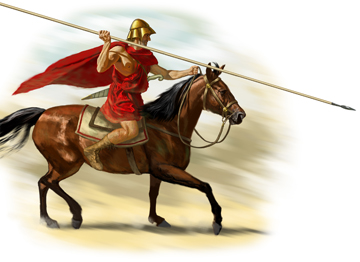
Some disadvantages came with the cavalry. Hands are occupied while riding a horse, so the rider is not able to carry as many weapons. They ran out of ammunition quickly. Also, throwing javelins from horseback decreases the efficacy of the shot. Accuracy and distance decline (Sidnell 58). The picture below shows the extensive length of the spear and how it cumbered the rider.

Their cavalry was well-used in observing and attacking when raids occurred. Unfortunately, they soon became overworked. Horses became lame and wounded, and had no time to rest in between battles (Worley 119).

The cavalry was powerful and made up for the times when others’ attempts failed. They stepped in and dominated. For example, the Chalcidians utilized their hoplites, light troops, and peltasts, and then the cavalry. They “at last caused a panic amongst them” (Strassler 137). Their strength in “riding up and charging them just as they pleased” provided victory against Athens.

Image

Greek Cavalry—This picture shows a soldier using javelins, their common weapon (Shumate). The spears limited their ability to ride because one hand was too occupied. It also limited their ability to fight because they are such long, cumbersome weapons.


Bibliography

Gaebel, Robert E. Cavalry Operations in the Ancient Greek World. University of Oklahoma Press, 2002.

Shumate, Johnny. Greek Cavalry. The Lost Treasure Chest.

Sidnell, Philip. Warhorse. New York: Hambledon Continuum, 2006. Print.

Strassler, Robert B., ed. The Landmark Thucydides: A Comprehensive Guide to the Peloponnesian War. By Thucydides. 1996. New York: Free Press. Print.

Worley, Leslie J. Hippeis. Boulder: Westview Press, 1994. Print.

Leave a comment

Filed under Uncategorized

Battle of Salamis: Greek Tactics/Organization REDONE

The Battle of Salamis

Tales From Herodotus XVI. The Battle of Salamis, 480 B.C.

Battle of Salamis

Greek Tactics/Organization 

     In the roaring waters near Salamis, the Greek fleet laid anchor, as the Persian fleet arrived and closed off the Greek retreat, keeping them in straights between Salamis and Attica.  At the same time, the Peloponnesians were building a wall to prevent the advance of the Persian army. A naval battle was soon fought between the Greek city-states and the Achaemenid Empire of Persia in September 480 BC.  As numerous ships trailed through the waters, the marking of the soon to be war was upon them as they lined up in preparation to see who would be victorious.

     As each side prepared for battle, different tactics and strategies engulfed the minds of each side. The number of ships is debated, but it is estimated that there were about 1200 Persian ships, but according to some modern historians, they reject this number and state that there may have been about 600-800 triremes. No matter what the number, the Greeks were still facing a disadvantage against the Persians due to this matter. Even though the Persians had a large numerical advantage, they still had some disadvantages as well. One of these was that they would have to attack the Greeks in the narrow straight rather than in the large, open sea because in confined spaces they could not outflank the smaller Greek force. The straights were so narrow that only half the Persian fleet could enter into it. The Persians, expecting an easy victory, were at a significant tactical advantage, outnumbering their allies.  Most of their marines carried a bow, which the Persians relied greatly on in their battles, which would most likely fail if their ship was boarded, as the bow would be negated due to the standoff range because it was not as good in hand to hand fighting.  Persians had ships with triremes being equipped with a ram at the bows, which would be used for ramming, which required skilled sailing, Persians were more likely to employ this technique.

     Led by Themistocles, the Greeks sailed there estimated 300 plus ships, (Herodotus reports that there were around 378 triremes) which were faster than the Persians, to battle. Being outnumbered by almost 3:1, the Greeks had the plan to counter this by fighting the Persians in a narrow space, as it would be favorable to the Greeks, as the leader, Themistocles, persuaded them to stay and fight the Persians in the narrows. Another tactic sought out by Themistocles was sending out a trusted slave to send a message to the Persian King that stated, “that the Greeks were about to flee.” Once the slave delivered the message, he returned telling the Greeks that the king had fallen for the trick and had ordered his captains to spend the night blocking all the escape routes that they had. As the Persians stood the whole at their ores, the Greeks slept soundly.

       Confident of their victory, the Persian king Xerxes, scoured up a hill to find a vantage point where he could watch the battle take place and by morning, all the Persians ships were in place. Some of the Persian ships blocked the Western straight while others packed the narrow waters of Salamis. This is where they waited for movement from the Greek fleet, but nothing came. Stunned, Xerxes was led to asking advice from his commanders who all told the king to attack, but one voice differed from the others. This voice came from the only woman commander, Queen Artemisia. Herodotus says, “Xerxes held a council with the Persian fleet at Phalerum.”  During this time, the Queen Artemisia tried to convince Xerxes to wait until the allies surrendered; adding that attacking was an unnecessary risk. Xeroxes ignored her advice.

        In the meanwhile, this was all beneficial for the Greeks, as they had a perfect night’s sleep and were prepared for battle. As another one of the Greeks tactics, the wind was now blowing south as they had hoped for, which began pushing all the Persian boats closer and closer to Themistocles. Finally, the Greek ships began to execute their well thought out plan. The Greeks felt confident knowing that the Persians would be exhausted and worn out after patrolling all night. Quickly the Persians realized this horrible mistake, the Greeks were nowhere close to fleeing, a battle was about to take place.

            The oarsman pulled and push like a powerful engine as they headed towards the Persians. Soon it all began as a Greek ship rammed a Persian ship, sending bodies into the waters. The maneuverable Greek ships soon brought havoc upon the Persians, as the Persians boats could not move as well. The stranded Persian ships with their exhausted men were almost like sitting ducks. Themistocles plan had worked.

          As the queen escaped, the scene over 200 Persian ships that were sunk was viewed. Many men were lost in the battle, even Xerxes brother. Xerxes left to Asia, leaving his army to carry on the battle, but he knew that when he didn’t have command of the sea, he would never control Greece. And so it was a defeat for the Persians.


Works Cited

Elayi, Josette. The Role of the Phoenician Kings at the Battle of Salamis (480 B.C.E.). Vol. 126. Paris: Journal of the American Oriental Society, 2006. Scholarly Journal.

Gabriel, Richard A. Battle of Salamis. Vol. 26. Military History, 2009. 28 January 2014. <http://web.a.ebscohost.com.hal.weber.edu/&gt;.

Rainey, William. Death of the Persian admiral at Salamis. The Stapleton Collection / The Bridgeman Art Library. Plutarch’s Lives for Boys and Girls’,. n.d. Colour Lithograph.PICTURE.

Rawlinson, George. Herodotus: The History. Vol. 4. New York Appleman & Company, 1885. Print.

Waterfield, Robin. Herodotus:The Histories. 2008. Book.

Wood, Adrian K. Warships of the World. 2012. Book.


Leave a comment

Filed under Uncategorized

Piece 60

My piece of the Bayeux tapestry at first glance doesn’t look like a very important piece.  It is just men on horses followed by a few archers.  But after studying this section of the Bayeux tapestry, I learned that it’s contents were actually a very important part of the story.

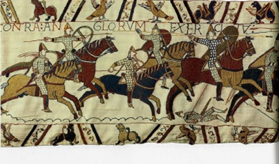
This piece is of the Norman soldiers charging the English.  The archers behind them are providing cover for the men charging on horses, archers usually were the last in the army.   The archers wore much less armor than the cavalry men, if any at all. One thing i noticed about the archers were that their clothes were all different colors.  They all had the same color scheme, but different items of clothing on them were different colors.   One archer is covered in full armor like the men on the horses, but the rest were armor less.  I found this odd because I am sure archers were just as likely to get hit by opposing arrows as cavalry men. Maybe they didn’t have enough armor to give to all the archers.  Spears seemed to be the weapon of choice for the warriors charging on horses.  Spears were long and could stab people easily while riding by them, they could also throw the spears to try to hit further targets.  Upon further research i found out that this piece is actually quite important, it  is important because it is a transition piece.  The horses in the pieces prior to my piece are walking and in my piece they move to a gallop. This is significant because the cavalry are increasing speed riding into battle.The caption of this plate is that the battle has begun. So even though this section of the tapestry might seem uneventful, it actually is quite the opposite, it is the start of the action.  The bottom border of my piece contains animals, but in the next piece the bottom borders are filled with dead soldiers and mangled body parts.  In the piece after, all of the dead English are seen with arrows sticking out of them, thanks to the archers in my piece most likely, this leads me to believe that in my piece they are still far away from the English. I don’t see any men dead from spears yet, so at this point there still must be some distance between the armies.

The Battle has Begun

The Battle has Begun


Some more interesting things I found out about this piece were that the lower border and upper border contain animals that are thought to be fables.  I am not sure what specific fables they are suppose to represent, because some of the animals are unidentifiable, still to this very day nobody knows what some of the animals are. The archers in piece 60 are the first Norman warriors that are seen on foot. In all the pieces before where the Normans are traveling or marching to war, all have been on horseback, pr ships. I thought this was a significant piece because it is the last piece before combat, the war starts in the section after my section.  So piece 60 is a very important piece because it is a transition piece from non violence to violence.  Transitioning is a very important aspect in art, and I think they transitioned well in this tapestry.

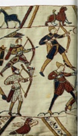
The archers ready their arrows while behind the cavalry.

The archers ready their arrows while behind the cavalry.

Work cited


“Britain’s Bayeux Tapestry.” (2000-2004): n. page. <http://www.bayeuxtapestry.org.uk/&gt;.


Hicks, Carola. The Bayeux Tapestry. London: Vintage, 2007. Print.


Wilson , David. The Bayeux Tapestry. New York, New York: Thames and Hudson, 1985. Print.

Leave a comment

Filed under Uncategorized