Monthly Archives: December 2016

On to Battle

marathonblogger2016

Blog Post 2

On to Battle

Joan of Arc was sent to battle in Orleans, the besieged city, with a full suit of armor tailored to her petite figure and a banner. The Maid’s standard had golden fleur-de-lis on a white field, the words “Jhesus Maria,” and a painted image of Christ on judgement day. She also had what is said to be Saint Catherine’s sword (that she carried and was killed by). The Maid sent for this sword from the church in the town of Sainte-Catherine-de-Fierbois, and many theologians thought it fitting she should receive assistance from Saint Catherine, the patron saint of young virgins. Joan also had the companions a military leader at the time would have: a squire, two pages, and a chaplain.

Joan of arc miniature graded.jpg

Artist’s Interpretation of Joan of Arc, 1485: Centre Historique des Archives Nationales, Paris, AE II 2490 (Wikipedia Contributors)

Instead of commencing battle immediately upon her arrival, the Maid, along with food and other provisions, snuck through the English blockade. The Orleanais, having seen the Maid, attacked the one English fortification, the bastille of the Saint-Loup so Joan could make her way through. Over the next few days, she began to familiarize herself with the terrain and strategies employed there. The Bastard of Orleans, the town’s commander, rode to Blois to rally Joan’s soldiers to come to Orleans to fight. When they returned, battle begun.

The Maid’s forces first attacked the bastille of Saint-Loup and burned it. Joan did not fight but carried her banner to embolden her men. With the Saint-Loup in French hands, the Maid and her troops were able to cross the river to attack the bastille of Saint-Jean-le-Blanc. The English soldiers that had been protecting that fortification fled to another: the bastille of Augustins and the Tourelles. These areas were “the key to the town’s safety” (Castor 109). The Maid led a charge to the bastille and forced her enemies back. By the end of the day, and after much bloodshed, the bastille of Augustins was under French control.

The English in desperation fought with their lives to protect the Tourelles as well as their honor, position, and the hope that God was still on their side. The French felt inspired because it seemed God had finally sided with the Armagnacs. Battle that day was still exhausting, and almost stopped when the Maid had been struck by an arrow between her neck and her shoulder, but she refused to quit and raised her standard. Her men became reenergized and fought with renewed vigor. The Englishmen panicked and within a few hours lost the Tourelles. The remaining English force retreated the next day. Joan had freed Orleans in just four days of fighting!

The Maid then rode to Chinon to see the dauphin and request more supplies and money. She also insisted he go to Reims to be crowned and that she would lead him there. It seemed an ambitious statement since Reims is farther away from Orleans than Paris, but Charles agreed.

She and the prince had to wait a month until she received the troops she needed, but when they came, they cleared the route of English forces (in cities such as Jargeau, Patay, and Troyes) and reached the city July 16, 1429.

When the royal procession entered Reims, the townspeople cried ,“Noel!” The archbishop reclaimed his seat which had been in Burgundian control for years. The next day, July 17, the dauphin was crowned King Charles VII, forty-nine years after his father’s coronation. The Maid had fulfilled her mission to restore the prince to the throne, but her battles were not yet over. She would not rest until the war was over and the king of England and the duke of Burgundy honored Charles as king of France.

Sources:

Castor, Helen. “Like an Angel from God.” Joan of Arc: A History. New York, NY: Harper, 2015. 100-127. Print.

Wikipedia contributors. “Joan of Arc.” Wikipedia, The Free Encyclopedia. Wikipedia, The Free Encyclopedia, 19 Nov. 2016. Web. 15 Dec. 2016.

Yeatts, Tabatha. Joan of Arc: Heavenly Warrior. New York: Sterling, 2009. Print.

Leave a comment

Filed under Uncategorized

Joan of Arc and Her Mission

marathonblogger2016

Blog Post 1

Joan of Arc and Her Mission

Joan of Arc (d’Arc) was born to Jacques d’Arc and Isabelle Romee in 1412 in Domremy, an Armagnac town in France. Her family, along with the rest of the country, was Catholic, and her mother was determined to raise Joan to be devout. Isabelle once described her daughter as pious and said that “Because the people suffered so much, she had a great compassion for them in her heart and despite her youth she would fast and pray for them with great devotion and fervor.”

France, before, during, and after Joan of Arc’s time was caught up in the Hundred Years’ War between the English, the French, and the Burgundians, a Vandal group that allied with the English forces. When Joan was eight years old, French King Charles VI and his wife Isabeau made a treaty with the English King, Henry V, that their daughter, Princess Catherine, would marry Henry V and he and his future son would rule France once King Charles VI died (instead of their son Charles VII). King Henry V died before King Charles VI, and Henry’s son was only an infant. Charles VII couldn’t fully claim the throne because of the Treaty of Troyes, so he and Henry VI were both named king. The prophecy had started to come true: a woman had lost France, and now a maiden had to save it.

In 1425 at thirteen years old, Joan started to hear voices and receive revelations from God. She associated the voices with the Archangel Michael and Saints Margaret and Catherine. The Archangel Michael originally told her to behave well and go to church (perhaps so she’d be prepared and pure for more heavenly visitations). Eventually her voices told her that she needed to help the dauphin (prince) Charles become king of France and unite the land. She felt overwhelmed being so young and untrained in any battle techniques, but she knew what she had to do to please her God.

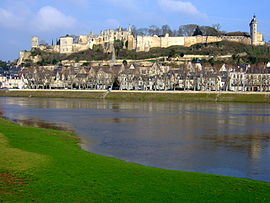
Her first step was to journey to Vaucouleurs, another Armagnac town, to visit Robert de Baudricourt who could send her to see the dauphin. She, being a woman, had to assemble an entourage to travel to Vaucouleurs, without the help of her father. When she got there, de Baudricourt was not convinced by her story and sent her away. But Joan was persistent. Within the year, she won his support (perhaps because her influence carried more weight at this time), and he sent her to Chinon to see the prince. She was given a horse and men’s clothes to wear including a tunic, doublet, and hose and breeches. With her hair cut short, she was quite a sight in Chinon.

The Château de Chinon, and the Vienne river

The Chateau de Chinon, and the Vienne River (Wikipedia Contributors)

The royal court was wary of Joan, since the people couldn’t know beforehand if she were from God or Satan. If she were Satan’s messenger or a false prophet and Prince Charles sent her to war on France’s behalf, it would lead to disaster and ruin his reputation. However, the court was also inspired and hopeful that she could finally put the rightful heir on the throne. It would’ve been equally damning to not listen to a true prophet of God who could finally put an end to their misery.

To assess Joan’s integrity, two ladies of the court were ordered to examine Joan’s physical body. If they found her a virgin, which they did, it would be a sign that she was pure and undefiled by the devil. Next, her spiritual integrity was put to the test. She was interrogated about her faith and habits. Several more inquiries by clerics and theologians in Poitiers were required before any other course of action were decided; however, the theologians agreed to test her by sending her to the besieged Orleans to test her claims. If her attack were successful, it would provide strong evidence that she had spoken right. If she failed, the French would have nothing to lose: Orleans would still be under siege (as it currently was) and it would look well on the clerics for having tested her.

Joan began to be perceived differently at this point. She was called the Maid, and she began to own that persona herself. When she had a wider audience listening to her message, she claimed the title without hesitation. She was sent back to the dauphin in Chinon (whom she had to find amongst others who claimed to be king) and then on to Orleans, Saint Catherine’s sword in hand.

Sources:

Castor, Helen. “The Maid.” Joan of Arc: A History. New York, NY: Harper, 2015. 89-100. Print.

Wikipedia contributors. “Chinon.” Wikipedia, The Free Encyclopedia. Wikipedia, The Free Encyclopedia, 13 Aug. 2016. Web. 15 Dec. 2016.

Yeatts, Tabatha. Joan of Arc: Heavenly Warrior. New York: Sterling, 2009. Print.

Leave a comment

Filed under Uncategorized

Grooming and Care of War Horses in the Middle Ages

Introduction

It is quite possible that since the beginning of time, no animal has had a greater or more lasting influence on the human race than the horse. From travel, to entertainment, to agriculture, to warfare, and almost anything in between, the horse has played an essential role in society and has greatly impacted the way things are done in a variety of aspects. Perhaps one of the most iconic images of horses that we have today is that of a fully armored knight riding into battle on his noble steed. The remainder of this blog will focus on how these warhorses in the medieval period were cared for. It will also depict a representation of the wardrobe of a medieval warhorse in a jousting competition which I created in conjunction with my final project. Enjoy.


General Info

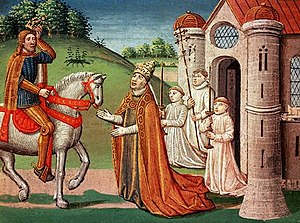
The general name for the types of horses in the medieval period was Charger. They were then divided into three main sub groups: Coursers, which were the swiftest and most popular in combat, Destriers which were the largest and most widely used in jousting, and Rounceys which were typically farm and pack horses.

                                              (Antoine Vérard)

A typical horse in this time period would have stood at about 14-16 hands tall and  weighed about 1,300- 1,500 pounds.(Bachrach)

Diet

The horse’s diet was essential to it’s overall health and it’s performance in battle. Without proper nutrition, a horse would put his rider at a significant disadvantage on the battlefield and ultimately put his life in peril.

A horse’s diet would’ve consisted mostly of the following:

  •  8-12 gallons of water per day.
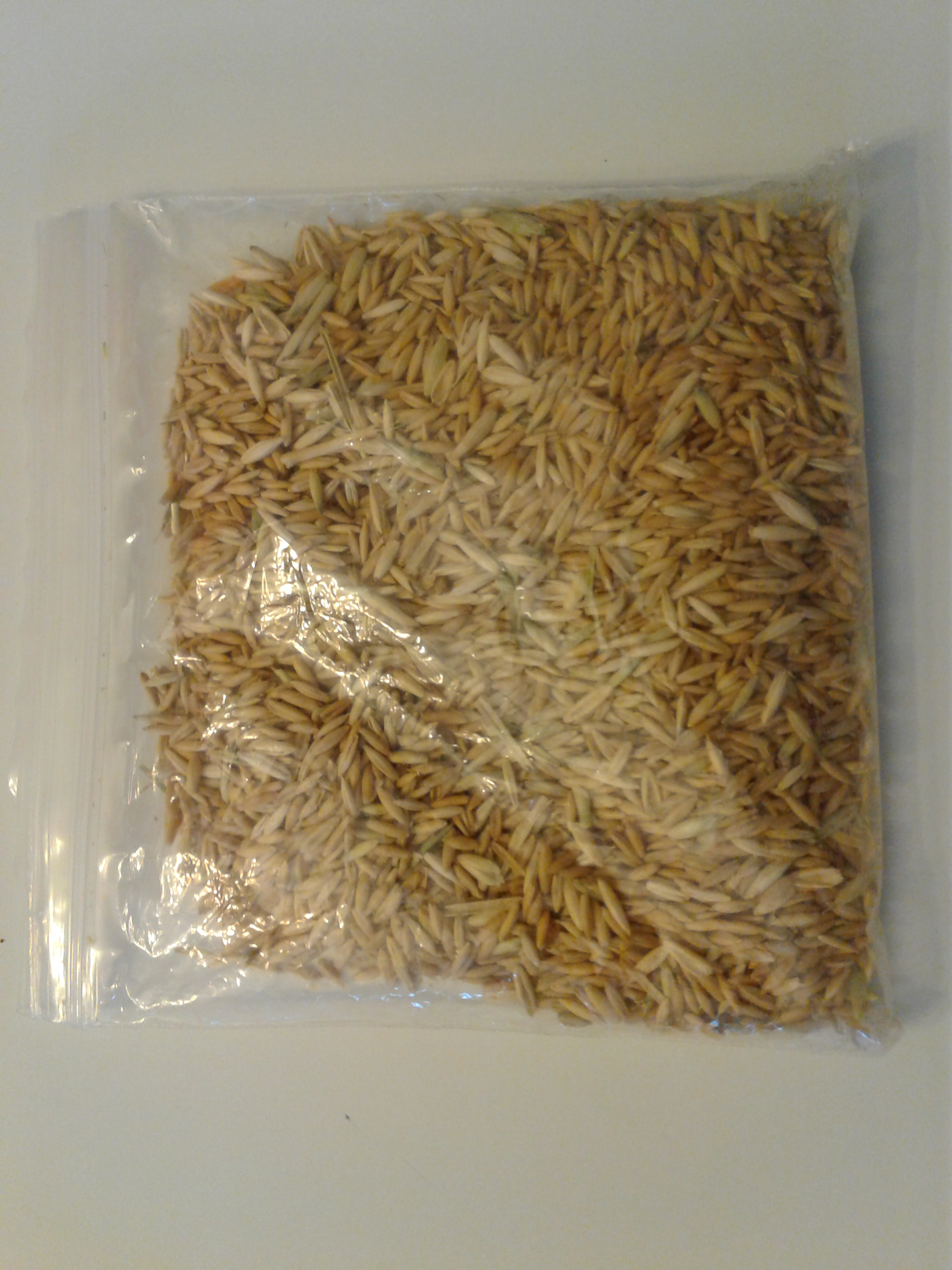
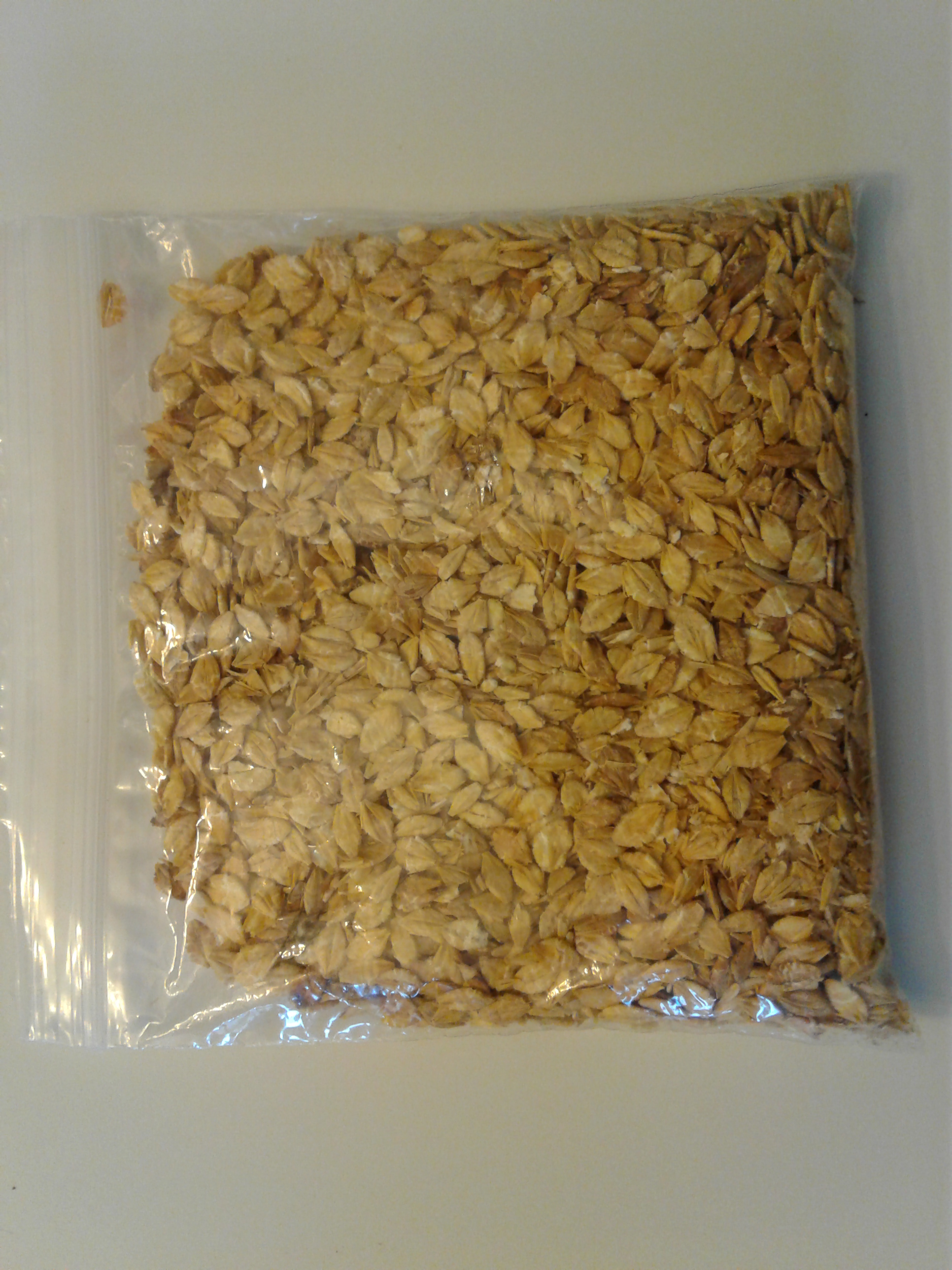
  • Grain:  12 pounds daily of what was usually barley and sometimes oats.
20161215_1333231

Oats

20161215_1333071

Barley

  • Hay: 25 pounds daily which could be substituted for grass, but with an increase to 40 pounds daily.
20161215_1332521

Hay

20161215_1333151

Grass

With all that being said, all that food has to go somewhere after it’s been consumed. An average War Horse weighing 1,500 pounds would produce 65-70 lbs of feces and 8-8.5 gallons of urine  on a daily basis. The job of caring for these essential war animals was tedious and time consuming, and required those whose task it was to do so to accomplish multiple tasks on a daily basis.( Hyland)

Example: At Dives-sur-Mer, where William of Normandy was camped with about 2,000 to 3,000 war horses for at least a month, a mountain of approximately 3,600,000 to 5,400,000 lb. of horse feces and a river of from 480,000 to 720,000 gallons of horse urine was created and had to be properly disposed of.  (Bachrach)

Hoofcare

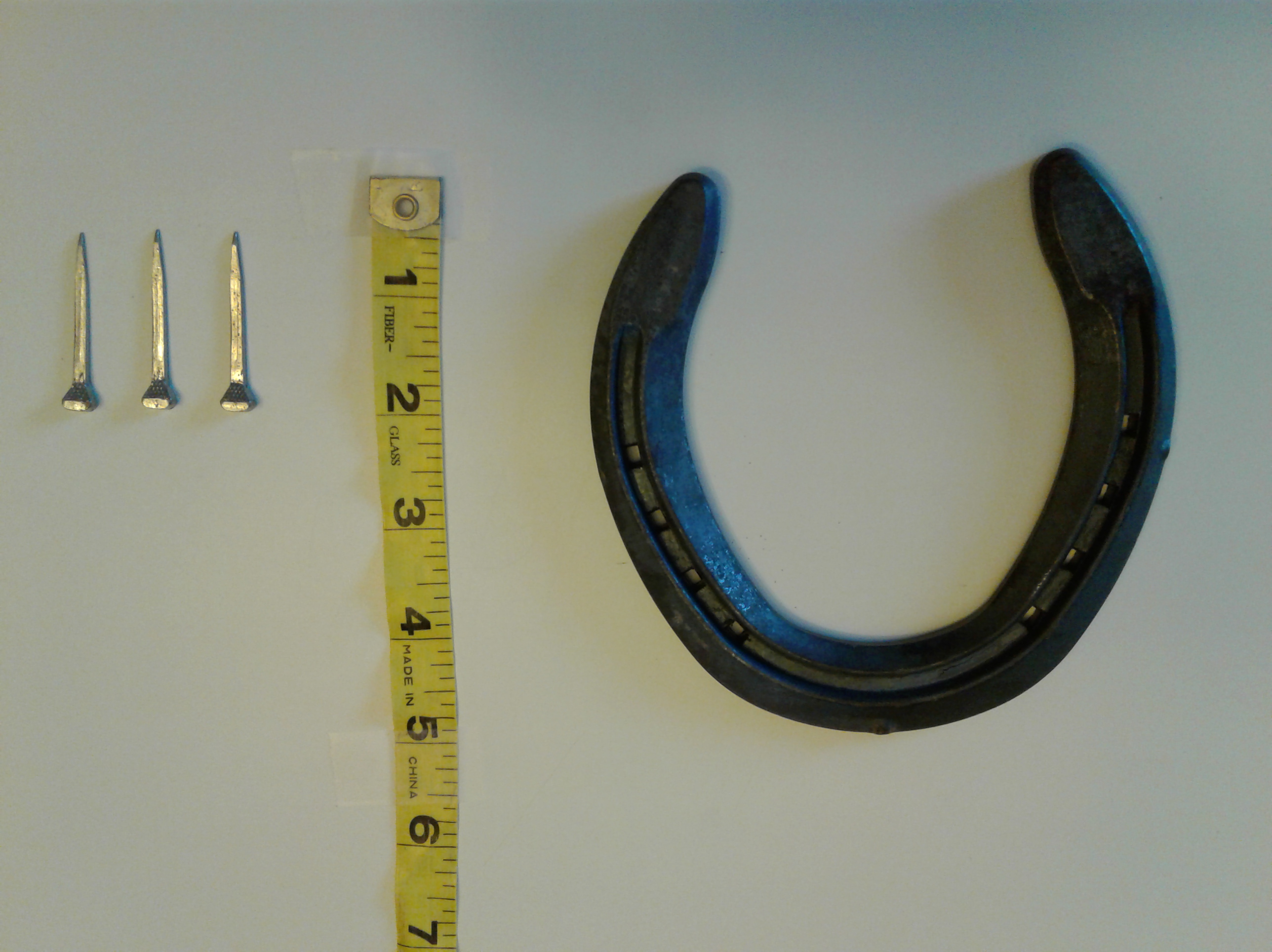
Bronze horseshoes with nail holes became common in Europe around the year 1,000 CE. Later on they were made of iron and were widely available by the 13th century.  The most common design was a scalloped outer rim and six to eight nail holes. Horseshoes were essential to a  warhorses health and well being because if their feet were not properly protected and taken care of then they wouldn’t be able to perform in battle which poses a major threat to the knight riding them. (Cohen)

20161215_1329571

Approximate representation of a shoe and nails used by a Destrier.


20161215_1330581

Approximate representation of a shoe and nails used by a Courser.


Each horse needed to be shod approximately once a month on average depending on how far they traveled or how many battles they fought in. The process of forging shoes and nails necessary to supply an army with approximately 2,000- 3,000 war horses would’ve required the labor of about 10 blacksmiths working for 10 hours each day. (Bachrach)

Jousting

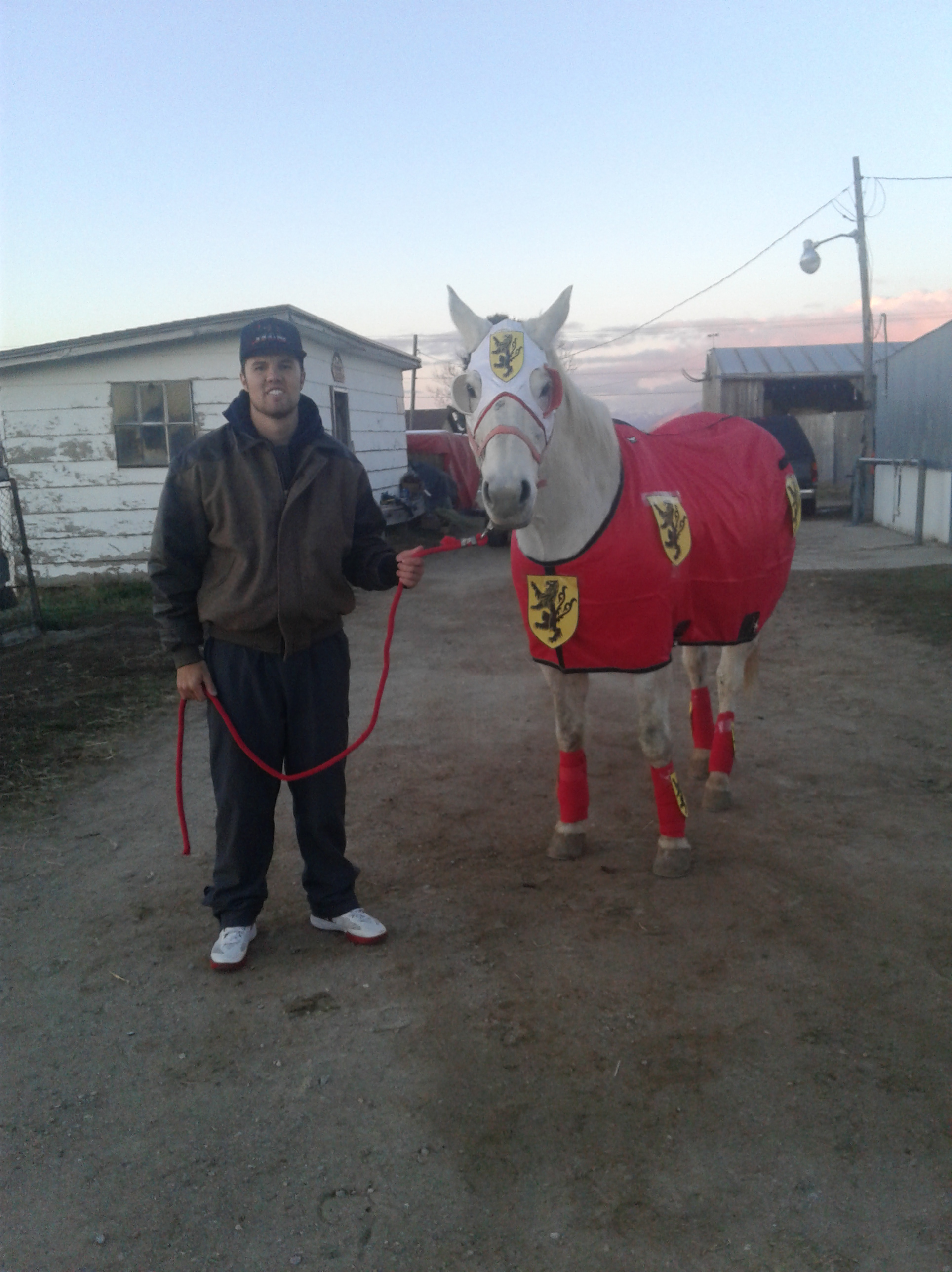
While participating in a jousting tournament, the horses were cared for by their grooms in tents.They wore caparisons, a type of ornamental cloth featuring the owner’s crest and heraldic signs. Competing horses had their heads protected by a chanfron, a leather,( and eventually iron) type of headgear used for protection from lance blows. Many times larger, “Destriers” were used for jousting.

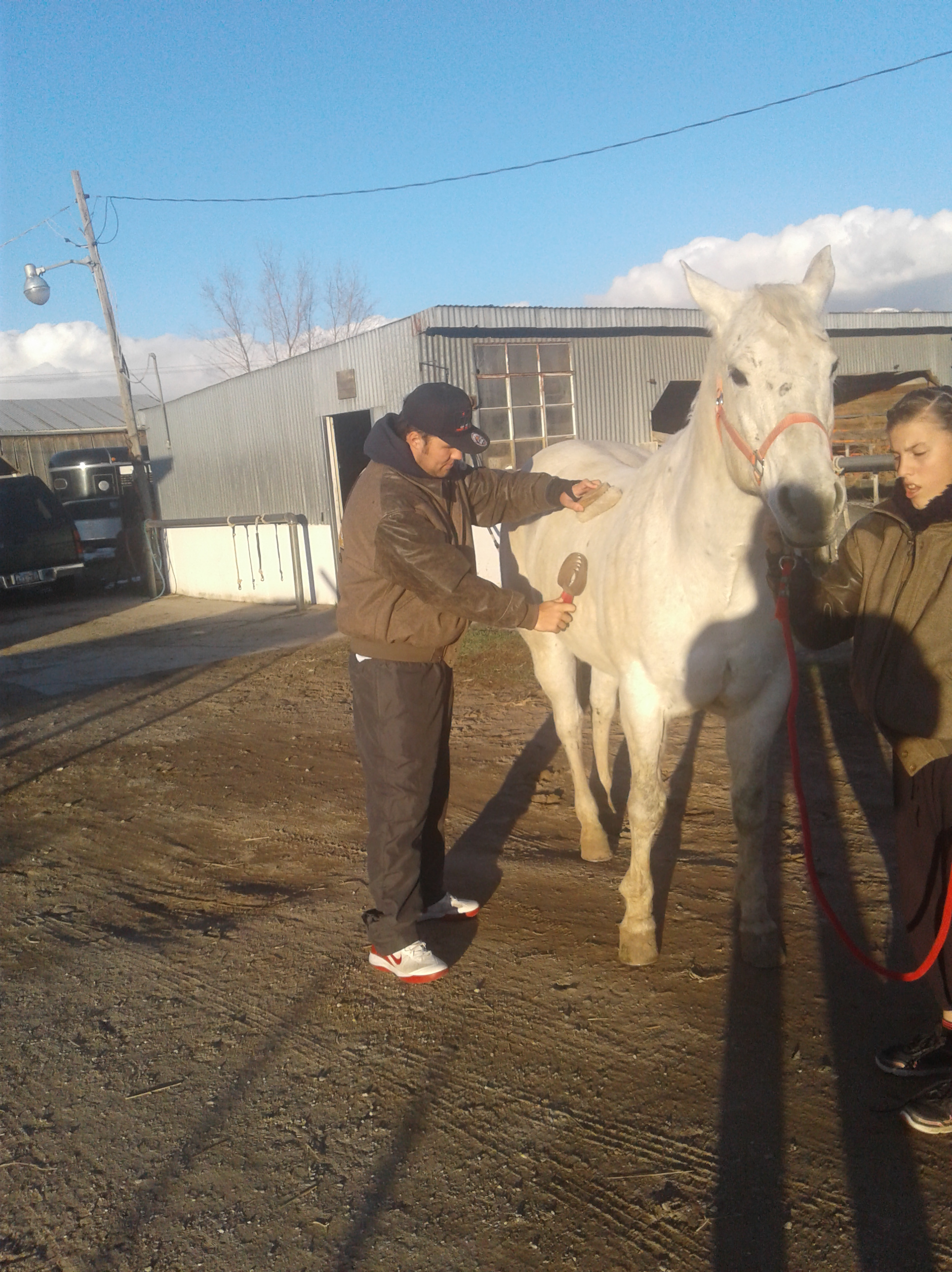
Here we arrive at the main part of my project. What you’ll see is a representation of the uniform typically worn by horses during jousting competitions. This idea came to me because of my love for horses. I grew up around them and we currently have twelve so I was excited to have a chance to use one of my favorite horses for my final project

.20161207_1613091

20161207_1617171

20161207_1618321

20161207_1632331

20161207_1656011

The Final Product 🙂

Here is a video of my final Project.

And here is some cool jousting footage etc. that I captured at The Excalibur in Las Vegas while there on vacation recently.

Armor

It was oftentimes referred to as barding.

  • Some important pieces were:
  1. Chanfron to protect the head.
  2. Crinet to protect the neck.
  3. Peytral to protect the chest.
  4. Crupper to protect the hindquarters.

In total the armor weighed about 50-70 pounds.


(Kunz Lochner)


Works Cited

Bachrach, Bernard S. Caballus et Caballarius in Medieval Warfare. Web. 1988. http://www.reitlehre.de/Caballus%20et%20Caballarius%20in%20Medieval%20Warfare.htm Accessed 9 December 2016.

Cohen, Rachel. The History of Horseshoes. Web. February 1996. http://dressagetoday.com/article/history-of-horseshoes-17802. Accessed 10 December 2016.

Hyland, Ann. The Medieval War Horse from Byzantium to the Crusades. London: Grange Books. 1994.

Image 1: Antoine Verard https://en.wikipedia.org/wiki/Horses_in_the_Middle_Ages#/media/File:Charlemagne_and_Pope_Adrian_I.jpg

Image 2:  Kunz Lochner https://en.wikipedia.org/wiki/Horses_in_the_Middle_Ages#/media/File:Royal_armoury_Stockholm_1.jpg


Leave a comment

by | December 15, 2016 · 3:43 pm

Summary

Philippides26

Blog Post 6

Final Summary


There are many other types of siege engines and siege weapons that were used in the Middle Ages.  There were mangonels, catapults, ballistas, ladders, biological warfare, psychological warfare, etc.  They could pollute or cut of the water supply to the castle or cut of the food supply.  Many times they would just cut off all access to outside the castle and wait until they ran out of food or surrendered.

The point is that there were numerous ways to attack a castle and there were numerous ways to defend one.  Each castle was a little different and would have its strengths and weaknesses.  All the castles were built on different types of terrain which would provide its own set of challenges in defending and attacking.  An attacking army would have to take all these things into account and choose the best way to attack the castle or town.

Laying siege to a castle was a game of moves and counter moves where the smarter army would win.  Whoever could out smart the other would survive.

Leave a comment

Filed under Uncategorized

Siege Mining

Philippides26

Blog Post 5

Siege Mining


Siege mining, if used correctly, was one of the most effective and successful ways to attack a castle.  All of the siege weapons that I have talked about so far consisted of destroying castle walls from above.  Mining attempted to destroy castle walls from beneath.  There were a couple different ways to mine an enemy castle.  One was to build a mine that went all the way under the castle wall and surfaced inside the castle.  This provided access to the inside but usually led to a sword battle where the defendants would have the upper hand.  The second way was to dig a tunnel below the walls and then collapse the tunnel which would collapse the walls.  The third way was called sapping, which was digging directly around the walls and collapsing them.

The least popular of the 3 types of mining that I mentioned was the first.  Digging tunnels all the way under the walls and into the castle was probably the least effective way of mining.  This usually didn’t work well because there would be a whole army waiting on the inside that would kill the miners with ease.

Sapping was a viable way to attack a castle.  Sappers would go directly up against the castle wall and begin digging down against the wall until they got before the foundation.  Then the would undermine the foundation and hopefully collapse the wall.  Under certain conditions it could be quite effective.  Sapping was most effective when used to collapse the corners of castles.  The corners were the weakest part of the wall and the easiest to collapse by sapping.  Later on castle began to be built with rounded edges to prevent sapping.  The other disadvantage of sapping was that the sapper would be completely exposed to enemy fire and could be shot before they could collapse the wall.

The most effective type of siege mining was a mixture of the first two.  They would try to collapse the walls like in sapping but would use tunnels like the first.  In this type of mining armies would employ skilled miners to build a tunnel starting at their camp and ending just below the enemy’s castle wall.  Once they would reach the wall they would dig under the foundation and replace foundation supports with wooden beams.  Then when they had replaced enough supports with wooden beams they would set fire to the the beams. They would then leave the tunnel and wait for the fire to burn the wooden beams and collapse the walls.  This was the safest and most effective type of mining because you never come into contact with the enemy until their walls are collapsed and you are ready to fight.

When collapsing the castle’s walls was successful it usually led to the surrender of the castle’s occupants.  They knew they didn’t stand a chance once their walls were taken out.  There were ways to prevent mining though.  The best way to prevent mining was counter mining.  This consisted of digging a tunnel below the other tunnel and collapsing their tunnel before they could collapse the walls.  The other way to defend against mining was in the design of the castle.  Removing sharp corners and replacing them with rounded edges strengthen the walls and made them harder to collapse by mining.  They also would add buttresses that enlarged the footprint of the wall.  This made the walls much harder to collapse as well.


Works Cited

Medieval Siege Tactics. 11 March 2005. 2016 5 December. <http://www.timeref.com/castles/castsiege.htm&gt;.

Bradbury, Jim. The Medieval Siege. Woodbridge: The Boydell Press, 1992.

Image: (http://www.midi-france.info/medievalwarfare/121347_mining.htm)


Leave a comment

Filed under Uncategorized

Trebuchets

Philippides26

Blog Post 4

Trebuchets


Trebuchets are probably my favorite type of medieval siege weapons.  They are my favorite because I think it is cool that they can throw such large things so far. These siege engines were very impressive to watch and could deal great damage to enemy castles.  The word trebuchet comes from the Old French word ‘Trebucher’, which means ‘Throw over’.  That is exactly what these weapons did.  They threw things over castle walls and into the castle.

The trebuchet is thought to have originated in China over 2000 years ago.  But the medieval trebuchet was introduced in England in the year 1216.  It was used during the Siege of Dover to attack the castle’s walls.

The medieval trebuchet was a very accurate and strong siege weapon, but it did require expert building and design skills.  A trebuchet is a combination of simple machines.  It consists of a long lever arm with a large counterweight.  The lever arm could be up to 60 feet in length.  The counter weight consisted of a large pivoting ballast box that would be filled up with sand or stones.  They put a a throwing sling at the end of the long lever arm where they would load boulders to throw.  When released, the counter weight rotates the lever arm around the axis throwing the boulder hundreds of feet through the air.  These siege engines were capable of throwing 200 pound boulders accurately up to 300 yards!

These impressive machines could launch up to 2,000 stones a day.  Even though trebuchets are generally associated with throwing boulders or stones, they were often used to launch many other things inside the castle walls.  Many times it wasn’t possible to have a supply of boulders large enough to keep the trebuchet running so attacking armies would throw whatever they had around at the time.  They were known to launch things like sharp wooden poles, fire, casks of burning tar, burning sand, dung, dead disease ridden bodies, and dead animals.  All these things were used to cause as much havoc inside the castle as possible.  They would throw dead bodies to spread disease and hopefully cause a surrender that way.

The advantages of these siege weapons usually outweighed the disadvantages.  They were usually safe to operate because they could be placed out side the attack range of enemies.  They were effective in breaking down castles and causing lots of damage.  They were very accurate.  The disadvantages of these weapons were that they required expert builders and a lot of material to build.  Once they were built they could not be moved either.  They stayed in that one place.


Works Cited

History of Trebuchets from The Middle Ages On. 25 January 2004. 2 December 2016. <http://www.medieval-castle-siege-weapons.com/history-of-trebuchets.html&gt;.

Kaufmann, J. E., H. W. Kaufman and Robert M. Jurga. The Medieval Fortress: Castles, Forts and walled Cities of the Middle Ages. Cambridge: Combined Publishing, 2001.

Trebuchet. 1 September 2009. 30 November 2016. <http://www.medieval-life-and-times.info/medieval-weapons/trebuchet.htm&gt;.

Image: http://www.freerepublic.com/focus/f-news/2189990/posts?page=42


Leave a comment

Filed under Uncategorized

Battering Rams

Philippides26

Blog Post 3

Battering Rams


Battering rams were a very common and simple way of breaching a castle wall.  These weapons came in a variety of different forms and sizes.  They could be something as simple as a fallen tree that people carried and smashed against a wall or door.  It could also be much more elaborate and have a wheeled base with a roof over head.  They were one of the most famous siege weapons used in the Middle Ages.

Battering rams had been around for centuries but were very prolific during the Middle Ages.  They were so common because they were so easy to make and use but could still effective.  Battering Rams were made out of large tree trunks.  They could simply be carried by a group of men or they could build a more complicated version with wheels and a suspended log.

The most basic form of a battering ram is one where an attacking army simply cut a large tree down and use it do knock down an enemies wall.  They don’t do anything to the log to make it easier to slam the wall or gate with but just simply carry it as is.  These types of battering rams could be useful but only if the other army didn’t have any defenses or were completely unaware of what was going on.

To make these weapons more effective and useable.  Attacking armies would build something much more elaborate like the one illustrated above. These were stronger, more effective, and provided protection from enemy defenses such as arrows.  These kind of battering rams were built on a car type of structure.  They would put them on wheels so that they could be pushed up to the wall.  They had a roof to protect them from enemy arrows and other flying or falling objects.  The fallen log would be suspended from the roof so that the men didn’t have to carry the weight of the log.  This also made them more accurate in their ramming abilities as well because they could hit the exact same part of the wall every time.  They would add a metal cap on the end of the log that was pointed so that they could do more damage to the wall. They would usually cover the structure in wet animal hides too so that it would be a little more fire resistant.

These battering rams did have their weaknesses however.  For one, they were not very effective against reinforced stone walls.  They were mainly used on wooden walls or gates which we much weaker.  They were also susceptible to fires even with animal hides.  They also required a lot of time to be spent at the wall where it was most dangerous.  It would take many repeated attempts to break down a wall or gate which meant that the men would be they ramming the wall for a long time.  So they defendants had a long time to try and find a way to stop them like by dropping a large boulder on them or something.


Works Cited

Battering Ram. 17 July 2012. 29 November 2016. <http://www.ancientfortresses.org/battering-ram.htm&gt;.

Battering Rams. 19 March 2009. 22 November 2016. <http://medieval.stormthecastle.com/armorypages/battering_rams.htm&gt;.

Bradbury, Jim. The Medieval Siege. Woodbridge: The Boydell Press, 1992.


Image:  (http://www.mortalonline.com/forums/threads/its-time-to-reign-in-these-stupid-art-decisions.104733/)


Leave a comment

Filed under Uncategorized

Siege Towers

phillipides26

Blog Post 2

Siege Towers


Siege towers were first used in the 11th century by Babylonians and Assyrians.  They were a very effective way of attacking a castle and forcing a surrender.  They were constructed in a special way to make them movable and fire resistant.  They could be built to almost any height and were used in a number of known siege attacks in the Middle Ages.

Siege towers were also called breaching towers or belfys in the Middle Ages. (1)  It was pretty much exactly what it sounds like; a large tower that was used to get assailants over the outer walls of a castle.  These giant structures were usually built on-site because they were too big to move long distances.  When an attacking army would besiege a castle they would cut off supplies to the castle and in the following weeks and months could begin to build structures like siege towers to accelerate a surrender.  The towers were built on 4 wheels so they could build them in safety away from the castle and roll them up to it when ready to attack.  These towers were usually built in levels and built to the same height as the castle wall or sometimes taller so they could have archers on a higher level than the people on the wall.  The other modification they made to these towers to make them more effective was that they covered them in fresh animal skins and drenched them in water just before attacking.  This made them resistant to fiery arrows shot from the defendants of the castle.  At the top of these towers was a gang plank that could be dropped when near the castle walls to allow the safe transfer of men from the tower to the wall.  To the right is a basic sketch of what one of these towers would look like.

It took a great amount of skill to construct these towers and the armies usually hired engineers to come construct their towers.  The engineers required the help from carpenters to shape timber and bore holes.  They hired sailors who were experienced in working with wood and could cut down trees and assemble the timbers quickly. (book 245)  It took a lot of time to construct one of these towers correctly.

These siege towers could be very effective weapons if used in the correct situation.  These towers were great for providing protection for the troops while approaching the wall.  They were a lot better than ladders because the troops could attack the top of the wall in larger groups which prevented casualties.  These towers could also be used against some of the tallest walls.

The siege towers weren’t always the best option.  For one they took a lot of time and effort to build.  They were susceptible to fire.  Their large size made them vulnerable to cannons and ballistas which could cause great damage.  They were also very slow and hard to move which made them difficult o use on hills or uneven ground.  Their last con was that they were only effective on the outer wall.  If the castle had more than one defensive walls they were useless.

Siege towers were a an effective weapon when used in the correct situations and were a great asset for many besiegers.


Works Cited

Bradbury, Jim. The Medieval Siege. Woodbridge: The Boydell Press, 1992.

Medieval Warfare. 22 January 2005. 29 November 2016. <http://www.medievalwarfare.info/#equipment&gt;.

Siege Tower. 30 November 2016. 1 December 2016. <https://en.wikipedia.org/wiki/Siege_tower&gt;.

Smileyman007. The Pros and Cons of Siege Equipment. 29 September 2006. 26 November 2016. <http://medieval2.heavengames.com/m2tw/strategy/battle/siegeequipment/siegeequipment.shtml&gt;.

Image 1: Viollet-le-Duc – This image comes from Dictionary of French Architecture from 11th to 16th Century (1856) by Eugène Viollet-le-Duc (1814-1879)


Image 2: Francis Grose – Military Antiquities Respecting a History of The English Army from Conquest to the Present Time by Francis Grose, published by I. Stockdale, London


Leave a comment

Filed under Uncategorized

Introduction

phillipides26
Blog Post 1
Introduction

Medieval Siege Warfare

Siege warfare was an important part of the Middle Ages. During this time in history there were many advancements in weapon technologies. Which in turn spurred new defensive technologies to come about. Siege warfare in the Middle Ages made a huge mark on history.
Siege warfare consists of surrounding and blockading a town, castle, or fortress in an attempt to capture it. The word siege comes from the Middle English word ‘sege’ meaning seat or blockade. Siege warfare wasn’t invented in the Middle ages but it was popularized during this time period and the Middle Ages were known for that type of warfare. For my final project I will be doing a series of blog posts about different types of siege equipment used during the Middle Ages.
During this time there were siege towers, battering rams, cats and weasels, mining, catapults, trebuchets, and many other types of weapons used to take over castles or force them to surrender. Each weapon had its own strengths and weaknesses. Depending on the type of terrain surrounding the town or castle, a variety of different siege weapons were used to attack enemy fortresses. The types of defenses that the castle had also played an important role into determining the right kind of siege weapon to use. In my blogs I will include when each weapon was most effective and the what types of defenses were effective in stopping it. The 4 main types of siege weapons that I want to focus on in my blog posts are the siege tower, battering ram, trebuchet, and mining.

Works Cited
Medieval Warfare. 30 January 2004. 12 November 2016. <http://www.medievalwarfare.info/#equipment&gt;.
Siege Warfare. 5 November 2010. 15 November 2016. <http://www.lordsandladies.org/siege-warfare.htm&gt;.
Bradbury, Jim. The Medieval Siege. Woodbridge: The Boydell Press, 1992.

Leave a comment

Filed under Uncategorized

Transition From the Rectangular Keeps

As time wore and siege machines developed, castle fortifications were forced to evolve once again in order to keep up with the evolving military technology. One important factor in the castle’s evolution away from the rectangular keeps was the crusades (Gies 27).  The Western Crusaders had, by the end of the First Crusades, “secured their presence in the Holy Land” (DeVries & Smith 234). However, their claimed lands were threatened as time wore on, and the crusaders were faced with the unenviable position of reasserting their claim “with fewer soldiers than they had in the initial conquests” (DeVries & Smith 234). There were two methodologies: negotiation with the locals and castle-building; the second proved to be more reliable (DeVries & Smith 234). It became clear that the “Crusaders needed a fortification that was larger, more quickly built, and more defensible as it was being built” (DeVries & Smith 236), so they intimidated the local “older Byzantine fortresses,” a style that is described as a castle complex or a concentric castle (DeVries & Smith 236-237).

In addition to exposing them to new forms of castle construction, the crusades exposed the crusaders to the East, which “introduced to the Western world efficient methods of siege warfare and sophisticated defensive techniques” (Lepage 72). As the crusaders marched home, they brought with them knowledge that transformed siege warfare in their own lands (Toy 90). As a result, castle planning adopted a “more scientific plan” intended to counteract these newly learned siege tactics (Toy 116). This contributed “to the full development of medieval military architecture in the 13th century and its brilliant apogee in the 14th” (Lepage 91).

However, despite the Crusaders learning these tactics in the early twelfth century, back home the transition from the rectangular keep to the circular keep took place slowly (Gies 25). After all, rectangular keeps were still being built “by Henry II in his numerous late-twelfth- and early-thirteenth-century castle-building projects” (DeVries & Smith 233). One explanation for this gradual transition lies in the hassle that the circular keeps posed to its inhabitants (Gies 25). For example, the circular interiors resulting from the circular design were perceived as being “less practical for daily life than rectangular ones” (Lepage 63). For a time, there was some investigation into constructing “keeps that were circular on the outside and square on the inside” (Gies 25). For the most part, the transitional keeps that were built tried to maintain “the advantages of both forms” (Toy 90).

However, shortly after “the third Crusade at the end of the twelfth century” builders seem to have admitted defeat and accepted the round keep, with all its advantages, as the typical structure (Toy 90). This acceptance of the circular keep was likely fueled by new developments in siege warfare.  The early thirteenth century supposedly saw the development of the trebuchet (Jones 174), which was “probably introduced during the Crusades” (Lepage 96). It seems to be difficult for historians to date the trebuchet exactly (Bradbury 259) due to the “casual” use of terms by medieval chroniclers (Bradbury 261), but for the most part “evidence from the twelfth century provides a good case for its introduction then, although one has to wait for the thirteenth century for conclusive proof” (Bradbury 260).

trebuchet1

“19th Century French Three-Quarters View Drawing of a Medieval Counterweight Trebuchet.” Dictionnaire Raissonne De L’Architectecture Francaise Du Xle Au XVe Siecle. 1854-1868. Wikimedia Commons, 15 May 2006, upload.wikimedia.org/wikipedia/en/6/63/Trebuchet1.png. Accessed 25 Nov. 2016.

The trebuchet had counterweights and was both more “powerful” and more “accurate” than any of the previous siege engines (Jones 174). This new machine definitely gave the attackers the advantage (Jones 174-175). As a structure with defense as its primary function, the castle naturally had to evolve to counteract this new threat. The design shifted because the “number of flat surfaces prone to such bombardment” had to be decreased (Jones 174). In other words, the keeps were rounded, and even the outer wall’s “square flanking towers were replaced by semi-circular or convex mural towers” (Jones 175). An example of this new style of keep can be seen in Windsor Castle. The tower did undergo renovations later, so keep in mind that it has been updated, but it is still a good example of a circular keep.
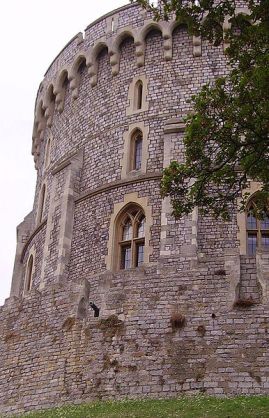
386px-windsor_round_tower_03

Giel, Immanuel. “The Round Tower in the Middle Ward, Built by Henry II and Remodeled in the 19th Century.” Wikimedia Commons, 07 Aug. 2006, commons.wikimedia.org/wiki/File:Windsor_round_tower_03.JPG. Accessed 03 Dec. 2016.

There was also a slight change in the keep’s purpose. Previously the keep had been designated as the lord’s living space, but in the newer style all “the living quarter…were now all built in the court of the inner bailey” (Toy 116). This new style of keep was still intended as a last line of defense, but now it was not necessarily the lord’s primary residence (Toy 116). It was also “smaller than those built previously but of a more powerful and scientific design” (Toy 116). Surprisingly, if a rectangular keep had already been constructed, it was that immediately abandoned (Toy 116). Instead, “one or two outer baileys were added on the line of approach” (Toy 116). This is demonstrated by additions that were later added to Dover Castle, which is depicted in the image below. You can see the square keep surrounded by outer castle complex structures. The circular towers on the outer walls over the gate (called Constable’s Gate) were definitely added later (Brindle 53).

dover-castle-from-outside-the-gate

chaoticblackcat. “Dover Castle From Outside the Gate.” 14 July 2014.

Ultimately the English rectangular keep and its place in castle architecture’s evolution can be best summarized by a quote from Joseph and Frances Gies in the first chapter of their book Life in a Medieval Castle:

Thus the castle, born in tenth-century continental Europe as a private fortress of timber and earthwork, brought to England by the Normans, converted to stone in the shell keeps and rectangular keeps of the eleventh and twelfth centuries, refined and improved by engineering knowledge from Crusading Syria, achieved its ultimate development at the end of the thirteenth century in the western wilds of the island of Britain. (Gies 31)

 Works Cited

“19th Century French Three-Quarters View Drawing of a Medieval Counterweight Trebuchet.” Dictionnaire Raisonne De L’Architecture Francaise Du Xle Au XVe Siecle. 1854-1868. Wikipedia, 15 May 2006. upload.wikimedia.org/wikipedia/en/6/63/Trebuchet1.png. Accessed 25 Nov. 2016.

Bradbury, Jim. “Chapter 9: Medieval Siege Weapons.” The Medieval Siege. The Boydell Press, 1992.

Brindle, Steven. Dover Castle. Edited by Katy Carter. English Heritage Guidebooks, 2012.

chaoticblackcat. “Dover Castle From Outside the Gate.” 14 July 2014.

DeVries, Kelly, and Robert Douglas Smith. “Chapter Nine: Stone Castles.” Medieval Military Technology, 2nd ed., University of Toronto Press, 2002. pp. 223-260.

Giel, Immanuel. “The Round Tower in the Middle Ward, Built by Henry II and Remodeled in the 19th Century.” Wikipedia, 07 Aug. 2006. commons.wikimedia.org/wiki/File:Windsor_round_tower_03.JPG. Accessed 03 Dec. 2016.

Gies, Joseph, and Frances Gies. “Chapter 1: The Castle Comes to England.” Life in a Medieval Castle. Perennial Library, 1974. pp. 8-31.

Jones, R.L.C. “Fortifications and Sieges in Western Europe c. 800-1450.” Medieval Warfare: A History, edited by Maurice Keen, Oxford University Press, 1999. pp. 163-185.

Lepage, Jean-Denis, G. G. “Chapter 2: The Revival of Military Architecture from the 10th to the 12th Centuries.” Castles and Fortified Cities of Medieval Europe: An Illustrated History. McFarland & Company, Inc., Publishers, 2002. pp. 28-106.

Toy, Sidney. “Chapter IX: Transitional Keeps of the Twelfth Century.” Castles: Their Construction and History. 1939. Dover Publications, Inc., 1985. pp. 90-99.

Toy, Sidney. “Chapter X: Fortifications and Buildings of the Bailey in the Eleventh and Twelfth Centuries.” Castles: Their Construction and History. 1939. Dover Publications, Inc., 1985. pp. 100-115.


Leave a comment

Filed under Uncategorized