Alexander the Great’s Army: Followers and Logistics

Image

Alexander the Great’s army was well, great. It consisted of more than 48,000 soldiers and at times grew to over 90,000 soldiers. The Macedonian Army under Alexander’s command embarked on the longest military expedition ever undertaken (Engels).The reason for alexander’s success on the longest military expedition was his careful watch over the provisions of his army. Most other armies that went the same way alexander did had many soldiers dying of starvation and dehydration. Because of Alexander, his army and their baggage train were able to stay well fed (Engels).

The actual size of Alexander’s army is hard to estimate because of the amount of followers and animals in addition to the number of troops already following Alexander. According to the ancient historians, Diodorus Siculus, Curtius, and Plutarch, Alexander had bodyguards, seers, soothsayers, physicians, poets, traders, musicians, courtesans and many, many, more followers with them on this large expedition. Because Alexander’s campaigns took him and his army so far away from their native land, the policy adopted by Philip, Alexander’s father and predecessor, to allow soldiers to return home periodically to visit their families, was abandoned. The soldiers were homesick and lonely so later; Alexander allowed his men to take wives of the captive which would keep the soldiers from missing their homeland too much and keep them on campaign. Because of this, the size of Alexander’s army grew adding thousands of followers to his many legions. The size of the army grew with each wife and eventually with each child that was born to the military families (Engels).

Works Cited

Adams, Colin E. P. “Supplying the Roman Army: “Q. Petr.” 245.” Zeitschrift für Papyrologie und Epigraphik (1995): 119-124. Web. <http://www.jstor.org/stable/20189638&gt;.

Engels, Donald W. Alexander the Great and the Logistics of the Macedonian Army. Berkeley: University of California Press, 1978. Print.

Livius.org. Alexander’s Army. n.d. Web. Feb. 2012. <http://www.livius.org/aj-al/alexander/alexander_t02.html&gt;.

Loomis, R.S. “Alexander the Great’s Velestial Journey. I-Eastern Examples.” The Burlington Magazine for Connoisseurs 32.181 (1918): 136-140. Web. <http://www.jstor.org/stable/860584&gt;.

Plutarch. Lives, Volume VII: Demosthenes and Cicero, Alexander and Caesar. Ed. Bernadotte Perrin. Trans. Bernadotte Perrin. Cambridge: Harvard University Press, 1919. Web.

Siculus, Diodorus. Library of History. Trans. C. H. Oldfather. Cambridge: Harvard University Press, 1989. Web. <http://www.perseus.tufts.edu/hopper/text?doc=Diod.+15&fromdoc=Perseus%3Atext%3A1999.01.0084&gt;.

Leave a comment

Filed under Uncategorized

Final Blog V: Usage of Biological and Chemical Weapons in Norse Mythology

The myth of Hercules and the hydra got me thinking, what other myths contains evidence of early biological and chemical warfare? What other civilization used poison arrows and other biological or chemical weapons?

The Prose Edda speaks of Baldr’s death as the result of a poisoned arrow or spear depending on which translation you read. Baldr and his mother had dreams of him his impending death which would lead to destruction of the gods according to the Völuspá (Poetic Edda). His mother Frigg, made all the objects in the world promise never to hurt Baldr except mistletoe which she thought was unimportant and nonlethal. When Loki, heard that the mistletoe was the only thing that had promised no to hurt Baldr, he fashioned a spear (later versions say arrow) and gave it to Hodr, Baldr’s blind brother. Hodr threw the spear at Baldr thinking it would just bounce off but it killed Baldr. Although mistletoe isn’t known for its deadly properties like the venom of the Hydra was, it was the only that could kill Baldr and thus becoming a biological weapon seen in Norse Mythology.

 Image

Figure 1:  Balder’s Death from being stabbed by Mistletoe:

Another story in the Poetic Edda and the Prose Edda, is the story of Loki’s imprisonment. the Gods had found out that Loki was the one who made spear out of the mistletoe which killed fair Baldr. So they took him and bound him with the entrails of his son Narfi in a cave. To punish him further they hung a poisonous serpent above him so the venom would drip onto his forehead and cause him great pain. His wife, Sigyn, held a bowl to catch the droplets of venom so Loki wouldn’t suffer but whenever the bowl became full she had to turn away to dispose of it and the venom of the snake dropped on Loki which made him “writhe[s] against it with such force that all the earth trembles: ye call that ‘earthquakes (Gylfaninnig)” Although Loki did not die from the snake’s venom, it caused him great pain.


Works Cited

Anonymous. “Völuspá.” Anonymous. The Poetic Edda. Trans. Lee M. Hollander. Texas: University of Texas Press, 1962. 1-13. Print.

Lindow, John. “The Tears of the Gods: A Note on the Death of Baldr in Scandinavian Mythology.” The Journal of English and Germanic Philology 101.2 (2002): 155-169. Web. <http://www.jstor.org/stable/27712205&gt;.

Mabie, H. W. “Norse Stories From the Eddas: How Loke Was Punished.” 2007. Heritage-History.com. Web. April 2012. <http://www.heritage-history.com/www/heritage-books.php?Dir=books&author=mabie&book=norse&story=loke&gt;.

Mayor, Adrienne. Greek Fire, Poison Arrows and Scorpion Bombs: Biological and Chemical Warfare in the Ancient World. New York: The Overlook Press, 2003.

North, Richard. Heathen Gods in Old English Literature. Cambridge: Cambridge University Press, 1997. Print.

Schnurbein, Stefanie von. “The Function of Loki in Snorri Sturluson’s Edda.” History of Religions 40.2 (2000): 109-124. Web. <http://www.jstor.org/stable/3176617&gt;.

Sturluson, Snorri. “Gylfaginning.” Sturluson, Snorri. The Prose Edda. Trans. Jesse L. Byock. London: Penguin Books, 1220; 2005. 9-79. Print.

Wikipedia. Baldr. n.d. Web. April 2012.


Leave a comment

Filed under Uncategorized

Final Blog VI: Poisoned Monarchy

Monarchy and treachery go hand in hand. If you’re a ruler you probably have at least one person that wants to kill you. And what better way to kill a ruler who has many guards watching over him than poisoning him?

Mithridates VI (114-63) was constantly afraid of being poisoned so he tested many poisons and eventually began taking small doses of poisons to build up an immunity. He eventually made a substance which he dubbed Mithridatium which supposedly was able to cure all poisons. Pliny criticized Mithridatium for its numerous ingredients and was suspicious of its abilities (XXI 24-25). Mithridates later tried to commit suicide by poisoning himself to avoid capture by Pompey, but he was unable to do so because of his resistance to the poisons (Cassius Dio).

Livy describes the usage of poisons in Rome to kill off members of their own family for personal and political gain. The emperor Nero, ruling from 54-68 AD, was widely known to have poisoned his relatives (Suetonius). Nero’s great-uncle and predecessor, Claudius was reported to have been poisoned by Nero’s mother Agrippina or her poisoner Locusta with poisonous mushrooms or according to other sources, different herbs (Tacitus).

Not only were poisons used to assassinate people, they were also used to commit suicide. Cleopatra was said to have poisoned herself after hearing of Marc Antony’s death. Many sources such as Florus and Velleius Paterculus tell of her inducing an asp or Egyptian cobra to bite her on her breast.

.Image

Figure 1: An Egyptian Asp

Works Cited

Aenid. Virgil. Trans. H. Rushton Fairclough and G.P. Goold. Cambridge: Harvard University Press, 2000. Print.

Cassius Dio. Roman History. Trans. Earnest Cary and Herbert B. Foster. London: W. Heinemann, 1970. Print.

Florus. Epitome of Roman History. Trans. E.S. Forster. Cambridge: Harvard University Press, 1929. Print.

Livy. History of Rome. Trans. B.O. Foster. London: Heinemann, 1919. Print.

Mayor, Adrienne. Greek Fire, Poison Arrows and Scorpion Bombs: Biological and Chemical Warfare in the Ancient World. New York: The Overlook Press, 2003.

—. The Poison King: The Life and Legend of Mithradates, Rome’s Deadliest Enemy. Princeton: Princeton University Press, 2009. Print.

Paterculus, Velleius. Compendium of Roman History. Trans. Frederick W. Shipley. Cambridge: Harvard University Press, 1979. Print.

Pliny the Elder. The Natural History. Ed. John Bostock and H.T. Riley. Trans. H. Rackham. Perseus, n.d.

Poisoning in the Ancient Times. n.d. Web. April 2012. <http://www.portfolio.mvm.ed.ac.uk/studentwebs/session2/group12/ancient.htm&gt;.

Suetonius. Lives of the Caesars. Ed. J.C. Rolfe. Trans. J.C. Rolfe. Harvard University Press, 1997. Print.

Tacitus. Histories. Trans. Clifford H. Moore and John Jackson. Harvard University Press, 1931.

Wikipedia. History of Poison. n.d. Web. April 2012. <http://en.wikipedia.org/wiki/History_of_poison#cite_ref-12&gt;.


Leave a comment

Filed under Uncategorized

Introduction and Background Information for Xenophon’s March Up Country

Xenophon was born in approximately 430 BCE and died approximately 354.  The son of Gryllus and Diodora was born into an aristocratic background and a family which had the means for him to study under Socrates (Xenophon, 2011).

Xenophon attached himself with a circle of privileged young men who identified themselves as followers of Socrates sometime in the 400’s.  According to Xenophon, one day he was walking down the streets of Athens and Socrates blocked his way.  Socrates began to engage in conversation with him concern where he could locate certain goods that were located in Athens.  The final question was, “And where can one get goodness?”  Xenophon looked puzzled, Socrates said, “Follow me, and find out (Waterfield, 2006)”.

This would be the beginning of Socrates’ influence on Xenophon.  He would also come to admire the values of the Spartans such as self-discipline, self-sufficiency and virtue.  These skill sets would serve him well in the following years of his life.

One day it would be Socrates that Xenophon would consult about an invitation which his Bohemian friend Proxenus had extended to him to accompany a group of mercenaries who were about to enter the service of Cyrus, the Persian satrap (govener) of Asia Minor.  Xenophon was told that they needed to “quail the revolt by the Piasidians,” who were an indigenous people who were protesting against Persian rule (Prevas, 2002).

This story begins in book one of Xenophon. He begins with telling the story of the two sons of Dareios and Parysatis.  Dareios becomes ill and expected to die, and he wants his sons to both be present.  The elder son, Artaxerxers, is there, but Cyros had to be sent for from the province where he was governor.  When he arrives he with is in the company of his friend Tissaphernes and 300 men-at-arms (Xenophon, 1964).

When King Dareios dies, his friend Tissaphernes turns against him and informs his brother who is about to become king that Cyros is plotting to against him.  Artaxerxers believes Tissaphernes and orders that Cyros be seized and put to death.  But, their mother begged for his life and sent Cyros back to his providence.  Cyros knows that his mother is behind him because he is her favorite. He also vows never to be under the power of his brother, now the king of Persia, again (Xenophon, 1964). This would be the beginning of the war that Xenophon would eventually write about as The March Up Country.  His accounts of this event would come to be known as the Anabasis which means an expedition or a going or marching up especially in the millitary.

Works Cited

Xenophon. (2006). Retrieved from Encyclopedia.com: http://commons.wikimedia.org/wiki/File:Xenophon.jpg

Xenophon. (2011). Retrieved from The Columbia Encyclopedia of World Biography 6th ed..: http://www.encyclopedia.com/doc/1G2-3404706983.html

Prevas, J. (2002). Xenophon’s march: into the lair of the Persian lion. Cambridge: Da Capo Press.

Waterfield, R. (2006). Xenophone’s retreat, Greece, Persia and the end of the golden age. Cambridge: Havard University Press.

Xenophon. (1964). The march up country (1 ed.). (W. H. Rouse, Trans.) Ann Arbor: University of Michigan Press.

Leave a comment

Filed under Uncategorized

The Gathering of the Troops

Xenophon was a follower and a student of Socrates.  So when his friend Proxenus had extended the invitation for him to join a group of mercenaries, which would be under the direction Cyrus, with a mission to “quail the revolt by the Piasidians” he consulted his mentor and friend Socrates concerning his decision (Prevas, 2002).  Socrates referred him to the divinely inspired Delphic oracle.  However, when Xenophon visited the oracle he did not inquire if he should go or not.  He asked which gods he should pray to and does sacrifice, so that he could best accomplish the mission.  When he returned and told his mentor what he had done, Socrates chastised him for being so disingenuous (Xenophon, 2012).

Xenophon had already made his mind up to go on the expedition.  According to Xenophon, this is the way that Cyrus went about gathering up his corps. “He instructed every officer in charge of a garrison in one of the cities of his providence to hire as many Peloponnesian troops as he could of the highest possible caliber, on the pretext that Tissaphernes had designs on the cities, because the Ionian cities had been given to him by the king (Xenophon, 2009).”

Tissaphenes discovered what was going on and had some of the men put to death, while others were exiled for seceding to Cyrus.  Miletus was the exception because he was the on the warned Tissaphenes about the people who were seceding to Cyrus. The exiles were rounded up and were assembled into an army which over took Miletus.  Then Cyrus sent a message to his brother the king and his mother that said that these cities should be given to him instead of Tissaphernes.  Cyrus’ mother supported him and the king granted the cities to him.  Cyrus continued to send money which he collected from the cities to the king in an effort to deceive him, so he would not be suspicious about the situation.  At this point the armies still did not know about what Cyrus intended to do. He would wait until he called them to Asia Minor.  However it is likely that the most senior commanders such as Clearchus, Xenias and Cheirisophus knew that Cyrus really intended to go against his brother the king (Waterfield, 2006).

Cyrus also applied to Sparta for aid when he began to assemble his troops for an attack on his brother.  His request was granted and admiral Samimus was ordered to render assistance.  A Spartan fleet, of 35 ships sailed, with Chirisophus and seven or eight hundred hoplites on board sailed to co-operate with Cyrus on the coast of Cilicia. Cyrus made every effort to conceal the report that Chrisophus would be in charge of the Spartans (Booner, 1915).  This demonstrates the lengths that Cyrus went to be sure that no one discovered his real intent to over through his brother. Below is an image of a hoplite in his armor (Ancient Greece, 2006).

Cyrus continued to assemble his army and when the time seemed right for the march up country, the excuse he gave was that he wanted to drive the Pisidians out of the territory once and for all. At this point he assigned the various troops to their commanders.  When all of this came to the attention of Tissaphernes, it struck him as too extensive for a campaign.  So, he traveled to the king as quickly as he could, and when the king heard from Tissaphernes about the size of Cyrus’ army he began to prepare to meet him (Xenophon, 2009).

Works Cited

Ancient Greece. (2006, Nov 18). Retrieved from http://www.wikipedia.com: http://en.wikipedia.org/wiki/File:Ancient_Greece_hoplite_with_his_hoplon_and_dory.jpg

Xenophon. (2012, March 30). Retrieved April 9, 2012, from http://www.wikpedica.com: http://en.wikipedia.org/wiki/Xenophon

Booner, R. (1915, Feb). Xenophon’s comrads in arms. The classical journal, 10(5), 195-205. Retrieved April 23, 2012, from http://www.jstor.org/stable/3287579

Prevas, J. (2002). Xenophon’s march: into the l.air of the Persian lion. Cambridge: Da Capo Press.

Waterfield, R. (2006). Xenophone’s retreat, Greece, Persia and the end of the golden age. Cambridge: Havard University Press.

Xenophon. (2009). The expedition of cyrus (2 ed.). (R. Waterfield, Trans.) New York: Oxford University Press.

Leave a comment

Filed under Uncategorized

Aftermath

Figure 1. Charlemagne finds Roland dead. Wikipedia contributors. "The Song of Roland." Wikipedia, The Free Encyclopedia. Wikipedia, The Free Encyclopedia, 23 Apr. 2012. Web. 23 Apr. 2012.

In The Song of Roland, after the battle ends several important things occur. Charlemagne has his men completely destroy Saragossa and its art and religious iconography (The Song of Roland 109). Not only the traitor Ganaleon but also, because the poem was written in an honor/shame society, thirty of his relatives are put to death (The Song of Roland 118). Bramimunde, the wife of the Saracen King, is baptised and renamed Julianne (The Song of Roland 119). The reader is made to feel that France is safe and that positive things are going to be happening for Charlemagne. Finally, and most importantly, however, Charlemagne is visited by the Angel Gabriel who instructs him to “summon all the force of your Empire and enter the land of Bire by the force of arms, and rescue King Vivien, for the pagans have laid siege to him in the city of Imphe, and the Christians there are pleading and crying out for you” (The Song of Roland 119). Just after losing a large force in Roncesvalles, Charlemagne is called on another campaign. The 200 year old Charlemagne replies, “my life is a burden!” and weeps after hearing this (The Song of Roland 119).

After the actual Battle of Roncesvalles, very little happened, or rather, we know about very little that happened. The battle was “not even mentioned in the Royal Annals, and for shame the whole Spanish campaign was omitted, but everyone knew what had happened” (Heer 108). We do know, however, that Charlemagne was “prevented by events in Saxony from seeking revenge” and distracted at home with a famine “partly caused by the absence of so many on campaign during the harvest” (Heer 114). Charlemagne spent the next 25 years in Saxony before the campaign was finished (Lewis 262). Since “Charlemange was engaged in almost constant battle throughout his reign” nothing more ever seems to have come of the situation (Wikipedia contributors). The Song of Roland has, however, stayed popular despite the historical obscurity of its origins.


Works Cited

Heer, Friedrich. Charlemagne and his World. New York: Macmillian Publishing Co., 1975. Print.

Lewis, David Levering. God’s Crucible: Islam and the Making of Europe, 570 – 1215. New York: W.W. Norton & Co. Inc., 2008. Print.

The Song of Roland. Trans. W.S. Merwin. New York: Modern Library, 2001. Print.

Wikipedia contributors. “Charlemagne.” Wikipedia, The Free Encyclopedia. Wikipedia, The Free Encyclopedia, 9 Apr. 2012. Web. 23 Apr. 2012.

Leave a comment

Filed under Uncategorized

Women and Warfare

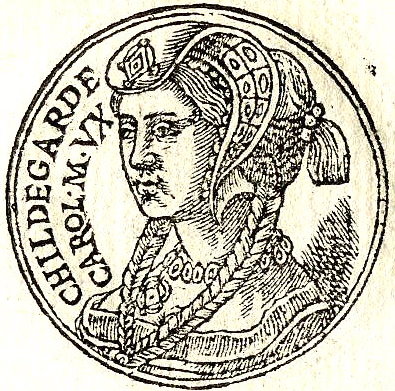
Figure 1. Hildegard, wife of Charlemagne. Demonstrating women's artistocratic dress at the time. Wikipedia contributors. "Hildegard of Vinzgouw." Wikipedia, The Free Encyclopedia. Wikipedia, The Free Encyclopedia, 17 Jan. 2012. Web. 23 Apr. 2012.

Two women play small, but significant roles in The Song of Roland: Aude, Oliver’s sister and Roland’s fiance, and Bramimunde, the wife of the Saracen King. Aude is mentioned on only a few occasions. We first hear her mentioned by Oliver when he is angry with Roland for his brash behavior. In stanza CXXX he criticizes Roland and says that he will not be able to marry her if he continues (The Song of Roland 53). Though Aude is not physically present, her role here is significant. In fact, “it is not an exaggeration, within this context, to equate Aude with royal booty, one of the better prizes of conquest” (Harrison 673). She is as much a part of the glory of war and honorable behavior as anything obtained in battle. After Roland’s death, Charlemagne promises her his son Louis as a husband to make up for her loss, but she again stands as a symbol of Roland’s glory by “honorably” joining him in death.

Bramimunde is also only briefly mentioned, but when she is, her character tends to anticipate  the eventual downfall of the Saracens to the Christians. After the Saracens have been conquered, she returns to France with Charlemagne and becomes a Christian. It is interesting to note that at the end of the poem, “The bishops agree and hand her over to female sponsors who then perform the actual baptism, giving her the name Juliana…the poet is conscious that Bramimunde is a woman, and the ritual observed is appropriate for a nun, not a male convert” (Harrison 677). Like Aude, she seems to come home as a symbol of conquest, both for the Charlemagne and the Christian cause.

There is, unfortunately, no information available about the actual roles played by women during the Battle of Roncesvalles. Their presence within the text does, however, tell us some significant things about the expected and ideal roles of women during the time that the poem was written. For example, “Aude…elects to die rather than contemplate life without Roland – not from romantic regret, however, but in fidelity to a masculine ideal of feminine virtue” (Lewis 260). Just as Roland typifies the ideal of the honorable male, Aude typifies the honorable female. She is totally devoted to her cause, Roland, to the point of giving up her life just as he is totally devoted to Charlemagne. This ideal seems to have been widespread in honor/shame societies as a similar practice called Sati, where a woman would throw herself on her husband’s funeral pyre, was known across India by the 10th century.  Bramimunde exemplifies almost the same ideal of feminine virtue by converting to Christianity at the end of the poem and joining a strict religious order after the death of her husband (The Song of Roland 119).


Works Cited

Harrison, Ann Tukey. “Aude and Bramimunde: Their Importance in the Canson de Roland.” The French Review 54.5 (1981): 672-679. Web.

Lewis, David Levering. God’s Crucible: Islam and the Making of Europe, 570 – 1215. New York: W.W. Norton & Co. Inc., 2008. Print.

The Song of Roland. Trans. W.S. Merwin. New York: Modern Library, 2001. Print.

Wikipedia contributors. “Sati (practice).” Wikipedia, The Free Encyclopedia. Wikipedia, The Free Encyclopedia, 13 Apr. 2012. Web. 23 Apr. 2012.

Leave a comment

Filed under Uncategorized

Honor and Shame Societies

Figure 1. Noble battle. Wikipedia contributors. "The Song of Roland." Wikipedia, The Free Encyclopedia. Wikipedia, The Free Encyclopedia, 23 Apr. 2012. Web. 23 Apr. 2012.

Status is incredibly important in honor and shame societies, and that is clearly reflected throughout The Song of Roland. Though the actual Roland who participated in the Battle of Roncesvalles was the governor of the Brenton March, a fairly important position, his status is further elevated within the poem because the author chooses to make him the nephew of Charlemagne (Wikipedia contributors, “Roland”). This noble lineage gives him a distinct place among his very honorable peers and makes him the clear choice for the main hero of the piece.

Interestingly, but not surprisingly, this stratification among the noble is not only reflected in the lineages and respective social statuses of the French nobility. The same criteria apply to the enemies that each of the twelve peers face. In stanza LXIX, the nephew of King Marsiliun asks to face off against Roland, the nephew of Charlemagne (The Song of Roland 29). In LXX, he asks his uncle to select twelve barons to face the twelve peers in Roland’s entourage, again, providing a perfectly equal match (The Song of Roland 29). Interestingly, though many of the Saracens are described as being powerful and well-bred but heathen enemies, some of the descriptions are also very positive. In stanza LXXII there is “an Emir from Balasquez whose body is noble and handsome, and whose face is bold and open…renowned for his courage…if only he were a Christian he would be an excellent knight” (The Song of Roland 30). Descriptions such as these again emphasize the worthiness and status of the opponents that the French will face, giving them greater honor in their victory.

During the actual battle of Roncesvalles however, the French did not fight people who matched their social standing. The Basques were fellow Christians and had been conquered for some time (Wikipedia contributors, “History of the Basque People”) Moreover, the Basques did not attack on equal footing, they surprised the French baggage train from above, killed everyone, “plundered the baggage and disappeared” (Heer 113). In fact, there is a possibility that the Basques were not even acting in retaliation for the French treatment of their cities: they may have attacked “simply for plunder” (Heer 108).

Works Cited

Heer, Friedrich. Charlemagne and his World. New York: Macmillian Publishing Co., 1975. Print.

The Song of Roland. Trans. W.S. Merwin. New York: Modern Library, 2001. Print.

Wikipedia contributors. “Roland.” Wikipedia, The Free Encyclopedia. Wikipedia, The Free Encyclopedia, 18 Apr. 2012. Web. 23 Apr. 2012.

Wikipedia contributors. “History of the Basque people.” Wikipedia, The Free Encyclopedia. Wikipedia, The Free Encyclopedia, 19 Apr. 2012. Web. 23 Apr. 2012.

Leave a comment

Filed under Uncategorized

Religion and War

Figure 1. Charlamagne in Baghdad. Wikipedia contributors. "Charlemagne." Wikipedia, The Free Encyclopedia. Wikipedia, The Free Encyclopedia, 9 Apr. 2012. Web. 23 Apr. 2012.

In the poem The Song of Roland, the Battle of Roncesvalles appears to have been fought strictly between Christians and Muslims in an attempt to convert and to conquer. Special emphasis is placed on the religiosity of figures on both sides of the battle to heighten the reader’s awareness of this fact. Charlemagne is a prime example. In stanza XI of the poem we are told that Charlemagne “rises in the morning, [and] hears mass and matins” (The Song of Roland 7). The endnotes in the book explain that “for a secular man to hear both mass and matins would be unusual” (The Song of Roland 125-126). Charlemagne is also connected in the poem to several biblical figures because he has visions and dreams. In stanza LVI for example, he has a dream which foreshadows Ganaleon’s betrayal (The Song of Roland 24). Charlemagne also employs Archbishop Turpin as one of the knights in his inner circle (Wikipedia contributors, “The Song of Roland”).

The author of the poem places equal emphasis on the religiosity of the Saracens, but in an extremely inaccurate way, reflective of the time period that the piece was written in and the Christian writer. We are told that King Marsiliun, the leader of the Saracens, “serves Mahomet and prays to Appolin” (The Song of Roland 3). Though the poem accurately associates the Prophet Mohammad with Islam, worshipping Appolin goes directly against the first pillar of Islam which declares that Muslims serve only Allah, the God identified in the Old Testament (Wikipedia contributors, “The Five Pillars of Islam”). The Saracen’s religiosity is, however, strongly emphasized, establishing their fervor for their faith over and over again as the antithesis of the Christian religiosity of the French.

The reality of the Battle of Roncesvalles was less religiously-driven and more complex. The French actually allied themselves with “the Abbissad governor of Barcelona, Suleiman” after he came to court to gain their assistance in a power struggle with a rival Muslim ruler (Heer 106). Charlemagne was offered land for his assistance and accepted. Charlemagne did, however, certainly support “enforced religious conversion,” and it may have been a factor in his decision (Lewis 242). When he approached  Pampelona as he was working his way into Spain, he “found it held against him, although it was a Christian city, and had to take the place by storm” (Heers 107). This certainly conflicts with the glorious Christian unity expressed in the poem. What is more, many of the Basques in Pampelona enjoyed Muslim rule because “Muslims were on the whole much more tolerant of other religions than the Christians were” which again, conflicts with the negative portrayal of Muslim rule in the poem (Lewis 107).


Works Cited

Heer, Friedrich. Charlemagne and his World. New York: Macmillian Publishing Co., 1975. Print.

Lewis, David Levering. God’s Crucible: Islam and the Making of Europe, 570 – 1215. New York: W.W. Norton & Co. Inc., 2008. Print.

The Song of Roland. Trans. W.S. Merwin. New York: Modern Library, 2001. Print.

Wikipedia contributors. “Five Pillars of Islam.” Wikipedia, The Free Encyclopedia. Wikipedia, The Free Encyclopedia, 21 Apr. 2012. Web. 23 Apr. 2012.

Wikipedia contributors. “The Song of Roland.” Wikipedia, The Free Encyclopedia. Wikipedia, The Free Encyclopedia, 23 Apr. 2012. Web. 23 Apr. 2012.

Leave a comment

Filed under Uncategorized

Casus Belli

In The Song of Roland,the cause of war is somewhat ambiguous. We are told in the first stanza that Charlemagne has essentially conquered Spain, but are never told why (The Song of Roland 3). We are, however, repeatedly informed that the Saracen King “[does] not love God (The Song of Roland 3). There seems to be a moral and religious superiority in the warfare that regards conquering as the right and duty of the Christian French, which is not surprising given the time period that the poem was written in. This moral superiority is further asserted because the Saracens create a deceitful plot to get Charlemagne to leave Spain, which involves an embassy promising that they will surrender, and then collaborate with a traitor, Roland’s stepfather Ganaleon, to plan a secret ambush on Charlemagne’s armies (Wikipedia contributors).  These dishonorable actions are presented by the author as sufficient justification for retaliation.

Figure 1. France and Spain with the Ebro River. Wikipedia contributors. "Ebro." Wikipedia, The Free Encyclopedia. Wikipedia, The Free Encyclopedia, 17 Apr. 2012. Web. 23 Apr. 2012.

Though there may have been some religious impetus for the actual Battle of Roncesvalles, other factors motivated both sides, and Charlemagne’s reasons for getting involved “are not clear” because “the campaign is not treated very fully in contemporary sources” (Heer 106). The ambiguity in the poem is, therefore, not surprising. We do know that Suleiman, the Muslim governor of Barcelona, did go to Charlemagne’s court to enlist his help against a rival Muslim ruler and that he promised Charlemagne “all of Spain up to the river Ebro” in return for his services” (see Figure 1) making the completely moral nature of the King’s motivations in the poem seem unlikely (Heer 106).The campaign was ultimately unsucessful however, and the French eventually had to return to Spain.

As to the opposing side in the battle itself, the French were actually attacked at Roncesvalles by the Christian Basques because “the Franks destroyed the city [Pamplona] in an act of departing malice” on their way out of their largely unsuccessful campaign in Spain (Lewis 252). This made the Basques, who were not enthusiastic about the idea of being conquered by the Franks in any way despite their shared religion, furious, and motivated them to retaliate at Roncesvalles (Lewis 252-253).

Works Cited

Heer, Friedrich. Charlemagne and his World. New York: Macmillian Publishing Co., 1975. Print.

Lewis, David Levering. God’s Crucible: Islam and the Making of Europe, 570 – 1215. New York: W.W. Norton & Co. Inc., 2008. Print.

The Song of Roland. Trans. W.S. Merwin. New York: Modern Library, 2001. Print.

Wikipedia contributors. “The Song of Roland.” Wikipedia, The Free Encyclopedia. Wikipedia, The Free Encyclopedia, 23 Apr. 2012. Web. 23 Apr. 2012.

Leave a comment

Filed under Uncategorized