Category Archives: Uncategorized

Legionary Religion and Weapons

Weapons – scaleydragon

Weapons played a huge role in military, religious, and societal standing in the Legionary times in Rome. Arrowheads made or break armies, axes made to change fighting methods, spears had various symbolic meanings, and a weapon that started the evolution of all iron weapons. This weapon was the Styli (or pen).

Sagittae, or arrows, were excavated from Concordia and were well-preserved (Salvemini, Arrowheads 1228). These arrows were either triangular, flat, or quadrangular (Salvemini, Arrowheads 1229). Triangular arrowheads were designed to penetrate armor (Salvemini, Arrowheads, 1229). “The bladed heads once removed leave a flat slit of a wound, which the muscles surrounding the wound would help to close by automatically contracting. The more pronounced blades of the tri-lobed points would generate cuttings in three directions, plus a punch hole, causing the same reflex muscle action to hold the wound open. This would inhibit clotting, allowing blood to flow freely from the wound and make it much more open to infection (Salvemini, Arrowheads, 1229).” Flat arrowheads were designed to aid equestrian archer’s skills. They were usually fired from compact bows to fly straight (also aided from the arrowhead’s heavier weight) (Salvemini, Arrowheads, 1232). Quadrangular arrowheads were used to penetrate armored enemies in Legionary armies (Salvemini, Arrowheads, 1234). Although arrows and axes were the only weapons that didn’t have an impact on a Legionary’s status.

3-SIDE-BLADE-ARROW-HEAD-Very

“> 3 SIDE BLADE ARROW HEAD < Very RARE Ancient Roman Legionary Archery Weapon • $34.98.” PicClick, 26 Aug. 2018, picclick.com/3-SIDE-BLADE-ARROW-HEAD-Very-123250213186.html#&gid=1&pid=1.

There are three types of axes, simple large axes with triangular hilts, simple axes with holed bottoms, and crescentic axes with a pike on the other side. Simple large axes were made to be heavy to deal sharp, blunt blows and the triangular hilts were used for better grip (Montanari 238-239). Simple axes with holed bottoms were made to be lighter to wield and easier to maneuver (also possibly used as projectile weapons) (Montanari 239-240). Finally, crescentic axes were made to deal significant blows with its crescent side. For the pickaxe side, it’s meant to pierce armor and pin enemies to the ground if needed (Montanari 240-241). The axes were used but not as popular as spears and swords.

Spears were popular due to being a symbolic weapon. It could represent nobility, righteous devotion to the church, and standing in the armies (Montanari 241-242). Most spears were in a lozenge shape and the spearhead metal and hilt of the spears would distinguish other Legionary statuses. The most important weapon during the Legionary time aside from the spear and sword would be the Styli.

The-lozenge-shape-confidence-belt-showing-reference-parameters-and-with-identifiable

IETE Journal of Education Binomial Sampling Charts Revisited with Graphical and Analytical Arguments – Scientific Figure on ResearchGate. Available from: https://www.researchgate.net/The-lozenge-shape-confidence-belt-showing-reference-parameters-and-with-identifiable_fig3_275023546 [accessed 18 Oct, 2018]

Styli had a huge impact on weapon manufacturing and religious assemblies since they were used for creating maps, being used for mailing services, writing religious scripts, and more (Salvemini Styli 1.1). Most well-preserved Styli were made out of iron, it was speculated that crating Styli was a common practice to train blacksmithing skills (Salvemini Styli 1.2). When one could craft Stylis then they would move onto spears, arrowheads, swords, and axes. A Styli’s look could determine someone’s standing in an army, church, or in society (Salvemini Roman). The more gold or copper accents on the iron Styli body would mean higher class in a Legionary army and within churches.

Roman Funerals- Kimberlee Whitmore

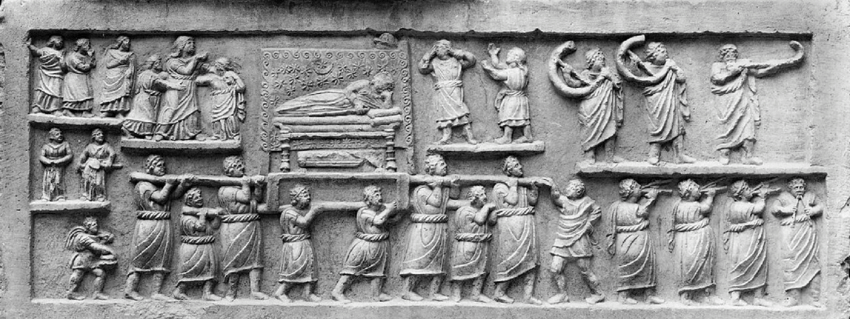
Funerals and burial, as in many cultures, were very important to the Romans. There were many rituals and events associated with a Roman funeral. Professional mourners were hired to comprise a large portion of the funeral procession; musicians, dancers and sometimes mimes who mimicked the dead or their ancestors were also hired (Sumi). The body, carried in a bier, would follow.
Laysymp

The end of the procession would have been the deceased’s family and friends, following behind the body. Funerals were very public, very loud events, and a great celebration. The more important you were the larger your funeral procession and the events surrounding it would be. The death of an emperor would result in a grand event for his funeral, there would be a parade though the center of the city and many eulogies and speeches would be delivered (Favro). The rituals of the funeral were performed to exactness, many believed that if they were not performed correctly the dead would have a difficult transition to the afterlife (Hope). Many of the records that remain about Roman funerals only describe the funerals of the very rich and may not accurately represent what the average funeral would have been like (Thompson).

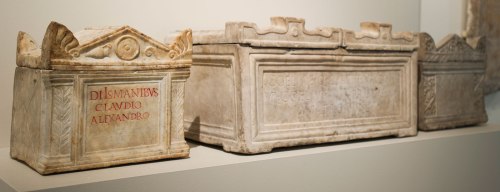
Early in the Roman empire it was very common to cremate the body, inhumation, or burial, had become more common by the mid second century and predominant by the mid third century though the end of the Roman empire (Thompson). When the body was cremated it was taken to the necropolis and burned on a funeral pyre. Ashes and any remains, such as bone fragments and teeth, would be gathered and put into an urn and the urn would be buried. It was believed that until the body was contained within the urn the dead’s spirit had not yet crossed the River Styx and was still present (Fife). If the body was to be buried it would be placed in an intricately decorated sarcophagus before burial. An epitaph was often included on the urn or sarcophagus, this inscription would include the name of the deceased, their birth day and life span, their relations, political offices or military rankings they held and often some form of sentiment. After the cremation and/or burial of the body a feast would be held, it was a marker for the soul to move on to the afterlife and for their family to continue on without them (Fife).

Amiternum-relief-first-century-BC-showing-a-Roman-funeral-procession-in-the-Museo.png

Funerals in the military would have been similar to other Roman funerals, but likely not as lavish. The conditions they lived in could have made it difficult to perform the intricate ceremonies, the dead were highly honored, although their funerals were quite simple. If the funeral had to be carried out quickly after a battle the soldiers would be buried in a mass grave or given a mass cremation, this was always avoided if possible, so the dead could be honored separately. At permanent garrisons of the Empire a small portion of the soldiers’ pay was set aside for funeral expenses. Many of the cemeteries at these outposts had special areas set aside to build pyres that would be reused multiple times for different individuals (Thompson).

Roman funerals were events steeped in ritual and ceremony, members of high society would have lavish and very public funerals, while the funeral of a soldier was often much simpler and less celebratory.

Deities – Cassandra57

The Romans had many gods and goddesses which they worshiped. However, there were only a few main gods that had to do with warfare: Mars, Bellona, Honos, and Victoria. Roman military leaders and soldiers would honor these gods in order to be successful in battle. Each of these gods had a different role to play in warfare and each was essential to the Romans.
Victoria-Crowning-Mars.jpg

https://www.mygodpictures.com/victoria-crowning-mars/

Mars is the god of warfare, agriculture, and animal husbandry and was perhaps one of the most important gods to the Romans. He is said to have been the father of Romulus and Remus, who founded Rome (Scopacasa). Therefore, Mars was seen to be the protector of the Roman land (Scopacasa). Many of the rituals/celebrations which take place between March and October (the war season) can be traced back to the honoring of Mars. One interesting point about Mars is the fact that many of his legends include him appearing on the battlefield and fighting amongst the soldiers, “However, once set loose on the battlefield, Mars was considered capable of indiscriminate destruction” (Scopacasa). Mars was also so important that a typical sacrifice to him consisted of a bull, ram, and a boar all at once (Scopacasa). Mars was important in warfare because he was able to rally the troops and bring enough bravery and spirit of war in order to succeed in battle (Scopacasa).

Bellona is the Roman goddess of war, and her role was mostly associated with foreign warfare. In literature, her symbols typically include a shield, a spear, a torch, and a trumpet (Holland). Her temple is located outside the city of Rome, and this is where the senators would meet in order to discuss or declare war on foreign nations (Holland). When Rome would declare war on another land, it became a ritual to cast a spear from Roman land to outside the city in the direction of the land they were declaring war on. However, when that land was simply too far away, the spear would be cast in front of Bellona’s temple because it was seen to represent all foreign lands (“Fetial”). Bellona was important because she helped the Roman troops while they were fighting abroad.

Bruxelles_Bellone_905

https://en.wikipedia.org/wiki/Bellona_(goddess)

Honos is the Roman god of chivarly, honor, and military justice. He was also commonly associated with the god, Virtus, who represented bravery and military strength. Honos is typically depicted with a cornucopia and a branch or sceptor (Dowling).  He would have been important to the Romans during times of war because they wanted to be worthy of the spoils in which they gained. The Romans also were concerned about whether a war was righteous or not (“Fetial”). Therefore, adhering and praying to Honos would be seen as a way to keep their fight just.

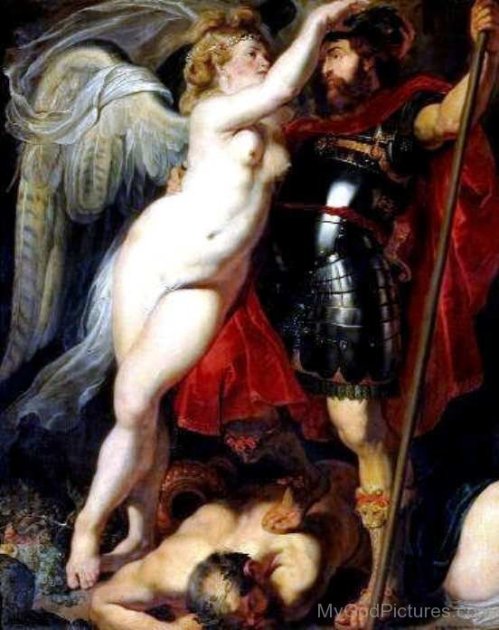
Victoria became a prominent goddess because of her ability to determine the victor in battles (“Victoria”). She became the personification of victory and was often depicted with wings like the Greek goddess Nike (Thornton). Successful generals would worship her as they returned to Rome (“Victoria”). It is obvious as to why she was seen as important to the Romans since she could determine who was the victor over life and death (“Victoria”). Her importance can also be seen by the multiple temples dedicated to her, the most important being the one on Palatine Hill (Thornton). She even has a golden statue in one of the temples dedicated to Jupiter, the head god to the Romans (Thornton). Prayers and sacrifices to Victoria would help lead to victory on the battlefield.

Important Military Festivals and Holidays- Halle

In the Roman calendar the new year starts in March. This is so that the years can start with the Campaign season. While there are many significant festivals throughout the year, I will only be focusing on those during the military season, March through October, and those immediately related to them.

Martius (March) 1st is the birthday of Mars for whom the month is named. It is also a celebration of a battle early in Rome’s history wherein wives and children kept their soldiers from walking into a trap. The war was won when the king, here unnamed, sacrificed a bull to the God Jupiter. Phoebus dropped a shield (2)  from the sky to trick Rome’s opponents (Ovid). The 9th is the festival of sacred shields, also called the dancing of the shields after the dancing priests of Mars, the shield given to the Roman King on the battle of Martius, and the original eleven replicas made to conceal its identity, are taken out to hearten the people and the army. It was also believed to be a way for the army to have good luck in the upcoming campaign season (Warde, 44). There is an account where the shield that fell from the sky was replaced by a replica, and that campaign season was a disaster (Warde, 46). The 14th is the second of the Equirria, chariot racing and discus throwing dedicated to Mars (Ovid). The 17th of march is a celebration of Jupiter userping Saturn, this is symbolic of Rome dethroning its enemies. 23- The purifying of trumpets and a sacrifice to “the Strong God” (Ovid). The 23rd and the 24th are also for the Purification of the Trumpets, most likely tubas, which were primarily used in the military (Warde, 64).

download.jpg

Capitoline Museums. “Colossal statue of Mars Ultor also known as Pyrrhus – Inv. Scu 58.” Capitolini.information.

A recreation of a Roman sculpture of the war god Mars, for whom the month of Marius, now March, was named.

April the 21st is a historical festival where the Vestal Virgins cleanse the city and the citizens. It was also a day to honor Romulus, the founder of Rome, for blessing the walls of Rome to never fall (Ovid). There are many rites involved with the Founding celebration including: repeating the prayer four times, and jumping over a flame three times. Similar celebration similar to this are found all over Europe, probably due to the spread of the traditions via the army (Warde, 83).

October 15th (ides) is the date of an ancient horse sacrifice to Mars. The origin and reason for this sacrifice is unclear, it is hypothesized that the winning horses from the Equirria, or perhaps the best war horses from the campaign season, were sacrificed to Mars. This was likely done as a thank you to Mars (Warde, 242). This sacrifice marks the end of military campaign season (Ovid). The literal sacrifice is phased out by the start of the republic, though the celebration stays (Warde, 242). The 19th is a ritual cleaning and storage of weapons for winter dedicated to Mars. This sacred cleansing was known as Armilustrium,  there is evidence that the sacred shields make a second appearance (Warde, 250).

download (1).jpg

Ancient shield illustration from Nordisk familjebok
A depiction of the sacred shield bequeathed to the king by the Gods.

Februarius (February) 27th is Equirria, first of two horse racing festivals to Mars, Ovid claims this festival to be based on the chariot runs that Mars himself made (Ovid). “The Equirria occurred between King’s Flight and New Year, bridging the period of ‘disorder’: held immediately before the new moon, they prepared the way for the reestablishment of order with the new month and year (Rüpke)”

Works Cited

“> 3 SIDE BLADE ARROW HEAD < Very RARE Ancient Roman Legionary Archery Weapon • $34.98.” PicClick, 26 Aug. 2018, picclick.com/3-SIDE-BLADE-ARROW-HEAD-Very-123250213186.html#&gid=1&pid=1.

IETE Journal of Education Binomial Sampling Charts Revisited with Graphical and Analytical Arguments – Scientific Figure on ResearchGate. Available from: https://www.researchgate.net/The-lozenge-shape-confidence-belt-showing-reference-parameters-and-with-identifiable_fig3_275023546 [accessed 18 Oct, 2018]

Montanari, Daria. “Early Bronze Age Levantine Metal Weapons from the Collection of the Palestine Exploration Fund.” Palestine Exploration Quarterly, vol. 150, no. 3, Sept. 2018, pp. 236–252. EBSCOhost, doi:10.1080/00310328.2018.1491937.

Salvemini, Filomena, et al. “Morphological Reconstruction of Roman <italic>styli</Italic> from <italic>Iulia Concordia</Italic>—Italy.” Archaeological & Anthropological Sciences, vol. 10, no. 4, June 2018, pp. 781–794. EBSCOhost, doi:10.1007/s12520-016-0390-4.

Salvemini, Filomena, et al. “Morphological Reconstruction of Roman Arrowheads from Iulia Concordia: Italy.” Applied Physics A: Materials Science & Processing, vol. 117, no. 3, Nov. 2014, pp. 1227–1240. EBSCOhost, doi:10.1007/s00339-014-8511-3.

Salvemini, Filomena, et al. “Residual Strain Mapping of Roman Styli from Iulia Concordia, Italy.” Materials Characterization, vol. 91, May 2014, pp. 58–64. EBSCOhost, doi:10.1016/j.matchar.2014.02.008.

Favro, Diane, and Christopher Johanson. “Death in Motion: Funeral Processions in the Roman Forum.” Journal of the Society of Architectural Historians, vol. 69, no. 1, 2010, pp. 12–37. JSTOR, JSTOR, www.jstor.org/stable/10.1525/jsah.2010.69.1.12.

Fife, Steven. “The Roman Funeral.” Ancient History Encyclopedia, Ancient History Encyclopedia, 18 Jan. 2012, http://www.ancient.eu/article/96/the-roman-funeral/.

Hope, Valerie M., and Janet Huskinson. Memory and Mourning : Studies on Roman Death. Oxbow Books, 2011. EBSCOhost, hal.weber.edu/login?url=https://search.ebscohost.com/login.aspx?direct=true&db=nlebk&AN=570000&site=ehost-live.

Sumi, Geoffrey S. “Impersonating the Dead: Mimes at Roman Funerals.” Oral History Review, Oxford University Press, 15 Jan. 2003, muse.jhu.edu/article/37888.

Thompson, T.j.u., et al. “Death on the Frontier: Military Cremation Practices in the North of Roman Britain.” Journal of Archaeological Science: Reports, vol. 10, 2016, pp. 828–836., doi:10.1016/j.jasrep.2016.05.020.

Dowling, Melissa Barden. “Honos.” onlinelibrary-wiley.com.hal.weber.edu, Wiley Online Library, 26 Oct. 2012, DOI: 10.1002/9781444338386.wbeah17204. Accessed on 21 Oct. 2018.

“Fetial.” Encyclopedia Britannica, the Editors of Encyclopedia Britannica, Encyclopedia Britannica Inc., 24 Feb. 2016, www.britannica.com/topic/fetial. Accessed on 21 Oct. 2018.

Holland, Lora L. “Bellona.” onlinelibrary-wiley-com.hal.weber.edu, Wiley Online Library, 26 Oct. 2012, DOI: 10.1002/9781444338386.wbeah17071. Accessed on 21 Oct. 2018.

Scopacasa, Rafael. “Mars.” onlinelibrary-wiley-com.hal.weber.edu, Wiley Online Library, 26 Oct. 2012, DOI: 10.1002/978144433836.wbeah17258.

“Victoria.” talesbeyondbelief.com, http://www.talesbeyondbelief.com/roman-gods/victoria.htm. Accessed on 21 Oct. 2018.

Ovid. Fasti. Translated by Frazer, James George. Loeb Classical Library Volume. Cambridge, MA, Harvard University Press; London, William Heinemann Ltd. 1931.

Warde, W. The Roman festivals of the period of the Republic, 1847-1921. https://hdl.handle.net/2027/mdp.39015004760644

Capitoline Museums. “Colossal statue of Mars Ultor also known as Pyrrhus – Inv. Scu 58.” Capitolini.information.
Leave a comment

Filed under Class Stuff, Uncategorized

Alexander and his conquest of India

Introduction:

Alexander the Great was one of history’s greatest military leaders. He established the largest empire in the ancient world, and led an army so loyal they would fight to their deaths for him. His influence on Greek and Asian culture was intense enough to create the Hellenistic Period at his death. Though he died before his dream of conquering the world was completed, he is remembered as one of the most skilled, ruthless, tactical, and intelligent rulers in the ancient world.

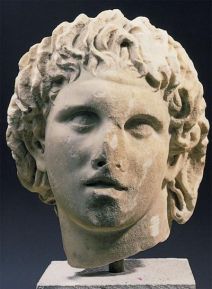
The Greek sculptor Lysippus was Alexander’s “official” portrait artist during his reign. The Azara Herm is a Roman copy of a bust that Lysippus made of Alexander. The copy is not exactly like the original, but is generally regarded as the most accurate representation we have of Alexander.

lyssipios

Lyddios’ sculpture of Alexander

Alexander III was born to King Philip II in Macedonia in 356 BCE. Legend says his father was Zeus, but Alexander adopted his Philip’s dream of conquering the Persian Empire. Philip was skilled in military tactics and made Macedonia a mighty and formidable force.

Alexander had displayed his courage by the age of 12, and when he was 13 Philip called on Aristotle to tutor Alexander. Aristotle helped Alexander find an interest in literature, philosophy, and science. He was 16 when Philip went to battle and left Alexander in charge of Macedonia. At 18 he led a cavalry into battle, decimating a previously unbeatable army, and proving his bravery and militaristic vigor.

When Philip was assassinated in 336 BCE, Alexander claimed the throne and killed other challengers before anyone could overthrow him. He was just 20 years old. Alexander followed in his father’s footsteps and sought to dominate the known world, starting with the Persian Empire. He was a brilliant and ruthless military leader, and claimed the Persian Empire after the Persian king Darius was killed. He also conquered Egypt and founded Alexandria. Alexander adopted Persian customs and ordered a few of his generals to be killed, paranoid that someone would try to overthrow him.

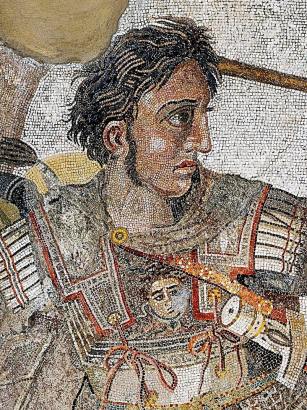
Mosaic of Alexander the Great

Alexander the great Mosaic   History.com


After conquering Persia, Alexander continued on his goal to conquer the world. The Greeks at this time only thought it reached to the eastern end of India, near Pakistan, so his “world” was much smaller than ours. They knew nothing of China, the Indian subcontinent, or any of the other eastern lands. He led an army of troops and supporters into India. By the time they had reached the Hyphasis River his army was too weary to continue, and they mutinied until Alexander agreed to retreat back to Persia.

The scale of the wars he fought and his undefeated status gives Alexander a reputation of being one of the most successful commanders of all time. By the time he died he had conquered most of the known world at the time. After claiming the throne to Macedonia upon his father’s death, he invaded Persia and overthrew the Persian king Darius III. He continued on to conquer Syria, Phoenicia, Egypt, among others, and extended his empire as far as Punjab, India. He had made plans to expand into the Arabian Peninsula, but those plans were never seen through because of his death at age 32, which plunged his empire into civil war. He died either from malaria, natural causes, or poison. He had named no heir, and his death unraveled his massive empire, though many of the conquered lands retained his influence, and some still do.

Indian Conquest:

Alexander the Great started his conquest of India in 327 BCE, after he conquered Persia.

Alexander’s army was composed of Macedonians, Greek mercenaries, and an increasing number of Asian soldiers. As his army became less Macedonian, Alexander had to incorporate new rituals from the east. While the Macedonians accepted the introduction of Persian garments, they flatly refused the practice of proskynesis, a Persian court ritual, since many of the actions and gestures involved were what they associated with the cult of the gods.

Alexander had sent various ambassadors to the tribes of India to demand submission. Those who didn’t submit got attacked. After crossing the Hindu Kush, Alexander split his army in half. The first part of the army -under the command of Perdiccus and Hyphaestion- was sent to the Indus river to build a bridge for the army to cross. The other half of the army was sent with Alexander to conquer the neighboring tribes that did not submit to Alexander (Possibly to secure a supply chain for his army).  you see, the problem with marching across a continent with thousands of people is that you need access to food water, and other supplies. This is especially true if you also want to conquer the continent you’re walking through. The farther that you get from your own land, the harder it is going to be to get the supplies that you

AlexanderConquestsInIndia

Alexander’s Conquest path

need to continue. This is where having supply chains becomes extremely important.

A well functioning supply chain is essential for an extended campaign full of siege warfare. The army itself could only march up to 10 days at a time once they left a port with access to the sea. Typically a marching army would be followed by their spouses, servents, and wagons. Alexander on the other hand decided to maximize his armies speed and flexibility by taking none of these with him. He instead followed routes that would allow him access to rivers that could carry tons of supplies compared to the around 200 carried by beasts of burden (Mieghem 42). Along the way some cities would and tribes would surrender before his arrival allowing him to send messengers ahead, create the town into a depot for supplies, and acquire supplies for his army as soon as he arrived. These supplies were mainly acquired from the local terrain but were also shipped in using water routes. Using these methods of traveling light, having frequent and easy access to supplies, and acquiring resources locally allowed him to have supplies where and when he needed them.

The battles fought in the valleys were fierce, but none were quite as merciless as  that with the Aspasioi at the fort of Massaga. After the Chieftain of Massaga fell in battle, his mother, Cleophis, assumed command of the military. Her determination to defend her homeland to the death inspired the all of the local women to also join in the fight.

In 326 B.C.E,  fighting under Cleophus,  Massaga gives Alexander resistance and was bent on defeating Alexander’s army. So, Alexander lured them outside of their fort by attacking just outside the fort. Once more Indians came to reinforce themselves, Alexander “retreated” as to lure the Indians further and further out of their fort. Once Alexander had done this, he turned his army around and chased them back to Massaga, killing many of them. Alexander then constructed siege towers and bridges to storm the wall. Before Alexander was successful with this, the Indians called a truce, asking to join Alexander’s army instead. However, that night, the Indians attempted to desert the army. Alexander countered this by massacring them, then burned Massaga to the ground.

It is thought that Massaga is near the modern day town of Chakdara, near Churchill’s Picket. It is also notable to mention that Alexander’s ankle was severely injured during the siege of Massaga.

Going further into India (still in 326 B.C.E), Alexander captured the fort, Ora, where he employed the same tactic of total warfare from Massaga. After hearing this, many Assakenians fled North to a high fortress called Aornos. This fortress was famously uncapturable by even the mighty hero Hercules.Also, another local legend claimed that another local deity, Krishna, was not able to capture Aornos either. This likely spurred Alexander on because he was known for liking too claim deity. The problem was that traditional siege warfare is conducted with the purpose of weakening the occupants of a city by cutting off their supply chains and essentially breaking spirits due to lack of food and the eternal threat of attack (Louis 130) . This would either allow you to capture the city with little to no casualties after fighting a weakened opposing force or possibly even forcing your foe to surrender

Without any conflict. This is, of course, a very good method of taking an isolated city because it’s only a matter of time before they run out of supplies and all you have to do is wait and watch them wither away. But this wasn’t the case with Aornos. The “Rock of Aornos” -or more commonly known as Mt. Pir Sarai- was 25 miles in circumference and 8,000 feet high with only one path carved from the rock. This of course makes it easier to block their supplies, but it also makes it harder to attack and in this case the positive of cutting off supplies doesn’t apply. The Rock had fresh water springs and arable land on top giving the people on the rock a near limitless supply of food and water, allowing them to stay for a near infinite amount of time. So the question was, how could you capture the rock that even Hercules wasn’t able to?

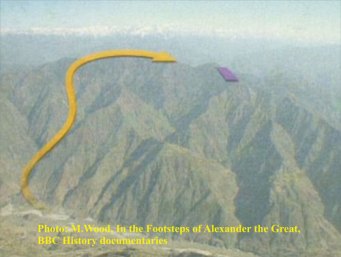
Alexander, unlike Hercules, had help from the locals. He was informed that there was a weak spot where troops could be sent to create a forward position and begin his attack from a nearby mountainous ridge. He sent Ptolemy, one of his generals, to take the position with a smaller group and signal Alexander that he could bring his forces to join him after marching his troops up the main path. In the meantime, Alexander used his local connections to being stockpiling supplies of his own in preparation for an extended siege. Once the signal was given and Alexander eventually met up with Ptolemy they had the problem of trying to cross the gap between the forward position and Aornos itself. Alexander had the idea to essentially build a bridge over to the other side. The forces of Alexander cut down the nearby trees and create wooden stakes that were then used as a framework for an earthen mount looking toward Aornos. From this mound he began his assault using archers and catapults.

Alexander's Path to seige Aornos

Alexander’s siege of Aornos

These catapults would have either been built near the earth mound or would have previously been built before joining forces because siege equipment was still in its earliest form, it was hard to build, hard to repair, and hard to transport (Hacker 37).It was also much different from the more commonly thought of medieval catapult. Instead of throwing one large rock a long distance, it would instead propel smaller stones and arrows at high velocities in an attempt to pierce any armor enemy soldiers may have had. Once they had this offensive mound created they continued building it up further in order to build a bridge closer to the enemy encampment. This method is somewhat similar to Alexander’s strategy at the siege of Tyre in 332 BC where he built a land bridge to an isolated island(Lagasse). With the catapults and archers providing cover for the builders, the enemies quickly surrendered upon seeing the progress. Alexander accepted their surrender, but then killed many of the Indians as they retreated. That is how Alexander the great conquered The Rock of Aornos.

After Aornos, Alexander reunites his army at a town called Hun to cross the Indus river. (this is still 326 B.C.E)  They crossed by building a bridge, which was constructed by Hephaestion. Hephaestion was sent earlier by Alexander to subdue the lands before Alexander had gotten there. The bridge was thought to be constructed of boats that were linked together spanning about 1500 feet across. Once they reunited, the army crossed and headed towards Taxila.

Once at Taxila the Macedonians were confronted by Omphis, the local king of Taxila, and his army. The Macedonians prepared for battle, thinking that they were going to have to fight through Taxila too. Omphis came up to Alexander and Alexander had asked Omphis why he had mobilized his entire force if he wasn’t going to attack. Omphis then said that he was offering his army for Alexander’s disposal. This friendly gesture prompted Alexander to make Omphis king of Taxila. The common thought on why Omphis did this is he recognized that Alexander was powerful, so being his ally, he could possibly further expand his power into other territory under the wing of Alexander.

In the summer of 326 B.C.E, Alexander continues his journey of conquest; towards the Hydaspes river -more commonly known as the Jhelum river-. The only thing that stops him is King Porus. Hearing that Porus was on the other side of the river waiting for him, Alexander orders that the boats used to cross the Indus river to be disassembled and to be reassembled at the Hydaspes river.

King Porus, on the other side of the river, has set up pickets (little groups of troops) to border the shore of the Hydaspes river to discourage any attempt of Alexander trying to cross. What King Porus failed to realize though, is that Alexander came well prepared and Alexander’s army camped on the other side of the river throughout the winter.

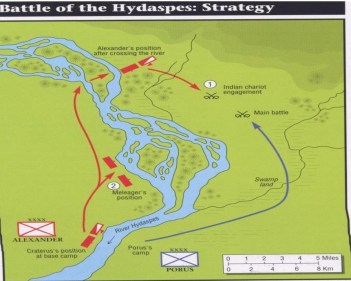
Alexander really only had two options: wait for the waters height to drop in the winter, or cross right then and there. Although Alexander had the supplies to last until winter, he decided that he needed to cross this river as soon as possible and continue his conquest; but he would have to do so as secretly as possible. Alexander began marching his army up and down the river every day making an extremely large scene as if he were attempting to cross the river. Hydaspes would then mobilize his army to mirror the actions of Alexander’s in case they attempted a crossing. This strategy was successful in two ways. King Porus’ army was inclined to parallel Alexander’s army to insure that they would not attempt a crossing. After a while, however, they got a false sense of security because throughout those few nights, Alexander never crossed so it was (poorly) assumed that Alexander wouldn’t dare cross any of the other nights either. The second advantage to this strategy is it gave Alexander ideas on where it would be most beneficial to cross. Alexander, after a few nights, had decided that the best place to cross would be a heavily wooded island 18 miles upstream from where they were camping.

At the night of their crossing, (it is suspected that this was in July of 326 B.C.E) it was instructed that one of Alexander’s general, Craterus, would stay behind with his portion of the army and only attempt to cross the river if Porus had moved upstream to meet Alexander and there was a small force left behind. This is so Porus wouldn’t get too suspicious when all of Alexander’s army suddenly went missing.

slide_37

Alexander’s Plan for crossing the river

As a source of communication, Alexander set up his own pickets along the banks of the river to have faster travel of messages, which were vital in this stealth operation. Alexander then moved part of his forces 18 miles up the river where he planned to cross. Under cover of night, and also a thunderstorm luckily,  he began his crossing. They destroyed the boats that they used to cross the Indus river and used the materials as flotilla that would help them bring the supplies and troops across. Unfortunately he didn’t realize that the landmass that he initially thought was the opposite shoreline was actually an isolated island. This added crossing time and allowed Porus’s scouts to spot the forces and inform Porus and move his forces to meet them. Once that happened Craterus was able to cross as well with little resistance; allowing all of Alexander’s forces to cross the river without becoming a massive target.

King Porus arrives on the scene and Alexander is left with a dilemma to solve. King Porus has elephants which are spaced 100 feet apart with cavalry behind them, along with a left and right wings of infantry and cavalry. Alexander knows it would be a death trap to attack the elephants head on, so he splits his army in two. He places ½ of his army in the command of general Coenus, and the rest in his command. Alexander leads the charge and attacks Porus’ left wing. In response, his cavalry rushes over to support the left wing, leaving the right wing with little support. General Coenus then attacks the right wing. ½ of Porus’ cavalry in response turns around to help out, splitting Porus’ army in half. This is exactly what Porus didn’t want to happen. As the battle progressed, Alexander’s army slowly condensed Porus’ army into a circle, taking out the elephant drivers when possible. The elephants were still a problem, but one that they solved relatively quickly. They just let the elephants pass when they charged.

It is important to note that the battle was made easier for Alexander because Porus’ chariots proved to be useless in the mud newly created by the storm. Alexander noticed this and made another opportunity to claim himself as a god like being.

As the battle continued on, Alexander’s army encapsulates Porus’ and this lack of space leads to a lack of coordination and chaos. The elephants take out a lot of Alexander’s men, but also take out a lot of Porus’ men too. At about this time, General Craterus comes with his portion of his army and reinforces Alexander.

After this strategic maneuver was done.  The majority of Porus’ army was decimated, and Porus is forced to retreat, wounded from the battle. Alexander sent messengers to Porus to negotiate. Finally negotiating in person, Alexander ask what Porus desires. Porus responds, “Treat me as a king would treat another king.”

Alexander respects this, and allows Porus to keep his land.

After the battle against King Porus was finished, Alexander holds a victory celebration before marching against a neighboring tribe, in which Alexander promised to Porus. The end of this gruesome and tough battle made Alexander’s more hesitant to continue the conquest of India.

In his march further into India, Alexander is troubled to have to deal with a few small rebellions in which he has to delay his conquest. Once taken care of, he continued his conquest; making the inhabitants come to terms or fight.  Most chose to come to terms, but a tribe by the name of the Kathaioi was prepared to fight them.  The rebellious tribe chose their fort, Sangala, as the perfect place to defend.

Although it has not been located yet, Arrian suggests that the fort of Sangala stood on top of a hill. The enemy set up three consecutive circles of wagons around the hill of which Sangala sits, to act as a barrier. Once Alexander understands their tactic, he changes the formation of his army so that the archers ran in front of the enemy front lines. When the battle commenced, the Indians countered by standing on top of the carts and using their bows to strike down Alexander’s cavalry. Alexander adapts by forcing his cavalry to retreat and Alexander leads his infantry head first into the wagon barrier. The Indians are forced to retreat back into the fort.

Alexander takes the break from battle to surround the fort with his army. He did not have enough people to completely encircle the fort, so he had the cavalry patrol the most likely route of escape.

The Indians, under the cover of night, attempted to escape their fort, but were routed back by the cavalry. In a separate attempt, they had opened the gates and had made a run for it. Unfortunately for them, Alexander had learned of this plan and had used the carts against them. Alexander used the cart to block the way of the Indians. Noticing that they wouldn’t be able to escape fast enough, they retreated again. Sangala was finally taken when Alexander’s army climbed the wall with ladders and the town was attacked by siege engines.

In the late summer/ early fall of 326 BCE, Alexander’s army refuses to cross the Hyphasis river. Alexander was convinced that they were nearing the end of the world, but Coenus reminded Alexander that his army was tired and wanted to return home. Angry and annoyed, Alexander waits two days at the Hyphasis river (more commonly known as the Beas river) and offers a sacrifice, in which he didn’t receive “favorable omens. ” So Alexander turns back, but acting on the will of the gods, and not the men, because that would be weak…

Many scholars disagree on the extent of Alexander’s impact on India’s history.

As Dr. V.A. Smith said, “India remained unchanged. The wounds of battle were quickly healed India was not Hellenized. She continued to live her life of splendid isolation and soon forgot about the passing of the Macedonian storm. No Indian author, Hindu, Buddhist, or Jain, makes even the faintest allusion to Alexander or his deeds.”

While Alexander’s campaign was not a defining moment of Indian history, it wasn’t an isolated event of no consequence. It is possible that Alexander’s conquering of the small tribes set an example that allowed for unified Indian rule in the future. Additionally, the Greeks left behind dated records, which were incredibly useful for future historians because they could then more certainly date later events, and the records proved to be a valuable source for early Indian history.


Delegations:

HopologyEnthusiast: How

Isaac, Son of Abrahm: When and where

Codexromana99: Who and what

Mediocrelegionnaire: Why


Citations:

“The siege of Sangala (in modern Pakistan)” 2016. https://makedonia-alexandros.blogspot.com/2016/11/the-siege-of-sangala-in-modern-pakistan.html

Arrian. “Mutiny at the Hyphasis.” M.M. Austin. Livius.org. 2016. http://www.livius.org/sources/content/arrian/anabasis/mutiny-at-the-hyphasis/

Rawlings, Louis. The Ancient Greeks at War. Manchester University Press, 2007. EBSCOhost, hal.weber.edu/login?url=https://search.ebscohost.com/login.aspx?direct=true&db=nlebk&AN=514974&site=ehost-live.

Hacker, Barton C. “Greek Catapults and Catapult Technology: Science, Technology, and War in the Ancient World.” Technology and Culture, vol. 9, no. 1, 1968, pp. 34–50. JSTOR, JSTOR, www.jstor.org/stable/3102042.

Hamilton, J. R. “The Cavalry Battle at the Hydaspes.” The Journal of Hellenic Studies, vol. 76, 1956, pp. 26–31. JSTOR, JSTOR, www.jstor.org/stable/629551.

“Tyre.” The Columbia Encyclopedia, Paul Lagasse, and Columbia University, Columbia University Press, 8th edition, 2018. Credo Reference, https://search-credoreference-com.hal.weber.edu/content/entry/columency/tyre/0. Accessed 30 Sep. 2018.

PP.41-46. https://www.proactiongroup.com/wp-content/uploads/2016/09/logisticslessons.pdf.

Arrian. Arrian’s Anabasis of Alexander and Indica. , England;United Kingdom;, 1893.

https://slideplayer.com/slide/13264115/

“Alexander the Great.” HISTORY. A&E Television Networks, 2009. https://www.history.com/topics/ancient-history/alexander-the-great.

“Alexander the Great: KING OF MACEDONIA.” Frank W. Walbank. Encyclopaedia Britannica. https://www.britannica.com/biography/Alexander-the-Great.

“SparkNote on Alexander the Great.” SparkNotes. SparkNotes LLC. 2005. Web. www.sparknotes.com/biography/alexander/.

“Wars of Alexander the Great.” Wikipedia. www.wikipedia.org/wiki/Wars_of_Alexander_the_Great.

Wikipedia contributors. “Indian campaign of Alexander the Great.” Wikipedia, The Free Encyclopedia. Wikipedia, The Free Encyclopedia, 23 Sep. 2018. Web. 1 Oct. 2018.

Lendering, Jona. “Alexander the Great.” Livius.org. http://www.livius.org/articles/person/alexander-the-great/

Arrian (1971) The Campaigns of Alexander the Great. Bungay: The Chaucer Press.

V, Shivani. “Alexander’s Invasion and Its Effect on India.” http://www.historydiscussion.net/history-of-india/alexanders-invasion-and-its-effect-on-india/6260


Leave a comment

Filed under Uncategorized

Alexander Blog

It is useful, in an attempt to more fully understand the world-shaking conquest of Alexander the Great, to view the context of his campaign. In learning about the state of the territories that he was to invade, both physically and in other, more temporary aspects, such as the political and cultural status’ of these lands, we discover elements that help to explain some of Alexander’s exceptional military success during his short reign.

The State of Greece

Alexander III of Macedon rose to power in 336 BC, following the assassination of his father Philip II by a royal bodyguard. His father’s accomplishments include the founding of the League of Corinth, a federation of Greek States, formed for mutual defense, as well as with intentions of conquering Persia, though Philip II died before any such campaign could be undertaken. The extent of his control can be seen in this map, where all the marked territories excepting Sparta, Crete, and the Persian Empire (naturally) could be considered his, though parts of it were still, at least in name, “independent” (such as Thrace and Molossia).

thumb

Upon Philip’s assassination, Alexander was the heir apparent and laid claim to the throne, though Thebes, Athens, Thessaly, and the some of the Thracian tribes in the northern reaches of the kingdom attempted to rebel. This was something of a kick-start to Alexander’s conquest, however, as his magnificent success in reconquering these rebellious territories–including the total destruction of Thebes–helped secure his native kingdom and established him in the eyes of his army as a capable leader from the very beginning of his campaign. Hence, when he turned toward Persia in 334 BC, his base in the Greek peninsula was stable.

The State of the Achaemenid Persian Empire

Achaemenid [Converted]

Interestingly, Darius III of the Achaemenid Persian Empire ascended the throne as the Persian “King of Kings” in the same year Alexander did, also as the result of his predecessor’s assassination, though his reign was fated to end far sooner than that of his contemporary, Alexander.

The vizier of the Persian empire for some years before 336 BC was a eunuch named Bagoas. Notably, during his time in that office, he was effectively the ruler of the Empire. Those emperors who attempted to assert dominance during this time were poisoned and replaced. However, when he selected Darius III as the new emperor after poisoning most of the family of Artaxerxes IV (as well as the man himself, naturally), Darius showed himself immediately to be dominant and, being forewarned of Bagoas’ tactics, forced his adviser to drink the poison intended for Darius. However, it appears that Darius may have had a harder time establishing his control in his Empire, as Alexander would make quite an indentation in the Persian border before meeting any real opposition from the Emperor.

The Terrain of Alexander’s Route

MacedonEmpire

Alexander spent much of his early conquest of Persia trying to remain close to river banks and the ocean, typically only departing from this approach when it was necessary to conquer a strategic target.. This was a mixed bag for him: it was basically necessary, assuming he wanted supplies to be able to reach his army quickly, and as it allowed his forces to minimize the advantage the more numerous Persian armies that (eventually) opposed them had, but at the same time this left them open to harassment by the Persian navy (sadly, until he conquered enough of Persia’s ports, Alexander had little to no navy of his own). When he did move inland, much of his travel was through mountainous terrain, particularly as he progressed closer to Alexandria Eschate (lit. “the furthest), the final reach of his stretch into Persia.

“File:Map Macedonia 336 BC-en.svg.” Wikimedia Commons. January 28, 2017. Accessed September 30, 2018. https://commons.wikimedia.org/wiki/File:Map_Macedonia_336_BC-en.svg.

The Editors of the Encyclopedia Britannica. “Bagoas.” Encyclopædia Britannica. April 11, 2016. Accessed September 30,2018. https://www.britannica.com/biography/Bagoas.

Kia, Mehrdad. The Persian Empire: A Historical Encyclopedia. Santa Barbara: ABC-CLIO, 2016.

“Wars of Alexander the Great.” Wikipedia. September 24, 2018. Accessed on September 30, 2018. https://en.wikipedia.org/wiki/Wars_of_Alexander_the_Great.

“File:The Achaemenid Empire at its Greatest Extent.jpg.” Wikimedia Commons. August 19, 2017. Accessed on October 1, 2018. https://commons.wikimedia.org/wiki/File:The_Achaemenid_Empire_at_its_Greatest_Extent.jpg.

caltrop101


What kind of troops would be effective?

Assuming we have around 60,000 total troops, choosing which types to bring requires us to understand what the enemy has. In one battle described by Kaushik Roy, Alexander fought against chariot archers, lightly armed cavalry, and disorganized infantry (Roy, 2004). Around 45,000 heavily armored men in the phalanx won’t have much difficulty with the enemy’s infantry, and around 5,500 heavy cavalry (called the companion cavalry) can help against the enemy’s chariots and cavalry.

https://en.wikipedia.org/wiki/Achaemenid_Empire.

The bigger issue is that India has lots of elephants. When one of the massive beasts charges the phalanx, the dense group of soldiers get trampled and impaled by the iron tipped trunks. A charging elephant can eliminate large groups of men very fast. To help combat this, the phalanx must split up. Instead of being in a big group, they can be divided into smaller groups that stay close enough together to prevent the enemy from surrounding them, but also providing enough room for them to spread out when an elephant charges. They can surround it and attempt to drive it back into the enemy infantry. If it doesn’t work quite so perfectly, it will at least help reduce losses.

Another important group of units would be around 1,500 horse archers. Societies like the Scythians are excellent horse archers, recruit as many of them as possible to help with the not as excellent Macedonian mounted archers (Mounted Archery). Elephant riders would often carry poisoned spikes they could stab into the head of the elephant if it ever turned on its own troops. Archers could pick of the riders to leave the beast uncontrollable and aid in driving it back into the opposing infantry.

The remaining 8,000 troops could contribute to the phalanx or cavalry, but there are some other units that could be useful. Lighter infantry, possibly mercenaries, could make up a lighter infantry that can fight where the phalanx can’t. More archers can be beneficial, especially if they have high power bows that can pierce metal. War elephants can be good, but overall not many should be used because of their unpredictability. Elephants might be more useful as a pack animal, but still require a large amount of food and care.

How do we deal with our troops?

As conquering continues, cities will be established and provides an excellent opportunity to leave behind those who are severely wounded and those who have served their time and would like to stay.  To transport the sick and wounded, they can be carried in a wagon or slung over a pack animal in what is called a litter (Sternberg, 1999). New troops can be recruited from conquered regions and hired as mercenaries. It can be dangerous and expensive to do so, but will help maintain the number of troops. Winning battles will help keep mercenaries on our side.


Sources

Mounted Archery. Retrieved from Wikipedia: https://en.wikipedia.org/wiki/Mounted_archery

Roy, K. (2004). India’s Historic Battles: From Alexander the Great to Kargil. Orient Blackswan.

Sternberg, Rachel Hall. “The Transport of Sick and Wounded Soldiers in Classical Greece.” Phoenix, vol. 53, no. 3/4, 1999, pp. 191–205. JSTOR, JSTOR, www.jstor.org/stable/1088983.

wingedhussar420


Alexander the Great Logistics

The first problem faced by any army is how to provide adequate food and water for a large number of soldiers. In the hot, dry Middle Eastern climate Alexander’s army would have marched through on their way to India, each soldier would require a minimum of 3,400 calories a day, including 70 grams of protein, and at least 9 quarts of water. With around 65,000 soldiers, the army would have to take along about 195,000 pounds of grain, 325,000 pounds of water, and about 375,000 additional pounds of grain to feed pack animals.

Another common problem was the issue of speed and flexibility. In the past, the ox-cart was the most common means of transport for armies traveling long distances. While it allowed more supplies to be moved, the carts only moved about two miles an hour for five hours. Ox-carts also required almost constant repair, necessitating the presence of repairmen, extra lumber, and tools, which added to the overall burden armies had to carry and slowed them even further. The Assyrians were the first to introduce the horse to military operations, allowing their armies greater speed and the ability to move over all types of terrain. While it took five horses to pull a load carried by one ox-cart, horses required almost half the amount of forage and were able to move the load at four miles an hour for eight hours. By the time of the Persians, the rapid growth of army size had created a logistical burden so large that speed and operational flexibility was becoming severely limited. The Persians’ use of horses as part of their military operations did a lot to remedy this issue, though they still relied heavily on the ox-cart. Phillip II and Alexander became the first to make horses a major part of their logistics train.

The mobility issue was further resolved by Phillip of Macedon, who was the first military commander to forbid the presence of camp followers in his armies. Before this, a typical army of 30,000 would bring with it almost the same number of attendants, wives, and various service providers. The logistics burden of his army was reduced by nearly 2/3 without the presence of these people, increasing the army’s combat power as well as the speed at which they were able to travel. Alexander’s army also maximized the speed at which it was able to travel by requiring each soldier to carry his own food and equipment. As a result, soldiers carried nearly 1/3 of the load normally hauled by horses and oxen and the army required almost 5,000 less pack animals.

http://www.ibiblio.org/wm/paint/auth/le-brun/

Alexander the Great Logistics

The first problem faced by any army is how to provide adequate food and water for a large number of soldiers. In the hot, dry Middle Eastern climate Alexander’s army would have marched through on their way to India, each soldier would require a minimum of 3,400 calories a day, including 70 grams of protein, and at least 9 quarts of water. With around 65,000 soldiers, the army would have to take along about 195,000 pounds of grain, 325,000 pounds of water, and about 375,000 additional pounds of grain to feed pack animals.

Another common problem was the issue of speed and flexibility. In the past, the ox-cart was the most common means of transport for armies traveling long distances. While it allowed more supplies to be moved, the carts only moved about two miles an hour for five hours. Ox-carts also required almost constant repair, necessitating the presence of repairmen, extra lumber, and tools, which added to the overall burden armies had to carry and slowed them even further. The Assyrians were the first to introduce the horse to military operations, allowing their armies greater speed and the ability to move over all types of terrain. While it took five horses to pull a load carried by one ox-cart, horses required almost half the amount of forage and were able to move the load at four miles an hour for eight hours. By the time of the Persians, the rapid growth of army size had created a logistical burden so large that speed and operational flexibility was becoming severely limited. The Persians’ use of horses as part of their military operations did a lot to remedy this issue, though they still relied heavily on the ox-cart. Phillip II and Alexander became the first to make horses a major part of their logistics train.

The mobility issue was further resolved by Phillip of Macedon, who was the first military commander to forbid the presence of camp followers in his armies. Before this, a typical army of 30,000 would bring with it almost the same number of attendants, wives, and various service providers. The logistics burden of his army was reduced by nearly 2/3 without the presence of these people, increasing the army’s combat power as well as the speed at which they were able to travel. Alexander’s army also maximized the speed at which it was able to travel by requiring each soldier to carry his own food and equipment. As a result, soldiers carried nearly 1/3 of the load normally hauled by horses and oxen and the army required almost 5,000 less pack animals.

Sources Cited:

Kast, Bernahrd. “The Logistics of Alexander the Great.” Military History Visualized. April 19, 2016. Accessed September 23, 2018. http://militaryhistoryvisualized.com/logistics_alexander_the_great/.

“Alexander the Great Needed Great Supply Chains.” SCM Globe. March 17, 2014. Accessed September 23, 2018. https://www.scmglobe.com/alexander-the-great-needed-great-supply-chains/.

“Ancient Macedonian Army.” Wikipedia. August 31, 2018. Accessed September 23, 2018. https://en.wikipedia.org/wiki/Ancient_Macedonian_army.

“Military Supply Chain Management.” Wikipedia. March 9, 2016. Accessed September 23, 2018. https://en.wikipedia.org/wiki/Military_supply_chain_management.

artemisia189


Navigation in Ancient Times

Being able to get from place to place was important, not only for regular citizens, but especially for military campaigns.  Alexander would have used every possible tool at his disposal in his conquest of Persia and Asia. Basic maps would have been had among the military, but the real information about the terrain would have come from the native populations.

Alexander was known for using guides from the newly conquered people in order to move to the next place.  These guides often gave accurate information, but sometimes used their position of trust to deceive and mislead.  Treachery of this sort was swiftly dealt with, as the cost in time, supplies and even lives mattered a great deal.  (Engels, 331) Either the guides themselves acted as hostages for their own good performance, or else family members of the guides were taken to insure proper intelligence gathering. (Engels, 331-332)

Another tactic was to use social connections to be introduced in new places.  These friends or kinsmen led the way to the new location and made introductions with the locals in charge. (Stark, 107)  Having the personal connection made it much easier to overtake cities.

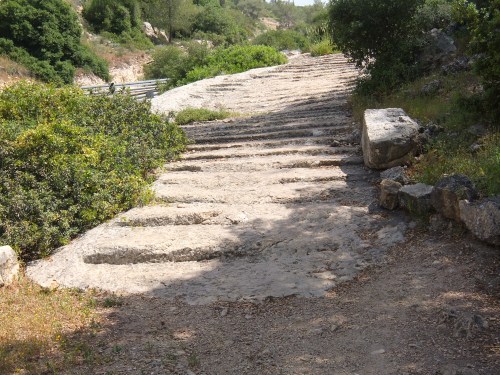
It is also important to note that trade routes and roads were used on some of the campaigns.  (Stark, 110) These roads were important not only for the movement of troops, but also for communication sent via horseback.Trekking_the_Old_Roman_Road

By Davidbena [CC BY-SA 4.0  (https://creativecommons.org/licenses/by-sa/4.0)%5D, from Wikimedia Commons

For naval use, the employment of sounding weights would have given navigators information about the depth of the water and general topography of the seafloor.  The weight was usually dropped to measure the depth of the water near the shore, but also in times of inclement weather. (Oleson, 119-120)

Interesting Tidbits from the Research

As I was researching this topic, I came across several references to Zoroastrianism in Persia. Alexander got in quite a bit of trouble for going counter to their traditions.  In one instance, Alexander ordered the crucifixion of Bessus, and for the soldiers to keep the vultures away from the body. This upset the Zoroastrians, who believed that it was important for the dead to be devoured by birds and wild beasts. (Livius, 2.12)

People during this time were highly superstitious, and armies often had magicians and soothsayers as part of their advisors.  The final battle between Alexander and Darius III was foretold to spell doom for Darius because of a lunar eclipse. In fact, the omen was so widely known for its negative prediction that many in Darius’ army deserted before the battle began.  (Livius, Alexander the Great)

http://www.livius.org/articles/person/alexander-the-great/

http://www.livius.org/articles/person/alexander-the-great/alexander-2.12/

Engels, Donald. “Alexander’s Intelligence System.” The Classical Quarterly 30, no. 2 (1980): 327-40. http://www.jstor.org/stable/638503.

Oleson, John Peter. “Testing the Waters: The Role of Sounding Weights in Ancient Mediterranean Navigation.” Memoirs of the American Academy in Rome. Supplementary Volumes 6 (2008): 119-76. http://www.jstor.org/stable/40379301.

Stark, Freya. “Alexander’s March from Miletus to Phrygia.” The Journal of Hellenic Studies 78 (1958): 102-20. doi:10.2307/628929.

iamcamalot


Punjab and Indus Valley, Approx. 327 BCE.

A well-planned and executed baggage train is essential for any successful military march, or at least for any march in the 4th century BCE. Alexander the Great’s cavalcade was no exception. The efficiency of a baggage train was generally rooted to the ability of its animals in terms of speed, survivability, and strength.

Before addressing the animals, it’s important to know what the “baggage” of a baggage train is. This is all of the army’s provisions: food, equipment, tents, medicine, firewood, etc. It’s also important to note that the followers in this march were not solely comprised of soldiers. In fact, the numbers were greatly bolstered by non-military individuals, as listed by Donald W. Engels:

Traveling with the Macedonians were bodyguards, older Macedonians exempt from combat duty, hostages, servants, seers, physicians, sophists, poets, a historian, a tutor, secretaries, surveyors, the transport guard, Egyptian and Babylonian soothsayers, Phoenician traders, courtesans, a harpist, a siege train, engineers, and as the expedition advanced further into Asia, women and children. (Engels 11)

Alexander was conscious of the size of his following, and took measures to downsize when appropriate. One method was to burn excess baggage and unnecessary carts (Engels 13). It goes without saying that limiting the number of wagons and carts and their respective beasts of burden would speed the march up.

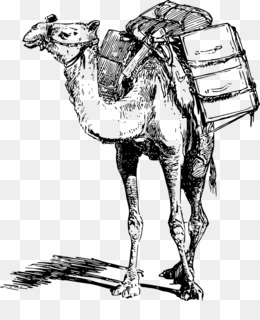
As previously stated, a baggage train is only as good as its animals. Mules, horses, and camels would have been Alexander’s primary “motive power.” Between these three animals, Alexander’s march would be able to transport its cargo with relative speed and efficiency. Mules and horses were effective at weathering down a path for the army to follow (Hammond 28). Camels were capable in the same terrains as mules and horses, but were more strongly suited for desert terrain(Hammond 28). Donkeys and oxen were not used as they were too slow and unfit for long journeys (Hammond 14-15). These animals, though able to be loaded with packs, would have hindered the march.

camel

Having inherited his army from Philip, Alexander would have maintained most of the practices previously in place, including the general unfriendliness towards the usage of carts. Only carts carrying essential battle equipment of medical supplies were allowed (Engels 15). Among whatever other reasoning exists for this decision. It was thought that the usage of carts might encourage individuals to try and bring along cargo that was unimportant and a waste of space (Engels 16). As a general rule, personnel were to carry their own smaller possessions— weapons, armor, utensils, etc.— rather than take up valuable space in wagons or carts (Engels 12). The smaller the train was in both size and weight the easier it would be to traverse and troublesome terrain. According to Livius, the march would have ran into trouble when the Himalayan snows melted and filled rivers in the surrounding valleys. In cases such as these, smaller was better.

alexander-the-great-refusing-water-in-the-desert

As far as amounts go, Engels asserts that, “About 800 pack animals were required by each legion to carry its noncomestible supplies, or about one animal per seven combatants” (17), and notes the increase of Alexander’s army as time went on as he continues, “After crossing the Hellespont, there were about 48,000 soldiers in Alexander’s army and about 6,100 cavalry horses… 1,300 baggage animals would be required” (18).

Bibliography

“Alexander 2.13.” Livius, Last modified January 16, 2017. http://www.livius.org/articles/person/alexander-the-great/alexander-2.13/.

Engels, Donald W. Alexander the Great and the Logistics of the Macedonian Army. Berkeley: University of California Press, 1980.

Hammond, N. G. L. Army Transport in the Fifth and Fourth Centuries. Cambridge: Clare College, 1982.

Loaded CamelKisspng. Accessed September 30, 2018. https://www.kisspng.com/png-dromedary-bactrian-camel-baby-camels-clip-art-came-1464809/.

Lovell, Tom. “ Alexander The Great Refusing Water In The Desert.” . American Gallery. Accessed September 30, 2018. https://americangallery.wordpress.com/2012/12/22/tom-lovell-1909-1997/alexander-the-great-refusing-water-in-the-desert/.

aganippe


How do we know these things?

Using primary and secondary sources, historians and researchers have been able to piece together most of the information.  Some things have to be inferred based on other historical evidence not related to this particular campaign, but similar in both time period and other methodology.  Additionally, sources are useful for what they spell out, but they are equally useful for what they do not expressly tell. Depending on the audience intended for the original documents, certain information would have been left out based on social norms or the expectation that the intended audience would have already had some of the information.  

iamcamalot


Leave a comment

Filed under Uncategorized

Username

Hello all!  I chose the username iamcamalot as a play on words.  I love the story of King Arthur, along with the musical Camelot, and it works because of the nickname I get called sometimes.  I am not as well versed in Ancient and Medieval history as I’d like, and I thought that this class might give me some more insights into that time period.  Plus, who doesn’t like learning about ancient smackdowns?

Leave a comment

Filed under Uncategorized

Username

Hello class. My name is Jacob Sandgathe, and I chose the name “Isaac, son of Abrahm.” I chose this name because my full name is Jacob Isaac Sandgathe. 2/3rds of my name is biblical so I figured I would associate it with the Bible. I’ve never identified myself as Isaac before, but I figured here would be a good start.

Leave a comment

Filed under Uncategorized

Username Backstory

I chose the username Beholdaman because it is a reference to one of my favorite interactions between Greek philosophers. Plato defined humans as “featherless bipeds” to which his philosophical rival, Diogenes, brought a plucked chicken to the steps of Plato’s academy proclaiming “Behold, a man!” Learning about this helped me to see how history, especially ancient history, is romanticized. For me at least, the philosophers were peaceable old men quietly teaching and discussing great moral questions. All with a side of subtle social commentary. I now know that they disagreed and often fought. It has helped me to view historical figures as human.

Leave a comment

Filed under Uncategorized

Username

whaddup y’all

I picked my username because Artemisia of Caria was a queen, navy general, and military strategist who fought in the Persian War and I thought she was really cool. The 18 is for my birthday, and the 9 is completely random because everything else was taken.

Leave a comment

Filed under Uncategorized

Username

My username codexromana99 is based off of my favorite book series the Codex Alera. It’s about a land settled by the missing Legio IX Hispana (A Roman legion that went missing) which got transported to a different world, so the books are based on Roman culture which I am really interested in. 99 is my birth year.

Leave a comment

Filed under Uncategorized

Username Post

Hello all,

The name I chose is Somebodycallixii, which is a gag line in Disney’s Hercules. IX-I-I is  911 in roman numerals. I just have always found it to be a very funny line and so I made it my username.  That is basically the whole story.

Leave a comment

Filed under Uncategorized

Why I Chose My Username

When I was looking for a username, I tried to find a name from Greek or Roman literature that sounded like my actual name. I also found Cassandra’s story interesting. In Greek Mythology, Cassandra is the daughter of King Priam and Queen Hecuba of Troy. She was cursed by Apollo to have the gift of prophecy, but with the predicament that no one would believe her. She became of symbol of tragedy, and I just find her story truly fascinating.

Leave a comment

Filed under Uncategorized