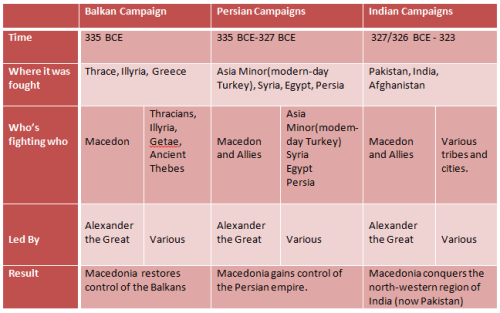
The Lines of the Battle of Zama

The Carthaginians did not think that the Romans, or anyone for that matter, could stop them from taking world. Hannibal had defeated the Romans with the tactic of circling around them and had taken the Romans and Scipio down. However in 202 BC, Scipio returned to Rome and wanted revenge and take Hannibal down to his knees.

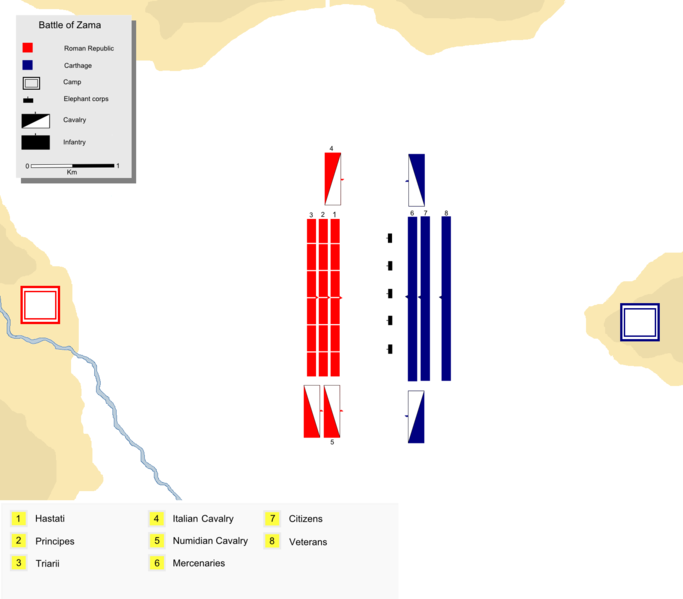
The Carthaginians definitely had the upper hand at first glance. Hannibal had 45,000 people in infantry, 4,000 men in cavalry, and had eighty war elephants (Wikipedia). Hannibal had put his people in three rows, and the last row being farther back than the others with the elephants at the front of his army. “He placed his elephants in front so that their irregular charge and irresistible force might make it impossible for the Romans to keep their ranks and maintain the order of their formation, in which their strength and confidence mainly lay. Then he posted the mercenaries in front of his Carthaginians, in order that this motley force drawn from all nations, held together not by a spirit of loyalty but by their pay, might not find it easy to run away.” (Livy)

However, Scipio used the same tactic as Hannibal did when they had the first Punic War. Scipio turned the tables on Hannibal by having three rows of his army, which only had 34,000 in infantry and 9,000 men in cavalry, but had the infantry all according to the best warriors. “The Hastati first, with an interval between their maniples; behind them the Principes, their maniples not arranged to cover the intervals between those of the Hastati as the Roman custom is, but immediately behind them at some distance, because the enemy was so strong in elephants. In the rear of these he stationed the Triarri. On his left wing he stationed Gaius Laelius with the Italian cavalry, on the right Massanissa with all his Numidians.” (Polybius) The Hastati, Principes, and the Triarri were all according to the classman of the Roman army.

The reason why the Romans had won even with the disadvantage is that they had blown horns to scare the Carthaginian war elephants and the elephants almost completely wiped out the left wing side of the Carthaginian lines. With the elephants out of the way, Scipio made the Romans go behind the Carthaginians and stab them in the back as well as surrounded them, and ultimately destroying them in the second Punic War.

Works Citied:

http://www.perseus.tufts.edu/hopper/text?doc=Perseus:text:1999.01.0234:book=15:chapter=9

http://etext.lib.virginia.edu/etcbin/toccer-new2?id=Liv4His.sgm&images=images/modeng&data=/texts/english/modeng/parsed&tag=public&part=5&division=div1

http://en.wikipedia.org/wiki/Hastati

http://en.wikipedia.org/wiki/Battle_of_zama

Leave a comment

Filed under Uncategorized

Roman Military Tech at the Battle of Zama

The Battle of Zama was fought in October of 202 b.c.e. which was the deciding battle in the Second Punic war and brought Carthage under Roman control. The battle was fought in North Africa near Carthage. The forces involved were Hannibal and his 51,000 troops and 80 war elephants for Carthage against Scipio Africanus and his 40,000 Roman soldiers. The battle was a decisive victory for the Romans with casualties on the Carthaginian side over 20,000 and the same number captured. The Roman force suffered 5,500 casualties in comparison. (Wikipedia)

The military technology used at this time was the standard load-out for the Romans. From the Archeological and Documentary evidence found for this time period the following weapons and armor are assumed to have been used by the Romans:

Gladius Hispaniensis: The basic short sword used by the Romans that was adopted from Spain.

Gladius Hispaniensis

Pila: The throwing weapon of choice for Legionaries.

Pilum

Pugio: The dagger that was the fallback weapon when all else had failed.

Also used at this time was Artillery that threw heavy pieces of debris or other pieces of material. The exact information regarding the artillery pieces are sketchy at best due to the lack of physical evidence to verify what they did exactly. The artillery was constructed with information gathered from Defectors from the Greek forces of the time thus enabling the Romans tech without the pain of trial and error. (Bishop)

The standard armor kit for the Roman soldiers at this point was a Chain or Ring Mail. This was light enough for desert campaigning while also providing the protection needed for close combat. The last piece of protective equipment that was used was the Scutum, or large shield that provided the protection needed to wage war in the Phalanx formations that Romans favored. (Zhmodikov)

Possibly the most telling information we have regarding the military tech of this time is summed up in the following statement:

“Our ignorance of the equipment and garb of Republican Soldiers is almost total: for not only is the archaeological evidence lacking, but also there is hardly any representational material to help fill the gaps.” (Bishop)


Works Cited

Bishop, M.C. Roman Military Equipment: from the Punic Wars to the fall of Rome. Oxbow: Oxford, 2006. Print.

Wikipedia. Battle of Zama. February 2012. Web. February 2012.

Zhmodikov, Alexander. Roman Republican Heavy Infantrymen in Battle. Verlag, 2000. Web.


Leave a comment

Filed under Cohort VII Scutum Decoris

Horses, Camels, Elephants, Oh my!


Alexander’s army of 65,000 Macedonians was also accompanied by 1300 baggage animals and 6100 cavalry horses, according to Engel. The estimation of this exact number of animals would fluctuate due to the provisions  being carried, availability of animals, as well as those lost to sickness and exhaustion. Horses, mules, and camels were the main types of pack animals included in Alexander’s baggage train.

 In addition to food and provisions, some pack animals were used for carrying non-comestible supplies like tents, hammocks, firewood, medical supplies, and treasure. A few horse or mule-drawn carts were designated to carry siege weapons, act as the army ambulance, or sometimes carry women and children. These were limited due to their tendency to break down and their cumbersome nature over rough terrain. Carts were additionally restricted because of the inefficient throat and girth harness, which was placed directly over the animal’s windpipe: the harder the horse pulled, the more it choked him. (Engel)

Horses and mules are basically the same as far as rations and carrying capacity; both  require an average of ten pounds of grain rations, ten pounds of grazing fodder, and eight gallons of water per day (Engel 18). A horse or mule can carry two-hundred pounds and each animal is capable of pulling a load directionally proportional to its body weight. The animals can bear the load, whether from pack or rider, for about five to seven consecutive days. After that, they will need to rest and have time – at least sixteen hours a day – for grazing to stay in good condition (Sidnell 85). Being a military campaign, conditions were not particularly ideal for the animal. Many horses died from exhaustion and/or malnutrition because the speed of the march prevented them from grazing, even though there was plenty of grain supply (Engel 81). Under these types of harsh conditions, common equine health issues may have also included wounds, poor body condition, respiratory diseases, parasites, dental problems, and lameness (Burn et al.)

Unfortunately, sick, injured, or exhausted horses were an encumbrance to the army and had to be left behind. Worse things could happen to a pack animal, namely being engulfed by sand, washed away by monsoons, or eaten by hungry soldiers (Arrian 6.24.4-6, 6.25.1-3, 6.25.4-5). Alexander turned a blind eye on this sort of ravenous activity, especially during desperate times. It made sense for the soldiers to eat the animals – after all, the average camel carcass provides 900-1400 pounds of meat (Wikipedia Contributors).

The introduction of the camel may have occurred after the Battle of Issus where Darius’ baggage train, which included camels, was captured by Alexander’s army. The benefits of using camels as pack animals in arid climates is obvious; camels are genetically developed to withstand temperatures and conditions that would kill most other animals (Wikipedia). A camel can also carry at least one hundred pounds more than the typical horse or mule (Engel 14). The largest disadvantage of using camels is that they require more water – ten gallons per day on average (Engel 18).
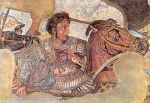
A mosaic depiction of Alexander and his horse Bucephalus at the Battle of Issus.

Besides camels, Alexander’s entourage even included elephants at times, some of which were captured from enemy baggage trains or rounded up from abandoned settlements (Arrian 3.15.4,4.30.7). When Alexander arrived at the Indus River, he was presented with thirty elephants in addition to the two ships, two hundred silver talents, three thousand sacrificial oxen, and ten thousand head of cattle (Arrian 5.3.5). Alexander’s horse, Bucephalus, was bred from famous Thessalian strain and cost thirteen talents – enough money for a Greek laborer to live on for a hundred years (Sidnell 85).

Among the 6100 cavalry horses, there are three distinct breeds that may have used. The first is an extinct breed: the Nisaean. Sixteen hands high and very muscular, the sacred Median horses were prized for their unusual size and strength. They were the most valuable horses in the ancient world and regarded as the most beautiful horses alive (Wikipedia Contributors). Modern descendants of the Nisaean include the Iberian breeds such as the Andalusian and Lusitano. The second breed used by the Macedonians, the Ferghana, is also extinct. Bred in what is now modern Uzbekistan and measuring at 15.3 hands, this ‘celestial’ breed used by Alexander was also greatly sought after by the Chinese to establish an Imperial bloodline. Emperor Wu Ti’s army suffered fifty thousand casualties when he forcibly seized three thousand stallions from Ferghana (Sidnell). The third breed, the Akhal-Teke, is the only one still in existence. A bit smaller than the Ferghana and more finely built than the Nisaean, these horses have prodigious stamina and beautiful, shining coats that look almost metallic in sunlight; the capital of the country from which the Akhal-Teke originate was even called ‘Bactra of the Golden Horses’ (Sidnell 85).
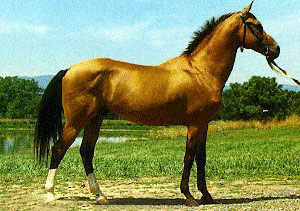
A modern day photograph of an Akhal-Teke. Tekes come not only in gold, but also in many other colors including bronze, copper, and obsidian.


A dark brown Andalusian horse. Andalusians and other Spanish breeds are believed to be descended from the now extinct Nisaean horse - the most beautiful and valuable breed in antiquity.


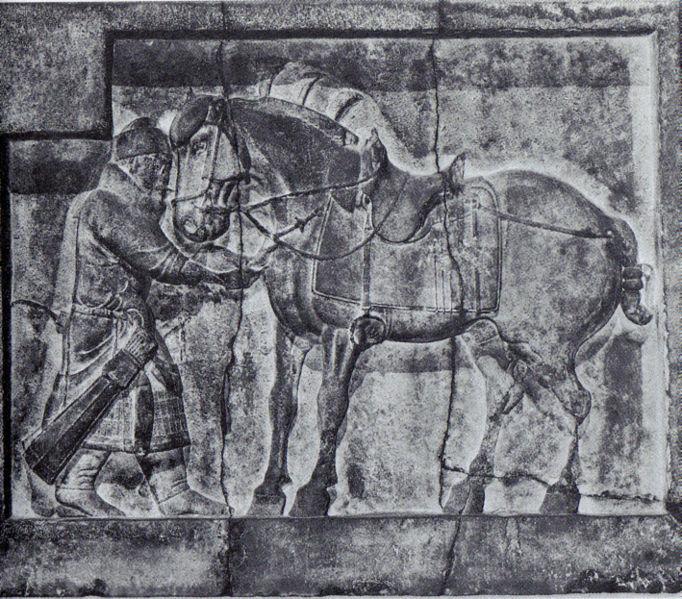
One of Emperor Taizong's horses from Zhaoling - likely to have Ferghana bloodlines. Tang Dynasty (c.650). University of Pennsylvania Museum of Archaeology and Anthropology.


Works Cited

Arrianus, Lucius Flavius. The Landmark Arrian: the Campaigns of Alexander. New York: Pantheon Books, 2010. Print

 Sidnell, Philip. Warhorse: Cavalry in Ancient Warfare. New York: Continuum Books US, 2006. Print

 Engels, Donald W. Alexander the Great and Logistics of the Macedonian Army. Berkeley: University of California Press, 1978. Print.

 Burn, Charlotte C., Tania L. Dennison, and Helen R. Whay. “Relationships between behaviour and health in working horses, donkeys, and mules in developing countries.” Applied Animal Behaviour Science 126, 3 (2010): 109-118. Web. 8 Feb. 2012

Wikipedia contributors. “Nisean horse.” Wikipedia, The Free Encyclopedia. Wikipedia, The Free Encyclopedia, 12 Dec. 2011. Web. 9 Feb. 2012.

Wikipedia contributors. “Camel.” Wikipedia, The Free Encyclopedia. Wikipedia, The Free Encyclopedia. Web. 8 Feb. 2012.

Leave a comment

Filed under Cohort II

Logistics of Alexander the Great: Fleet as Troop-Transport

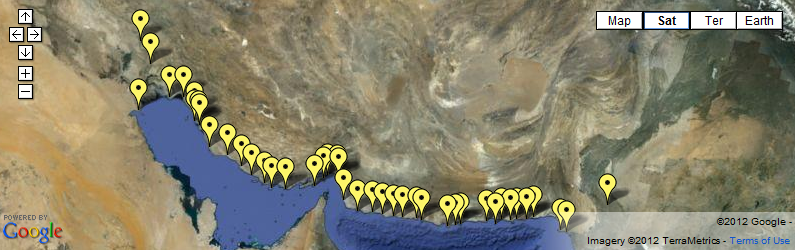
The coastline of the Indian Ocean and the Persian Gulf from the Indus River (far right) to Susa (top left). The markers indicate known or possible areas noted by Nearchus. Image copied from “Nearchus” page at Livius.org.

When Alexander the Great’s troops refused to continue on the Indian campaign, Alexander ordered a fleet built on the Indus river and appointed Nearchus as its admiral. The voyage of the fleet began in September 326 BC (Lendering) and ended at Susa in early 324 (Wikipedia contributors). Along the way, they fought various “barbarian” tribes living along the coast (Arrian, Indica).

The fleet consisted of 800 ships, consisting of “ships of war, merchantmen and horse transports, besides others carrying provisions as well as troops” (Arrian, Indica, 363). Nearchus’ fleet ferried about 1/6th of Alexander’s soldiers: 17,000 – 20,000 men total (Lendering).

They had to sail very close to the coast in order to find fresh water and food, sometimes stolen from the barbarians they fought, sometimes left for them by Alexander and his troops marching inland (Arrian, Campaigns, 256). Before Nearchus set out, Alexander took some ships down both arms of the Indus river to see which would be easier to sail down. He set down garrisons of grain and supplies and dug wells along the Eastern fork, though according to J. R. Hamilton, Nearchus most likely ended up going down the Western branch (perhaps forced by the barbarian attacks) (503).

Some of the fleet was lost to the summer monsoons, a few more ships lost to squalls as they were travelling, and sometimes men were lost in the fights with the coastal barbarians. Though there were a few losses, most of the fleet arrived safely in Susa, where they met with Alexander and the surviving troops and the navy had a great celebration (Arrian, Indica, 429).


Works Cited


Arrian. Arrian II: Anabasis of Alexander, Books V-VII. Indica. Trans. P.A. Brunt. Ed. G.P. Goold. Cambridge: Harvard University Press, 1983. Print.

Arrian. The Landmark Arrian: The Campaigns of Alexander. Trans. Pamela Mensch. Ed. James Romm. New York: Pantheon Books, 2010. Print.

Hamilton, J.R. “The Start of Nearchus’ Voyage.” Historia: Zeitschrift für Alte Geschichte 43.4 (1994): 501-504.

Lendering, Jona. “Nearchus.” Livius. Livius.Org, 2009. Rev. 1 Jan. 2009. Web. 9 Feb. 2012. < http://www.livius.org/ne-nn/nearchus/nearchus.html&gt;

Wikipedia contributors. “Nearchus.” Wikipedia, The Free Encyclopedia. Wikipedia, The Free Encyclopedia, 11 Jan. 2012. Web. 9 Feb. 2012.

Leave a comment

Filed under Cohort VII Scutum Decoris

Alexander the Great: Organization and Leadership of the Macedonian Army

As leader of the Macedonian army, Alexander the Great showed by example what he wished his soldiers to be. He dressed like his soldiers and interacted with them in camp, which gave his troops a feeling of love and concern from their commander and won great affection (Straker). Coupled with his determination and courage, he was able to win the loyalty of his men that endured even in the most desperate of times (Straker). He would most commonly be found at the front of a charge in clear view of  his men and as an obvious target for his enemy. It is likely that he was wounded in battle more frequently than any of his men (Burn, 140).  He built their morale up from the beginning, instilling in them a sense of moral superiority and the belief that under his command nothing was impossible (Burn, 140).

Alexander kept a relatively small army, never numbering more than 40,000 total cavalry and infantry, giving them the advantage of speed and mobility (Straker).

Cavalry:

Hetairoi or companion cavalry was the most prestigious of the mounted troops. During the reign of Phillip II, these soldiers were selected only from Macedonian nobility. Under Alexander, the number increased from 600 horsemen to 3000 troopers. The hetairoi were organized in ilai or “wings” of 200 men, with the exception of the basilike ile (royal squadron) which consisted of 300 to 400 cavalrymen (van Dorst). During battle, these soldiers generally rode in a wedge formation and depending on the circumstances could be heavily or lightly armed. Cavalry men generally always wore metal helmets and body armor (consisting of linen or leather corselets with metal scales, or breastplates made from iron or bronze) and were equipped with heavy thrusting spears, javelins and always carried a sword as a secondary weapon. Shields were reserved for dismounted actions. Prodromoi, the light cavalrymen and scouts of the Macedonian army, were equipped with javelins when on a reconnaissance mission but could be redressed and serve as heavy cavalry (or sarissophori) in battle (van Dorst).It is believed that Alexander’s cavalry forces were an important part of his success in battle, and they were “unmatched on their own ground” (Burn, 141).

Infantry:

Infantry men were recruited territorially. Each Macedonian province provided a single taxis or regiment of pezhetairoi or foot companions, and each regiment consisted of approximately 1500 soldiers (van Dorst). Command of these regiments was usually given to nobles originating from the same province as the men they commanded. The phalanx infantry was much more flexible than the Greek hoplites—equipment and tactics were adjusted to suit different battle situations. Each was equipped with a hoplite shield and normal length spear, which could be traded for light  javelins or a a long pike requiring both hands and a sarissa, or rimpless shield hanging from the shoulder (van Dorst).

Phalanx with Pikes (Wikipedia contributors)

Another very important part of the infantry was the hypaspistai or shield bearers, comprised of 3000 men organized into subunits of 1000 soldiers. The elite formation of shield bearers was the argyraspides or “silvershileds.” Membership in this unit was based entirely upon merit as a soldier in one of the taxes, rather than upon status and nobility (van Dorst). These soldiers were frequently used on special duties and were more likely to carry lighter arms and equipment. In engagements, the shield bearers were generally deployed in the dangerous place of honor—the right flank of the heavy infantry line (van Dorst).

Tactics:

Alexander generally aimed to force his enemy into rapid decisions that would confuse and lower morale. Success depended largely on undermining the confidence of the enemy, and attacking them at weak moments—particularly when the enemy forces were tired after long marches or lack of sleep (van Dorst). He also used tactics such as a fierce cavalry charge on a small portion of the enemy’s forces to break morale and cause panic among the units not yet engaged in the battle (van Dorst).

Works Cited:

Burn. A. R.. “The Generalship of Alexander.” Greece & Rome, Second Series. Vol. 12, No. 2. The Classical Association, Cambridge University Press. 1965. JSTOR. 7 Feb. 2012.

Straker, David. “Alexander the Great.” Changing Minds. Changing Minds. Web. 9 Feb. 2012. http://changingminds.org/disciplines/warfare/commanders/alexander_great.htm

van Dorst, Sander. The Army of Alexander the Great. Ancient Warfare. 2000. Web. 7 Feb 2012. http://s_van_dorst.tripod.com/Alexander.html

Wikipedia contributors. “Macedonian army.” Wikipedia, The Free Encyclopedia. Wikipedia, The Free Encyclopedia, 17 Apr. 2009. Web. 9 Feb. 2012.

2 Comments

Filed under Uncategorized

Alexander and the Animal Train

In one of Alexander’s early campaigns, he traveled through Asia Minor in an attempt to conquer the Persian Empire. Alexander wanted to fight the Persians to silence them, in contrast to his father who wanted to form peace treaties with the Persians while he was on the throne. The conquest of Alexander began in the year 334 BC with 48,100 soldiers, 6,100 cavalry, and a fleet of 120 ships. (Rosiman. 2010) Accompanying his army was a baggage train which carried supplies for the soldiers.

The animals in the baggage train were an important component to the army; they frequently carried large loads of food and other necessary items such as siege equipment or cookware for the soldiers. Baggage trains consisted of anywhere from 520 to 1500 animals. (Shean. 171) Typically horses, mules, and camels were used due to their ability to carry large loads, but still keep a rapid pace. Horses and mules could carry about 200 pounds and camels were able to carry around 300 pounds. Oxen and donkeys were not utilized because they weren’t as quick and, therefore, slowed down the progress of Alexander’s conquest. Animals were generally superior to man in their ability to carry large loads, but their downfall was in the recovery process. After multiple days of hard work, the animals were not able to promptly recover with a little nourishment and rest like man. For this reason, a careful watch was kept over the animals, “the transport animals of an army shall be regarded as worth their weight in gold, no care or supervision can be too great or too strict.” (Engels. 1980)

Alexander’s army encountered harsh conditions along the way that took an extra toll on the animals. The greatest difficulty for the animals was traveling through the desert. The extreme heat, lack of water, and sandy terrain drained their energy. Marching through the sand was complicated; the uneven soil caused them to stumble frequently and the sand didn’t support their weight like solid ground (Arrian. 2010). Instead, their feet seemed to sink through the sand rather than walk in it.

Image

The camel in the photograph above is the type of pack animal that Alexander would have used for his campaign. Although camels are well known for their ability to store water, they need to drink as much as other pack animals, but are able to go for longer periods of time without taking a drink.


Works Cited

Arrian. (2010). The landmark arrian : the campaigns of alexander. (J. Romm, R. Strassler Eds.). (P. Mensch Trans.). New York: Pantheon Books. (Original work published 2005)

Engels, D. (1980). Alexander the great and the logistics of the macedonian army. (pp. 126-130). Los Angeles: University of California Press.

Roisman, Joseph; Worthington, Ian (2010). A Companion to Ancient Macedonia. John Wiley and Sons.

Shean, J. (1996). Hannibal’s mules: The logistical limitations of hannibal’s army and the battle of canne. 216 b.c. Historia: Zeitschrift fur Alte Geschichte, 45(2), 170-174.

warsame90. (2008). Camel pack animal transporting nomadic materials. In Retrieved from http://en.wikipedia.org/wiki/File:Eylcamel.jpg


Leave a comment

Filed under Cohort VII Scutum Decoris

The Women and Changes of Alexander the Great

From the moment that Alexander III of Macedonia was born, he was born into a world that was for his taking. After the death of his father, Philip, Alexander started his rein to take over the world in 336 BCE and would keep going until his death in the summer of 323 BCE. Alexander had to “reaffirm Macedonian power in Greece, Alexander defeated Persian forces in a first battle at the River Grancius in northern Asia minor.” (Brosius, 31)

The problem that Alexander faced, that may have been even more difficult than trying to rule the world, was that Alexander had to win over the countries he had invaded. Alexander took prisoners of war such as noble men and women, and made them a part of his court in order to understand the culture of the Persians. One of whom was Barsine. “Alexander, esteeming it more kingly to govern himself than to conquer his enemies, sought no intimacy with any one of them, nor indeed with any other women before marriage, except Barsine, Memnon’s widow, who was taken prisoner at Damascus.” (Plutarch, Life of Alexander, 21.7-9) Alexander knew that he had to get married in order to win the heart of the Persians and to better communicate with them, but Barsine did not cut it. She was too “Greek” and European, and not Persian enough. Though being a noblewoman, he could not take the risk. The picture below is of what the Persian noblewoman looked like. (Livius)

This had led to Alexander falling in love with Roxane (Roshanak). She was a prisoner of war at the young age of sixteen and Arrian wrote “Alexander fell in love with her at sight; but, captive though she was, he refused, for all his passion, to force her to his will, and condescended to marry her.” Ultimately, Roxane was Alexander’s first official wife even though he had a child with Barsine.

With falling in love with Roxane, Alexander fell in love with Persian culture. The most prestigious interesting thing that the Persians did that the members of Alexander’s court from Macedonia loathed was “Proskynesis.” “When the Persians meet one another in the roads, you can see whether those who meet are of equal rank. For instead of greeting by words, they kiss each other on the mouth; but if one of them is inferior to the other, they kiss one another on the cheeks, and if one is of much less noble rank than the other, he falls down before him and worships him.” [Herodotus, Histories 1.134] Alexander started to use proskynesis and his followers did not believe that he was losing his heritage, as pride was a huge issue for the Macedonians. However, Alexander believed that to rule over the Persians, he had to change himself and his people and have a good medium. He thus forced many of his soliders to marry Persian woman after he had concurred another part of the Persian empire.


Works Citied:

http://www.livius.org/ba-bd/barsine/barsine.htm

http://www.livius.org/ro-rz/roxane/roxane.htm

Brosius, Maria. The Persians: An introduction. New York: Routledge, 2006. Print.

http://www.livius.org/aj-al/alexander/alexander_t54.html

http://www.livius.org/pp-pr/proskynesis/proskynesis.htm

Primary Source: Herdotus, Arrian, Pulrach

1 Comment

Filed under Cohort VII Scutum Decoris

Feeding the 5,000 (A Dozen Times Over)

How Alexander Perfected his Supply Chain

Plutarch credits Alexander The Great with “greatness of soul, keen intelligence, self-restraint, and manly courage.” All excellent traits, but are they enough to keep an army fed and watered as he “shower[ed] the blessings of Greek justice and peace over every nation” he could reach for over a decade?

Alexander, son of Philip II,  led what some have called “the most formidable military expedition ever to leave Greece,” heading an army of approximately “43,000 infantry and 5,500 cavalry,” plus camp followers and animals on an “eleven year” campaign from Macedonia all the way to “the Indus Valley.” (Hemingway)

Engels estimated that the “65,000 personnel” alone of Alexander’s convoy would have consumed 195,000 pounds of food and 32,500 gallons of water each day. Each man could only carry about ten days’ worth of rations (3lbs a day) and water ( ½ gallon, 5lbs a day) at a given time.  Pack animals could ease the burden a little and carry some extra supplies, but each animal needs its own ration (20lbs grain and 20lbs forage a day) and water (80lbs a day) in addition to that of the men, the baggage animals, and the cavalry horses. So how did Alexander manage to supply an army that needed 511,000 pounds of food and 158,900 gallons of water every day?

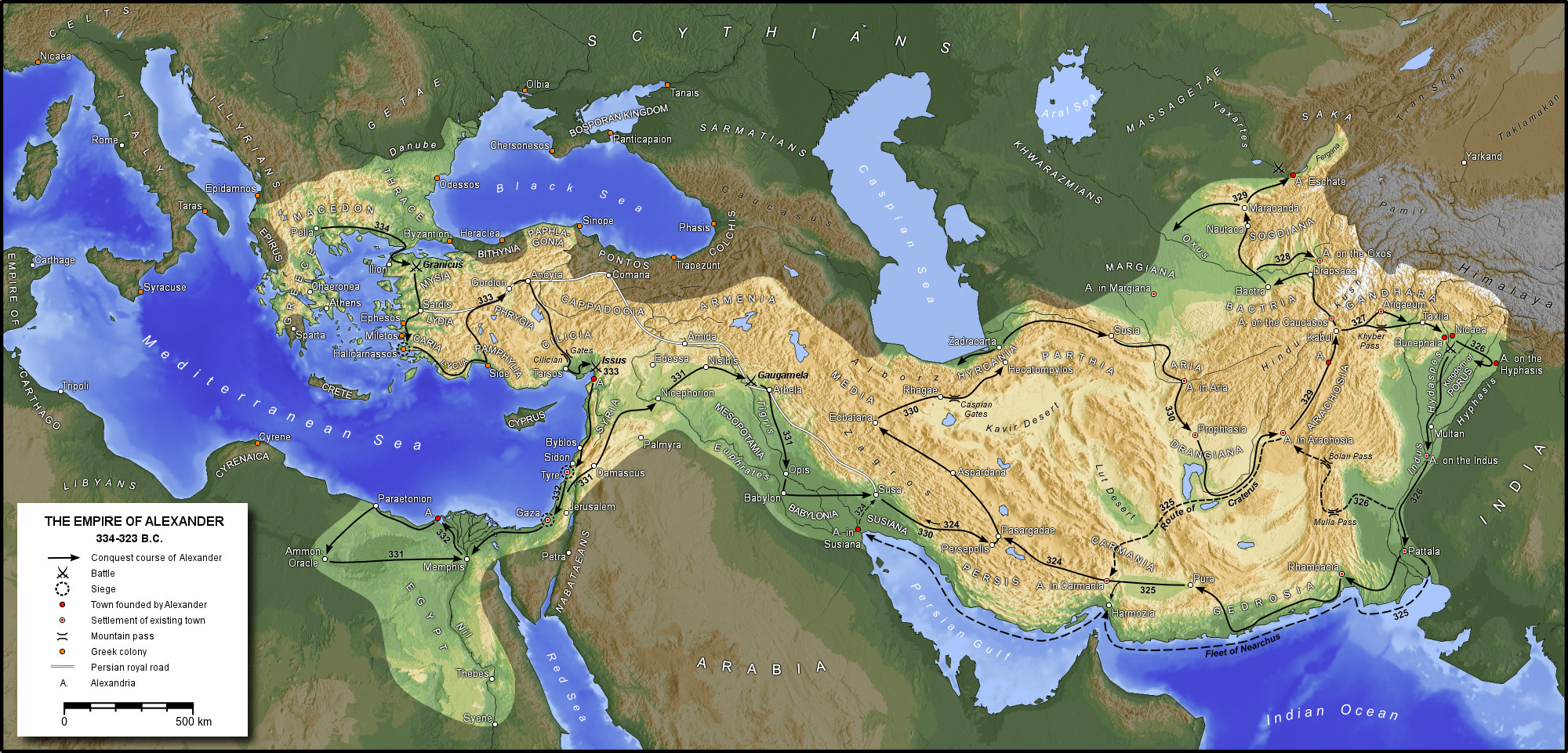
First, he planned his route carefully. As the map shows, he didn’t try to blaze straight across deserts; he followed water when he could, keeping to lush, green riverbanks with ample fresh water and easy naval access. Equal care was given to the timing of each stage of the campaign. “In addition to synchronizing his troops’ actions with harvest cycles …He timed his departure so the 30-day supply of rations, carried by sea transport, would last until 10 days after harvest at the first destination city. This provided a seamless supply of food and water for his men.” (Van Mieghem) Each conquered city was used wisely as a base or for its farm land. Of course, some cities didn’t need to be conquered; some surrendered, and willingly offered alliances and supplies, to avoid being crushed by Alexander’s army.

He also “maximized swiftness of action and flexibility of the army by eliminating the usual [camp followers]…” and by “order[ing] forced, or double-time, marches to conserve supplies in difficult circumstances.”

Alexander’s knowledge of logistics proved to be one of his most effective tools in extending his reach across so much of the known world, and carving his name into the history of our culture.


Following water and skirting around deserts to ease the way


Works Cited


Engels, D. W. (1978). Alexander the Great and the Logistics of the Macedonian Army. Berkely: University of California Press

Hemingway, Colette, and Seán Hemingway. “The Rise of Macedonia and the Conquests of Alexander the Great”. In Heilbrunn Timeline of Art History. New York: The Metropolitan Museum of Art, 2000–. http://www.metmuseum.org/toah/hd/alex/hd_alex.htm

Plutarch. (1936). De Fortuna Alexandri. IV, Loeb Classical Library edition. Retrieved February 08, 2012, from http://penelope.uchicago.edu/Thayer/E/Roman/Texts/Plutarch/Moralia/Fortuna_Alexandri*/1.html

Van Mieghem, Timothy. “Logistics Lessons From.” Quality Progress. Jan 1998: n. page. Web. 9 Feb. 2012. http://www.proactiongroup.com/news/logisticslessons.pdf


Leave a comment

Filed under Cohort VII Scutum Decoris

Seers and Omens in Time of Alexander the Great


Even before Alexander is born to his father King Phillip and his mother Olympia, Aristander played a part in the story of the man who came to be known as Alexander the Great.  King Phillip dreams of sealing up the womb of Olympia with a seal which bore the likeness of a lion device. The soothsayers were suspicious about the dream because they believed that it meant that the King should keep better track of his wife.  Seer, Aristander interprets it to mean that the unborn child will be lion-like and brave (Aristander).

The Greeks were known for their belief in seers and soothsayers.  Alexander the Great was no exception.  He relied on many seers that traveled with him during his campaign in Asia. Aristander has been called the seer extraordinary of Alexander the Great. In one instance he was called upon to explain the strange flight of birds, and on another occasion he was asked what a spring of oil meant by a river (Robinson).  These are just a couple of examples of how Alexander the Great relied on seers to help him interpret what he believed constituted signs about the future.

Aristander performed three main functions in his service to Alexander.  He assisted with the daily sacrifices of animals by determining their status. He interpreted omens and provided prophecies.  The third function was to interpret dreams (Powler).

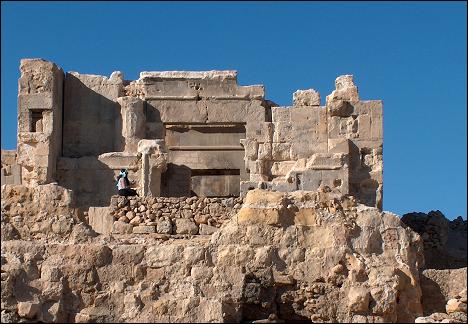
Another thing that Alexander believed in was oracles.  During his conquest he visited the Oracle of Amon on his quest for confirmation that he was the son of Zeus, the Grecian God.  It was Alexander’s wish to be buried at Siwa.  This is a photo of the entrance to the temple complex as it appears in modern times.

Entrance to the Temple site at Siwa

The Inside Wall of the Temple

http://www.minamar.com/alexander-the-great-oracle-siwa-oasis.html

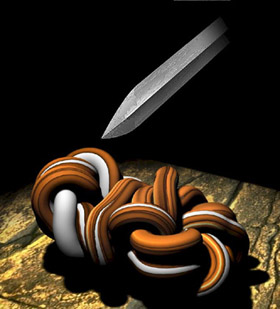
Alexander was in the city of Gordium, Turkey after the battle of Grancius.  Some of the Spartans had been persuaded not to support Alexander. This caused Alexander to hesitate to move forward with his campaign to conquer Asia due to the mixed support of the Greeks.  Gordium was the location of the Gordian knot and it what prophesized that the man who could untie the knot would rule Asia.  Alexander untied the knot buy slashing it with a sword  Alexander took this instance as an omen that he should continue his campaign to conquer Asia (Gill).


The Gordian Knot

http://www.maa.org/devlin/devlin_9_01.html


Works Cited

Aristander. n.d. 7 Feb 2012. <http//en.wikipedia.org/wiki/Alistander>.

Gill, N.S. Gordian Knot-Alexandelr Solves the Gordian Knot. 2012. 9 Feb 2012. <http://ancienthistory.about.com/od/alexanderterms/g/GordianKnot.htm&gt;.

Powler, Thomas-William. All About Alexander the Great. 1994. 7 Feb 2012. <http://www.pothos.org/content/index.php?page=pothos&gt;.

Robinson, Jr. C.A. “The Seer Aristander.” American Journal of Philology 1929: 195-197. 7 Feb 2012. <http://www.jstor.org/stable/290420&gt;.


Leave a comment

Filed under Uncategorized

Alexander the Great: Siege of Gaza

The siege of Gaza occurred in 332 B.C.E. at the city of Gaza. Gaza is a coastal city on the Aegean coast (Fig. 1). Gaza posed a significant challenge because it is located on a plateau that rises up to 60 feet over the surrounding areas. The siege was between Alexander and his 45,000 strong force of Greeks against Batis, King of Gaza and his 49,000 soldiers of the Achaemenid Empire.


Around October of 332 B.C.E. Alexander the Great was on his march south to Egypt in order to secure his flank before marching across the Middle East on his mission of World Conquest. Alexander wanted to shore up his rear In order to avoid having issues behind him so that all of his focus would be in front of him. One of the cities on his path was Gaza, which was ruled by Batis, who was loyal to Egypt.

Alexander arrived at Gaza and quickly spotted the southern walls as the weakest point in the city. Thus he set his siege sights on that part of the city. He quickly built up mounds from which siege weapons would begin to batter the walls. Batis knew that Alexander was coming for Gaza and had therefore provisioned his city in order to withstand a long siege, hoping for the arrival of the Egyptian army to meet Alexander in open battle.

It took 3 unsuccessful attempts to capture the city before Alexanders forces stormed the city and was able to finally bring the city to its knees. When the city fell the men were “put to the sword” and the women and children sold into slavery.

This was the last major obstacle on the Aegean coast for Alexander. After the city fell Alexander was able to successfully claim Egypt and begin his march across the known world.


Bosworth, A.B. Conquest and Empire: The Reign of Alexander the Great. Cambridge: Cambridge University Press, 1988. Web.

Wikipedia. Siege of Gaza. February 2012.


Leave a comment

Filed under Uncategorized