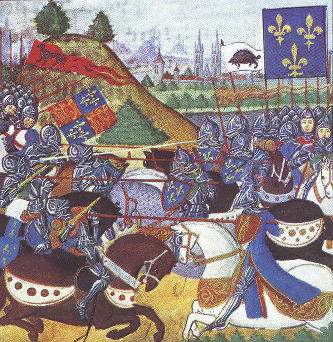
Battle of Marathon

Philippides26

Honors 2110B

Blog 1

September 20, 2016


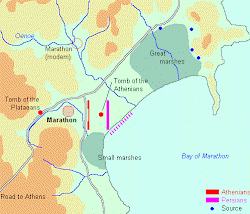
Location of the Battle of Marathon

The Battle took place near the shore near modern day Marathon, Greece.  About 42km from Athens.  The location of the battle was chosen by the Persians because they landed their ships there because it was a best place for them to be able to use their cavalry effectively.

As you can see in the upper right-hand image, there were two marshes on either side of where the battle took place.  This turned out to be an important detail as the battle went on.

pic-1

(Lendering, 2015)


Strategy and Tactics
pic-2 (Used under the Creative Commons Attribution-ShareAlike License)

(The Battle of Marathon, n.d.)


The battle consisted of 10,000 Athenians against 25,000 Persians.  So in order for the Athenians to have a chance at winning they needed a good strategy.  What they did was have a thinner battle line in the middle and put more men on the flanks as they ran into battle.  The Athenians charged the Persians at full sprint and the battle commenced.  As the battle went on the outer edged of the Athenian army began to push back the Persians while the Persians pushed the Athenians back in the middle.  At that point the Athenian flanks turned inward on the Persians and surrounded them.  The Athenians completely surrounded the Persians and began to close in on them quickly.  The Persians began to drop quickly and began to retreat back to their ships and run along the shore.  The two big marshes made it so they couldn’t get very far and many drowned in the marshes and were killed trying to run away.  In the end it is said that 6,400 Persians died and only 194 Athenians died in battle.

Works Cited

Lendering, J. (2015, August 15). Marathon (490 BCE). Retrieved from Livius: http://www.livius.org/articles/battle/marathon-490-bce/

The Battle of Marathon. (n.d.). Retrieved from Wikipedia: https://en.wikipedia.org/wiki/Battle_of_Marathon


Leave a comment

Filed under Uncategorized

Testing, 1 2 3

Did it work? 😀 Am I finally a blogger like I always dreamed of?

Leave a comment

Filed under Uncategorized

test post

Leave a comment

Filed under Uncategorized

Test post

I’m making sure I can publish a post.

Leave a comment

Filed under Uncategorized

short post

Leave a comment

Filed under Uncategorized

Test Post

This is a test post as requested.

Leave a comment

Filed under Uncategorized

Final Project 6, The Demise of Joan of Arc


“You say that you are my judge; take good heed of what you do, because, in truth, I am sent by God, and you put yourself in great peril.” -Joan of Arc 1429 (Translated from French)


For my final blog I will be focusing on the fall of Joan of Arc, beginning from her capture to her death.
Just as Joan’s aggressiveness in combat proved to be one of her greatest strengths as a military leader, so did it lead to her downfall. In early 1430, a truce with the English prevented Joan from engaging in combat. Respecting the wishes of her King, she honored the truce, but later confided to friends via letter, “I am not content with these truces and do not know if I will keep them” (Joan’s Letter to Reims).  Joan got the opportunity she was looking for when the truce ended in spring and went to Compiegne to fight against Burgundian and English forces. While she was there to defend against a siege, she attempted a similar method that had brought her success at Orleans: she launched an ambitious assault. This time, her aggressive maneuver failed, and her troops were overwhelmed by Burgundian reinforcements. While her forces retreated, she lingered, and was captured by Burgundians on May 23 (Geiger 32-34). Once in Burgundian captivity, she attempted to escape several times, and was ultimately transferred over to English possession (Pernoud 96).

Castle of Rouen, where Joan was imprisoned during the trial. http://en.wikipedia.org/wiki/File:Tour_Jeanne_D%27Arc10.jpg

Castle of Rouen, where Joan was imprisoned during the trial. http://en.wikipedia.org/wiki/File:Tour_Jeanne_D%27Arc10.jpg

Joan was then put on trial for heresy and spent her days in night in the Castle Rouen. The conditions of such trial were not in line with the ecclesiastical order of the church. Bishop Cauchon took the leadership role in the case, but he was clearly partisan in favor of the English. There were problems with technicalities of evidence, the committee was full of pro-English Bishops, and other bishops, such as Guillaume Manchon, later reported feeling terrified to speak anything against the pro-English viewpoint during the trial (Williamson 2005). True to her aggressive nature, Joan asked for French bishops, but her request was denied (Taylor 137).

Remarkably, we know very much about what went on at the trial because of the detailed minutes taken. Originally taken in French and then translated into Latin, the primary sources for the trial reveal a mentally exhausting back and forth in cross examination between Joan and her excusers. The majority of the heresy charges settled around Joan’s wardrobe, which she refused to change out of or denounce. Additionally, she was confronted with numerous theological trap questions, specifically designed to set her up to unknowingly denounce herself. Joan maintained her connection with the divine throughout the trial and navigated around the trick questions seemingly effortlessly. When asked if she believed she was in God’s grace, which was a trick question as no one can know, Joan responded, “If I am not, may God put me there; and if I am, may God so keep me. I should be the saddest creature in the world if I knew I were not in His grace” (Barett, Trans).

Joan was essentially condemned a heretic for cross-dressing. She was burned at the stake on May 30 1431, almost a year after being captured. During her entire time imprisoned, not once did her beloved King Charles VII reach out to try and free her. Charles’ lack of interest in her fate perhaps hints something about the true power dynamic between her and the King. Was she a pawn used and discarded? Was she in a much less powerful position than contemporary scholars credit her for?  Or was it the opposite, was King Charles VII content to let her go because she had gained too much prominence? The questions remain unanswered. However, almost assuredly, the scholastic community agrees that it was Joan’s drive and relentless determination that rose her to a place of prominence unheard of for peasant women in Europe at the time. It was also this drive and determination that sealed her fate.

Bibliography
BARRETT, Trans. W. P. “THE TRIAL OF JEANNE D’ARC TRANSLATED INTO ENGLISH FROM THE ORIGINAL FRENCH AND LATIN.” Medieval Sourcebook: The Trial of Joan of Arc (1932).

Geiger,Barbara (April 2008). “A Friend to Compiegne”. Calliope Magazine 18 (8): 32–34

Joan of Arc’s letter to the citizens of Reims, 5 August 1429; Quicherat I, p. 246, trans. Wikipedia.

Pernoud, Régine. Joan of Arc: Her Story, p. 96.

Taylor, Craig, Joan of Arc: La Pucelle, p. 137

Williamson, Allen. Excerpts of the Testimony on this subject at the Appeal. September 2005. 28 April 2014.

Leave a comment

Filed under Uncategorized

Final Project 5: Joan’s Military Strategies

“King of England, if you do not do these things, I am the commander of the military; and in whatever place I shall find your men in France, I will make them flee the country, whether they wish to or not; and if they will not obey, the Maid will have them all killed. She comes sent by the King of Heaven, body for body, to take you out of France, and the Maid promises and certifies to you that if you do not leave France she and her troops will raise a mighty outcry as has not been heard in France in a thousand years” (Joan of Arc, Halsal).

For my fifth blog I will be examining Joan’s military strategies. After convincing Charles VII to sponsor her mission, Joan was sent to the Siege of Orleans with a small army of troops. On April 29, 1429, while the rest of the French forced distracted the English on the west side of the city, Joan entered through the Eastern side. She brought with her troops and supplies, and gave speeches to inspire the French forces. The next week, Joan launched an offensive against the English. Joan played an active role in the battle, even getting injured. On May 8, the French were victorious, and the English retreated. Joan’s most significant battle strategies visible from the battle of Orleans was her clever entry of the city, ability to motivate her fellow soldiers, and tenacity to launch an assault (History).

The next battle Joan participated in was the Battle of Jargeau, Joan’s first offensive battle. It occurred as a result of a group decision of military leaders and the Dauphin, who wanted to clear the Loire Valley. First, the French forces launched an assault on the suburbs (Richey). The assault was successful, and the English retreated into the city while the French rested in the suburbs overnight. The next morning, the French began a siege of heavy artillery. Joan began an attack on the walls, and climbed up a ladder herself. Ultimately, it became an overwhelming French victory (DeVries).

Battle of Patay. Note that the English did not actually fight with horses. http://en.wikipedia.org/wiki/File:Patay.JPG

Battle of Patay. Note that the English did not actually fight with horses. http://en.wikipedia.org/wiki/File:Patay.JPG

Joan had once again demonstrated her commitment to her cause and her tenacity for accomplishing her goals. Joan fought in more battles until the culminating battle of the Loire Campaign, the Battle of Patay, which can be seen depicted in the picture above. The English attempted to use a strategy that had previously worked well for them: using many longbowmen, defended by large stakes in the ground in front of the army. However, it put the English at a disadvantage in hand-to-hand combat, which the French took advantage of. French scouts discovered the position of English archers and the position of the stakes. The French immediately launched an assault with Calvary, and massacred the English. Again, Joan’s willingness to charge full-steam ahead, allowed the French to secure another victory (Allmand).

Joan’s willingness to jump into battle gave France the much-needed boost to turn the tide of the war. Her bravery and conviction not only motivated her fellow soldiers, but gave them strategic advantages in war.
Bibliography
Allmand, C. The Hundred Years War: England and France at War c. 1300–1450. (Cambridge: Cambridge University Press, 1988)

DeVries, Kelly. Joan of Arc: A Military Leader (Glaucestershire: Sutton Publishing, 1999).

Halsall, Joan of Arc (Paul. “Medieval Sourcebook: Joan of Arc: Letter to King of England, 1429.” Fordham University Sourcebook (1996).

History. Joan of Arc relieves Orleans. April 1996. 25 April 2014.

Richey, Stephen W. Joan of Arc: The Warrior Saint. (Westport, CT: Praeger, 2003)


Leave a comment

Filed under Uncategorized

Final Project 4: France and Charles VII

For my fourth blog, I will be addressing the political climate in France during the time of Joan’s birth and her relationship with Charles VII.

Joan was born in 1429 during the Hundred Year’s War, which began in 1337. At the time of Joan’s birth, the French military was losing the war, the economy was suffering, and the French people were still recovering from the Plague. French leadership was inconsistent and unreliable and the English had set up a puppet crown that controlled much of France. The French King, Charles VII, struggles with bouts of depression, which resulted in messy family dynamics and an unclear leader and heir.

Charles VII (pictured above), who inherited the title of dauphin after his previous four older brothers died, became Dauphin when France was largely occupied by the English. He almost immediately faced assassination attempts on his life, was forced to flee from an English battle conflict, and was accused by his own parents of being an illegitimate child . After his father’s death, he finally declared himself King, although he still had a French rival for the position who was living under English capture. Charles VII stayed in Southrn France and did not try to take back Northern France from the English. He had no coronation.

In 1428 Joan, a teenager of estimated sixteen or seventeen-years-old, visited Lord Robert de Baudricourt, who refused to listen to her. She returned to her hometown and in July, a Burgundian army, another warring French political fraction which opposed Charles VII, passed through Joan’s town. Villagers were forced to hide out at a nearby village until all the soldiers passed through. In October the town of Orleans was put under siege by the English, and the English army started making an advancement further south.

By 1429, Joan had visited Baudricourt three times requesting an escort to visit the Dauphin. He finally obliged. Since Joan had claimed she could recognize him without ever having met him, the Dauphin tested her by dressing as a courtean. She immediately recognized him and bowed before him. After some convincing, the Charles VII finally sent her to stop the siege. Surprisingly, merely nine days after her arrival, Joan turned around the situation for a French victory. Charles was crowned King later.

While none of Joan’s letters to Charles survive, a copy of a written record of what she wrote has. It is said that in the letter, she inquired earnestly of the King what military action to take,”she was sending a message in order to learn whether she should enter the town where her aforementioned King was, and that she had come a good hundred and fifty leagues in order to come to his aid” (Blah). Thus, Joan’s letters to her king reveal her enthusiasm and commitment to military strategy.

Charles VII did not return such loyalty. Despite professing that Joan knew things about him he had only revealed to God, when she was captured by Burgundian soldier sand handed over to the English, he made no effort to free her. She was abandoned by the King she’d so passionately served.

For my fourth blog, I will be addressing the political climate in France during the time of Joan’s birth and her relationship with Charles VII.

Joan was born in 1429 during the Hundred Year’s War, which began in 1337. At the time of Joan’s birth, the French military was losing the war, the economy was suffering, and the French people were still recovering from the Plague (Gale Research). French leadership was inconsistent and unreliable and the English had set up a puppet crown that controlled much of France. The French King, Charles VII, struggles with bouts of depression, which resulted in messy family dynamics and an unclear leader and heir.

Charles VII, who inherited the title of dauphin after his previous four older brothers died, became Dauphin when France was largely occupied by the English. He almost immediately faced assassination attempts on his life, was forced to flee from an English battle conflict, and was accused by his own parents of being an illegitimate child. After his father’s death, he finally declared himself King, although he still had a French rival for the position who was living under English capture. Charles VII stayed in Southern France and did not try to take back Northern France from the English. He had no coronation (Gale Research).

In 1428 Joan, a teenager of estimated sixteen or seventeen-years-old, visited Lord Robert de Baudricourt, who refused to listen to her. She returned to her hometown and in July, a Burgundian army, another warring French political fraction which opposed Charles VII, passed through Joan’s town. Villagers were forced to hide out at a nearby village until all the soldiers passed through. In October the town of Orleans was put under siege by the English, and the English army started making an advancement further south (Williamson).

By 1429, Joan had visited Baudricourt three times requesting an escort to visit the Dauphin. He finally obliged. After some convincing, the Charles VII finally sent her to stop the siege. Surprisingly, merely nine days after her arrival, Joan turned around the situation for a French victory. Charles was crowned King later (Heritage History).

While none of Joan’s letters to Charles survive, a copy of a written record of what she wrote has. It is said that in the letter, she inquired earnestly of the King what military action to take,” she was sending a message in order to learn whether she should enter the town where her aforementioned King was, and that she had come a good hundred and fifty leagues in order to come to his aid” (Williamson, Joan of Arc’s Letter to Charles VII, 1429). Thus, Joan’s letters to her king reveal her enthusiasm and commitment to military strategy.

Charles VII did not return such loyalty. Despite professing that Joan knew things about him he had only revealed to God, when she was captured by Burgundian soldier sand handed over to the English, he made no effort to free her. She was abandoned by the King she’d so passionately served.

Bibliography

Fouqet, Jean. Portrait of Charles VII. 1445-14450, Louvre Museum, WikipediaCommons
Gale Research . Encylopedia of World Biography. 17 Vols 2nd ed. 1998. online. 23 April 2014.
Heritage History. Joan of Arc. 2014. Online. 25 April 2014.
Williamson, Allen. Joan of Arc, Brief Biography. 2005. Online. 25 April 2014.
—. Joan of Arc’s Letter to Charles VII, 1429. 2005. online. 25 April 2014.

Leave a comment

Filed under Uncategorized

Final Project 3, Virginity, Motherhood, and Joan

For my third blog I will be discussing Joan of Arc as a religious symbol and comparing her to another religious female figure during the medieval ages: the Virgin Mary.

Above is a depiction of the Virgin Mary, Mother of Jesus. While Mary was worshiped throughout the medieval ages, the Cult of the Virgin Mary gained prominence in Western Europe during the twelfth and thirteenth century (Women and Religion). Whereas society saw women as workers of evil, Mary exemplified goodness and therefore, emulation of Mary by women was an escape from sin (The Metropolitan Museum of Art). Uniquely, while existing as the ideal mother, Mary also was exempt from carnal sin by remaining a virgin (this was the understanding of medieval people). Thus, the Virgin Mary was what medieval women could strive to emulate, but could never truly do so. In her review of Marina Warner’s book, Alone in All Her Sex: The Myth and Cult of the Virgin Mary Joan of Arc: the Image of Female Heroism, Johanna Wolgast addresses this inadequacy, saying, “Mary is alone of all her sex in remaining pure while sexually functional. If the Virgin Mary is understood and interpreted as an eternal, super religious archetypal model for a woman’s individuation, all women are judged by this impossible ideal, and their universal inability to live up to it has truly insidious psychological consequences” (Wolgast 28)

Besides a figure to worship and emulate, the Virgin Mary also served as a balance to Eve, the other great mother, who had transgressed by tempting Adam in the Garden, and by doing so, doomed herself and all women to a life dominated by service to their male counterparts. Wolgast also addressed this in her review, saying “Eve’s transgression; her punishment in the form of pain at menstruation and labor; and her domination by her husband all express this idea with emphatic economy” (Wolgast 29). Thus, Eve was the mother that doomed mankind, while the Virgin Mary was the mother who brought salvation to mankind.

However, the Mary’s virginity also gave her a special standing beyond being what was impossible for other women. Beginning in the tenth century, virginity became associated with asceticism (a form of self-martyrdom) and marked a woman as separate from the subservience required of women who had sexual relations with men and bore them children.  Wolgast again raised this point in her review saying, “Female virginity was and is conceived of as above all a physical state, and so gives women a special potential for purity” (Wolgast 30). In this way, women were in a unique position which men were unable to participate in. “Free of male domination and of the responsibilities of motherhood, a virgin commanded respect, had an increase of independence even in seclusion, might travel on pilgrimages, endure trials, and create legend” (31). This was not to say that women were given equal footing as men, but their status as virgins could enable them to do things otherwise open to them.

Joan of Arc was one such woman who utilized the status of virgin, “At about sixteen, refusing to marry the man chosen for her by her family, hearing and obeying the voices of saints. She left home alone, determined-with the help of continuous communications from God-to save France” (Wolgast 31) Joan’s status as a virgin gave her the status of purity to not only make divine claims, but also to reject the marriage arranged by her parents and depart to visit with the French Crown. Partially because of her status as a virgin and thus having special purity, she was able to make grand claims about divinity support her cause (English translation, d’Arc, Maid of Orleans). In doing so, she aligned herself with a tradition of virgin woman warriors that even had a place in Greek history, such as with the case of Athena.


Bibliography

Germalde, Freskenzyklus im Dominikanerkloster San Marco in Florenz, Szene: Verkündigung, 1437-1446, Museo di San Marco, Florence, Online.

(trans.), T. Douglas Murray. Jeanne d’Arc, Maid of Orleans. New York: McClure, 1902.

Authors, Contributing. Women and Religion. 2014.

The Metropolitan Museum of Art. The Cult of the Virgin Mary in the Middle Ages. 2013. Online. 24 April 2014.

Wolgast, Johanna. “Virgin and Maid.” The San Francisco Jung Institute Library Journal (1990): 25-34.


Leave a comment

Filed under Uncategorized